Preparing for Disasters with AI | How to Achieve Smart Updates for Disaster Response Manuals
The "File Analysis Assistant" diagnoses deficiencies and shortcomings in disaster response manuals, significantly reducing the burden of the updating process. It dramatically improves disaster preparedness awareness and readiness while streamlining operations.


Tools Used
- File Analysis Assistant
Smart Updates for Disaster Response Manuals
When a disaster strikes, a current and clear disaster response manual is essential to protect the safety of employees and ensure the company's business continuity. However, the reality is that cases where manuals are "outdated since they were first created" or "fail to reflect changes in law or company policy" are common. In such situations, this poses a great risk to the lives of employees and the business in the event of an emergency.
The "File Analysis Assistant" allows the AI to analyze the contents of existing documents in detail and improve the documents based on that information.
By using this assistant, the AI can quickly identify weaknesses in your existing disaster response manual and propose necessary updates. Furthermore, we will introduce how to create key points in an easy-to-understand Q&A format for employees, significantly reducing the time and effort required for manual updates and establishing a truly useful emergency response system.
Specific Procedures
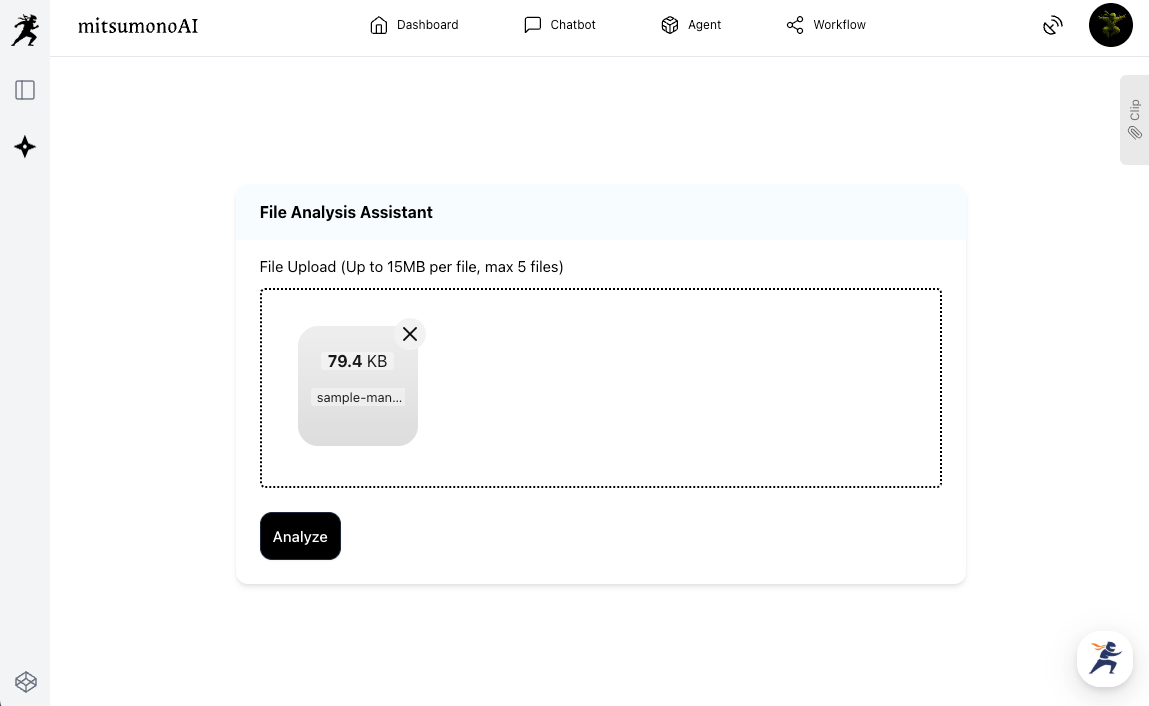
Step 1: Upload the Current Manual
First, upload your current disaster response manual that you wish to update to the "File Analysis Assistant." By uploading it in formats such as PDF or Word, the AI will read the manual's contents, and the analysis will be ready to proceed.
Step 2: AI Diagnosis and Revision of the Manual
Once the manual has been uploaded, give the AI the following three specific instructions in the chat screen. This will proceed with a series of tasks: finding deficiencies in the manual, creating a revision proposal, and creating a Q&A for employees.
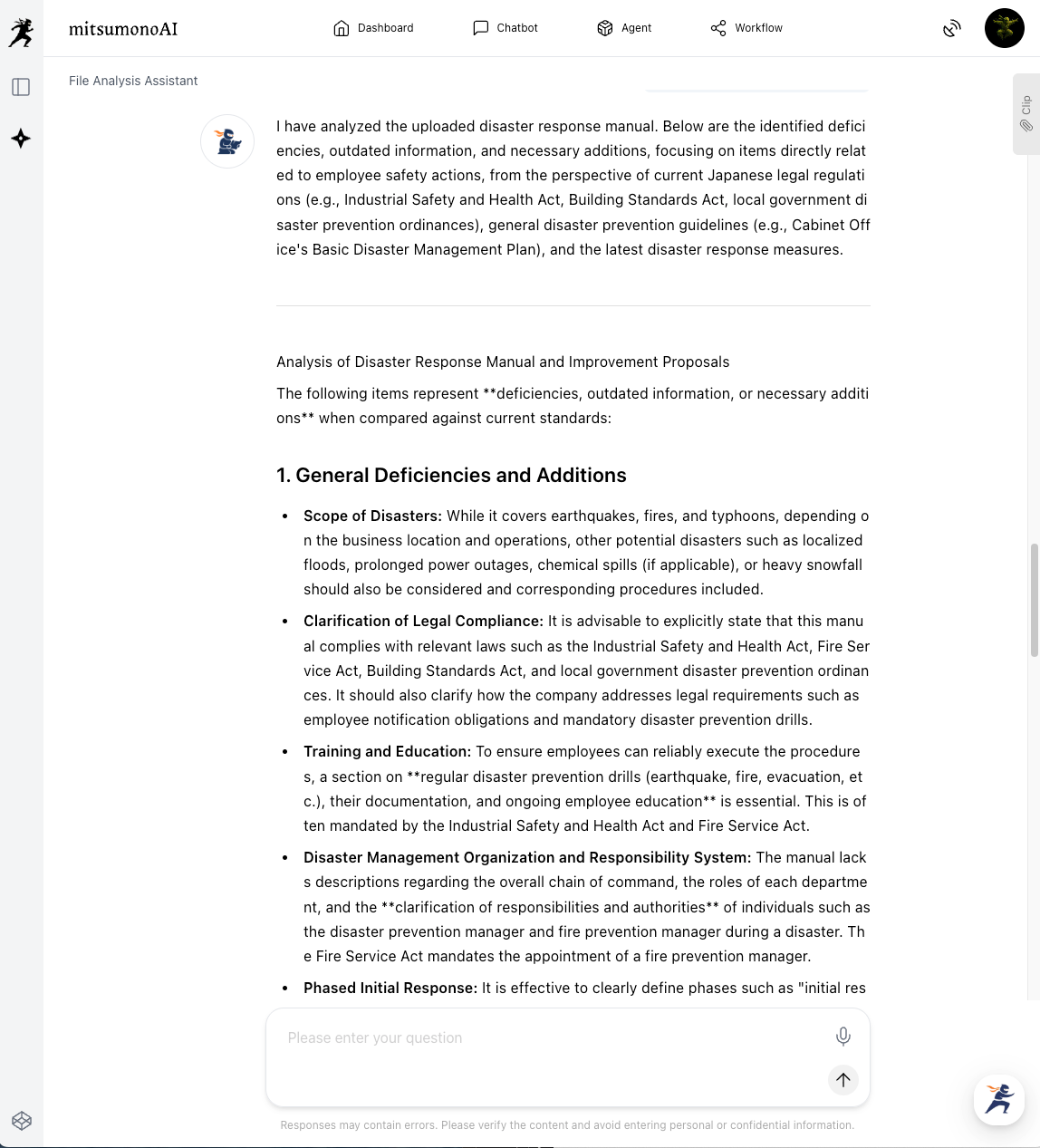
① Identify Deficiencies and Points for Improvement
Have the AI specify where the deficiencies are and where improvements should be made.
"Analyze the uploaded disaster response manual and specifically point out and list the manual's deficiencies, outdated information, or necessary additions from the perspective of current legal regulations (e.g., Industrial Safety and Health Act, Building Standards Act, local government disaster prevention ordinances), general disaster prevention guidelines (e.g., Cabinet Office's Basic Disaster Management Plan), and the latest disaster response measures. Focus particularly on items directly related to employee safety action."
② Create a Revision Proposal
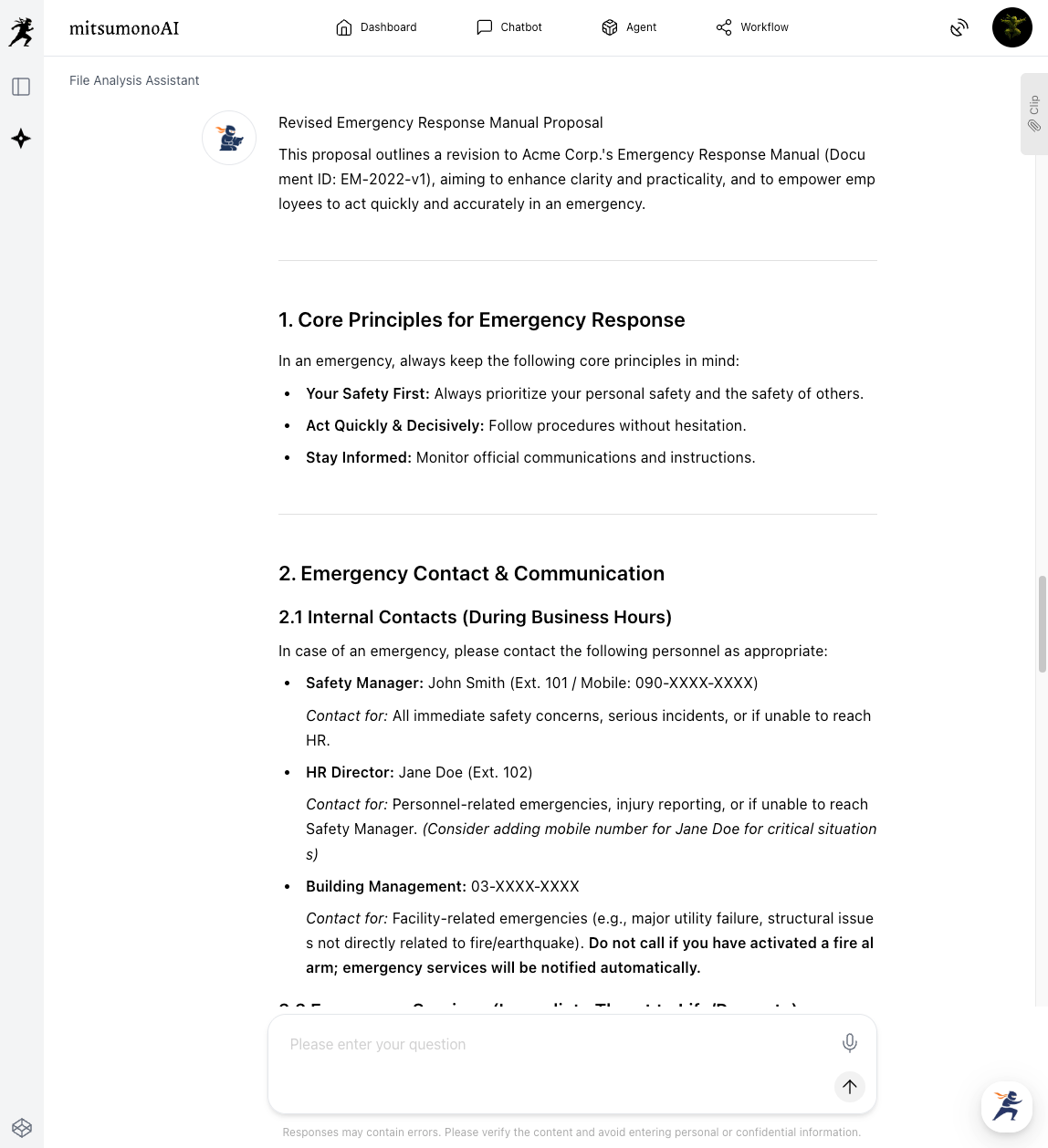
Based on the improvements summarized in ①, have the AI create a revision proposal.
"Based on the identified deficiencies and points for improvement, create a revision proposal for the manual that enables employees to act quickly and accurately in an emergency. Emphasize clarity and practicality, and include specific instructions for action. Use headings and bullet points effectively to create a structure that is intuitively easy to understand."
③ Create a Hypothetical Q&A
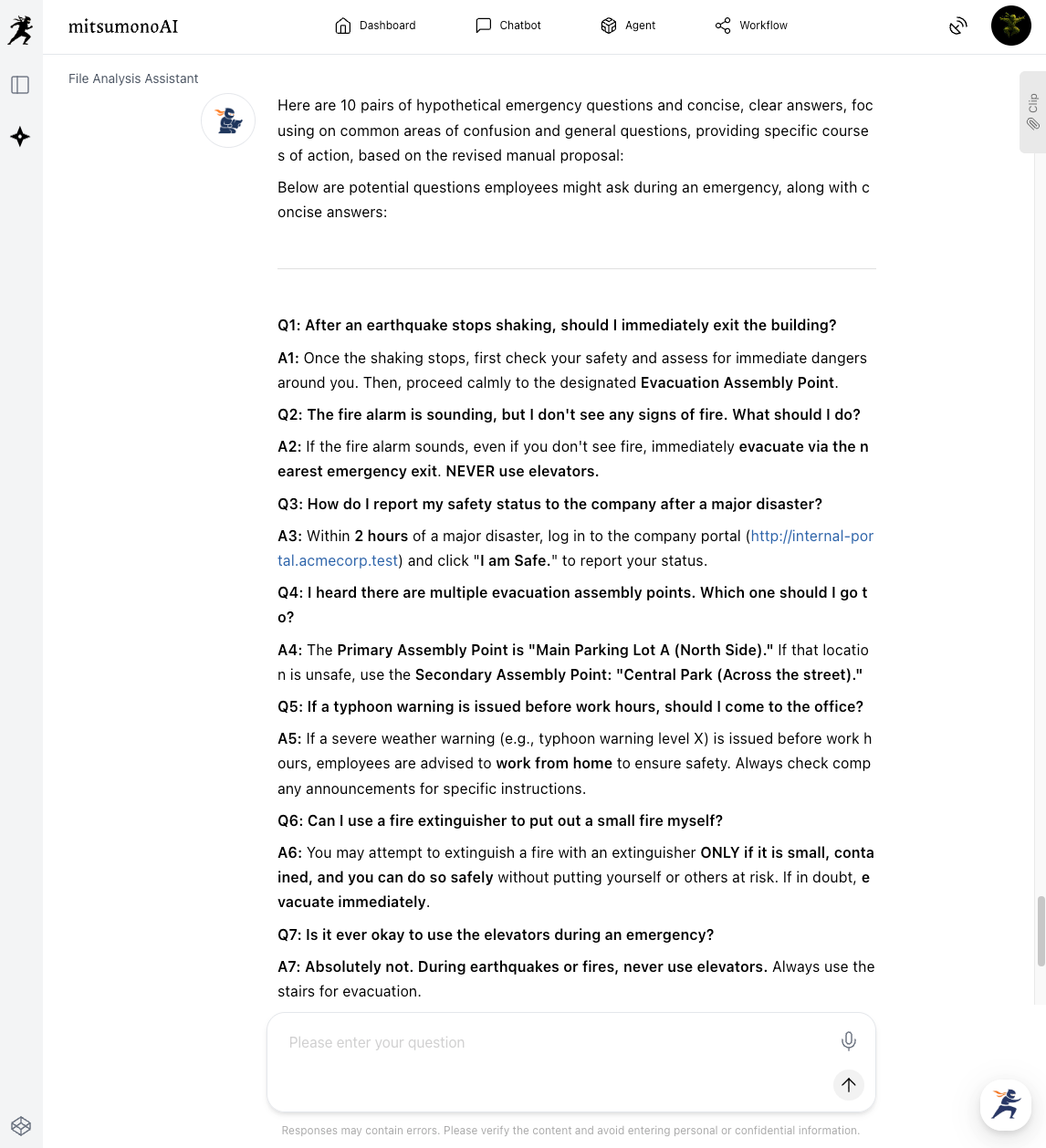
Create a Q&A for particularly important and frequently questioned parts of the disaster manual to enhance its practicality.
"Based on the content of the created revision proposal, generate 10 pairs of hypothetical emergency questions that employees might ask and concise, clear answers to them. Focus on common areas of confusion and general questions, providing specific courses of action."
Step 3: Final Confirmation and Rollout to Internal Departments
By performing a final confirmation and adjustment based on the revision proposal and Q&A created by the AI, a manual that is more tailored to your actual situation will be completed.
- Content Confirmation and Adjustment
- The AI-proposed revision proposal and Q&A are reviewed by your company's disaster prevention officer and department heads. Adjust the wording and add/correct information as necessary to align with specific equipment, personnel structure, and local characteristics.
- Final Check of Legal Regulations
- Ensure full compliance with the latest laws and industry guidelines by conducting a final check by a specialist for complete assurance.
- Employee Rollout and Training
- The completed, updated manual is promptly provided to employees in a form that they can check at any time, such as posting on the internal portal site, physical distribution, or storing in emergency kits.
Furthermore, conducting regular disaster drills based on the manual's content ensures that knowledge is put into practice, making the manual truly useful.
Achievable Outcome Goals (Reference Example)
- The worry that updating disaster response manuals is "time-consuming and laborious" is eliminated, making it possible to efficiently and reliably maintain a manual that is always current and practical.
- Utilizing AI analysis and generation significantly reduces the time and effort spent on updating, lessening the burden on the staff member in charge.
- Employee disaster preparedness awareness and readiness are increased, improving the certainty of safety assurance and business continuity during an emergency. The improvement in manual quality also contributes to fulfilling corporate social responsibility and fostering employee trust and peace of mind.