Establishing a Data-Driven Improvement Cycle through Post-Event Performance Verification
We explain how to analyze event data and use "Sensei AI" to generate DX consultant-level reports and future strategies. Learn the concrete steps to achieve data-driven decision-making and maximize your event outcomes.


Tools Used
- File Analysis Assistant
- Sensei AI
AI Analysis to Connect Past Lessons to Future Success
Verifying performance after an event is a crucial process for the success of the next one. However, while being busy with daily tasks, many people likely don't have the time to analyze the factors behind an individual event's success or failure, or to think of hints for applying those learnings to the next initiative.
This article introduces a concrete method for using the "File Analysis Assistant" and "Sensei AI - Tourism DX" to objectively analyze event performance based on data and utilize it for planning and improving future events. Let's use AI effectively to maximize the ROI (Return on Investment) of your events and deploy more effective marketing strategies.
Specific Procedures
Step 1: Collect and Organize Data for Analysis
Collect and organize the necessary data for objectively analyzing event performance. To increase the accuracy of AI analysis, it is important to prepare data that is as comprehensive and accurate as possible.
[Quantitative Data]
・Event revenue data (ticket sales, merchandise/food and beverage sales, etc.)
・Participant demographic data (age, gender, location, etc.)
・Publicity/advertising effectiveness data (click-through rate, conversion rate, etc.)
[Qualitative Data]
・Participant survey results (satisfaction level, positive aspects, areas for improvement, open-ended responses, etc.)
・Event execution report
Step 2: Comprehensive Analysis of Various Data
▶ File Analysis Assistant
Upload the collected and organized event-related data to the "File Analysis Assistant" to prepare for analysis.
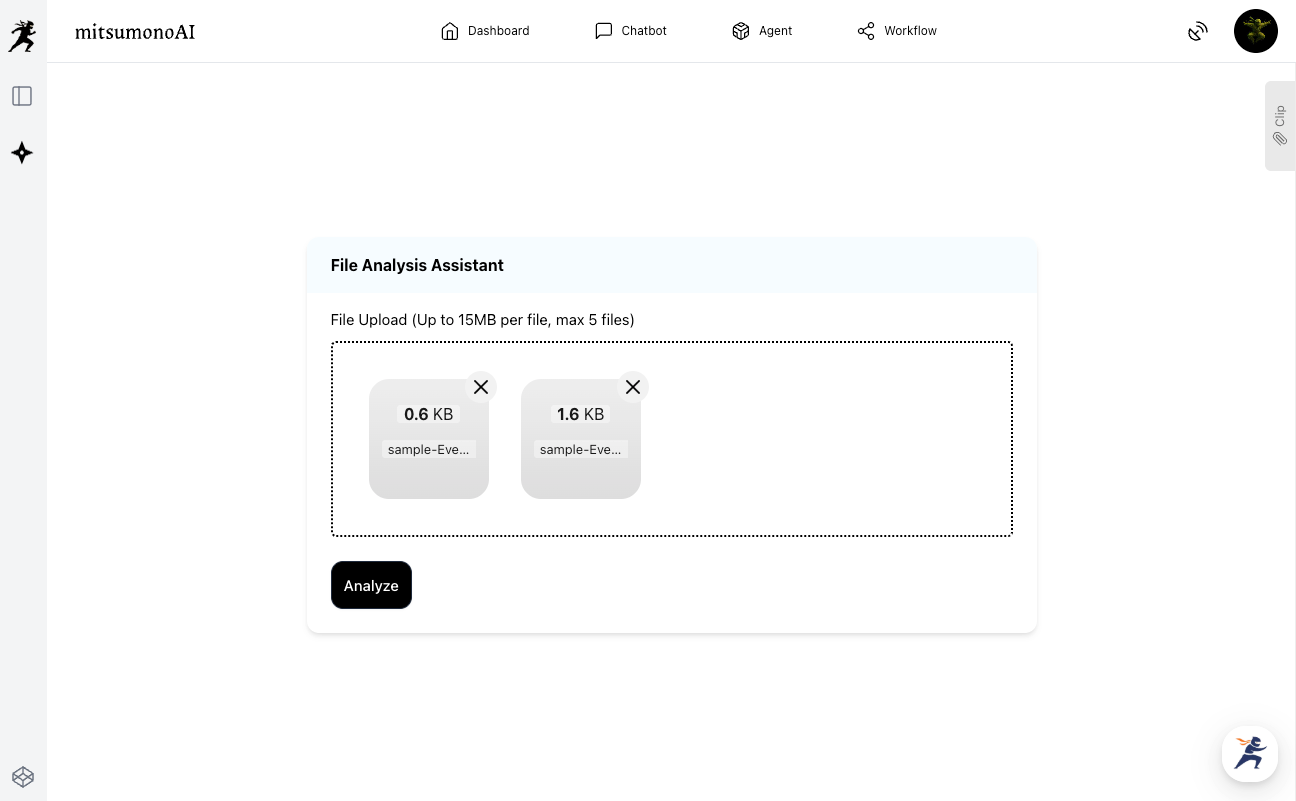
Next, execute a comprehensive analysis. Even simple instructions like the following can lead to a sufficient analysis containing necessary information.
We would like to use these results for planning the next event."
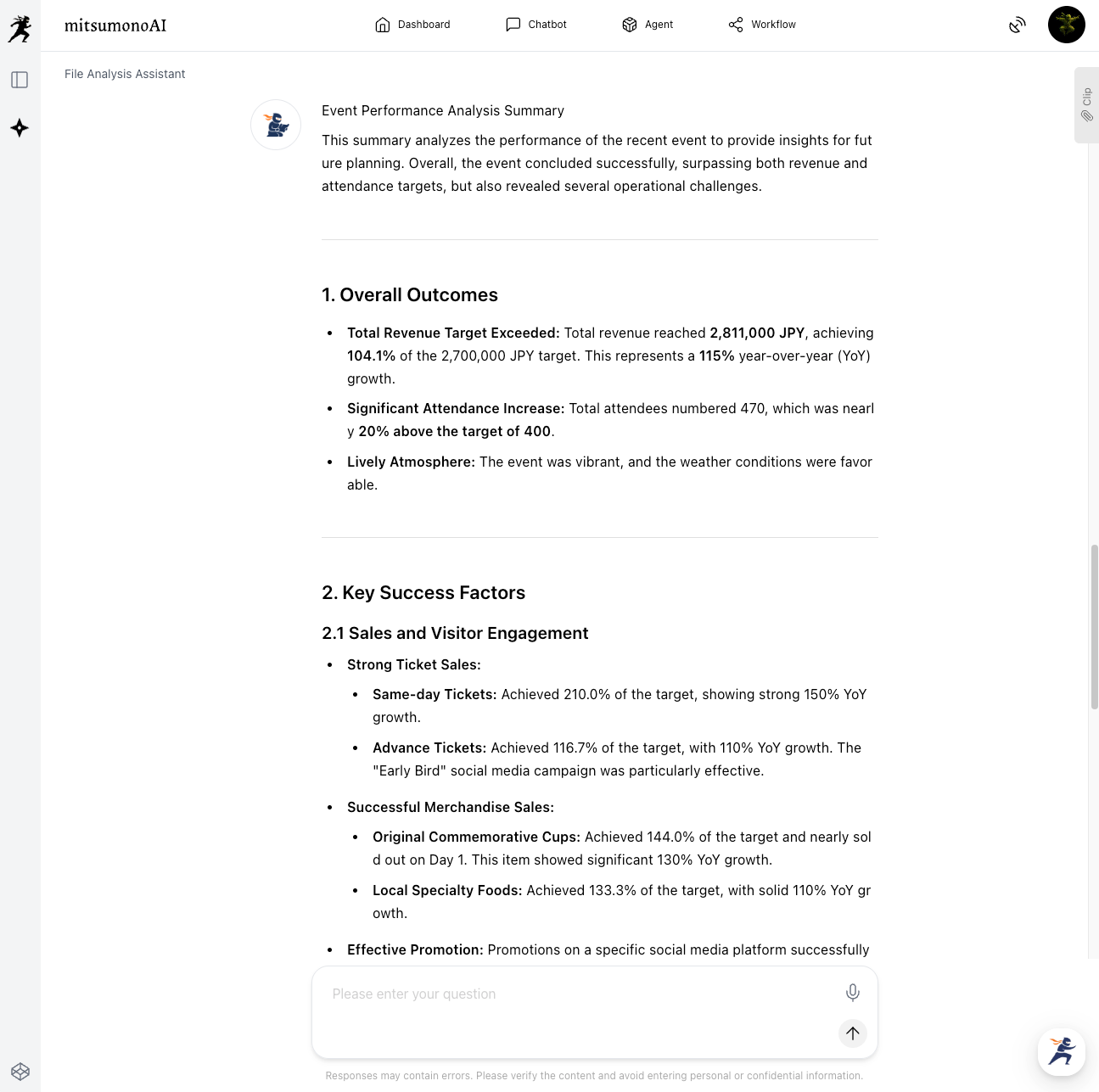
Save this analysis result to the clip to use it as material for dialogue and consideration in the next step.
Step 3: Concrete Formulation of Next Initiatives through Dialogue with the AI Consultant
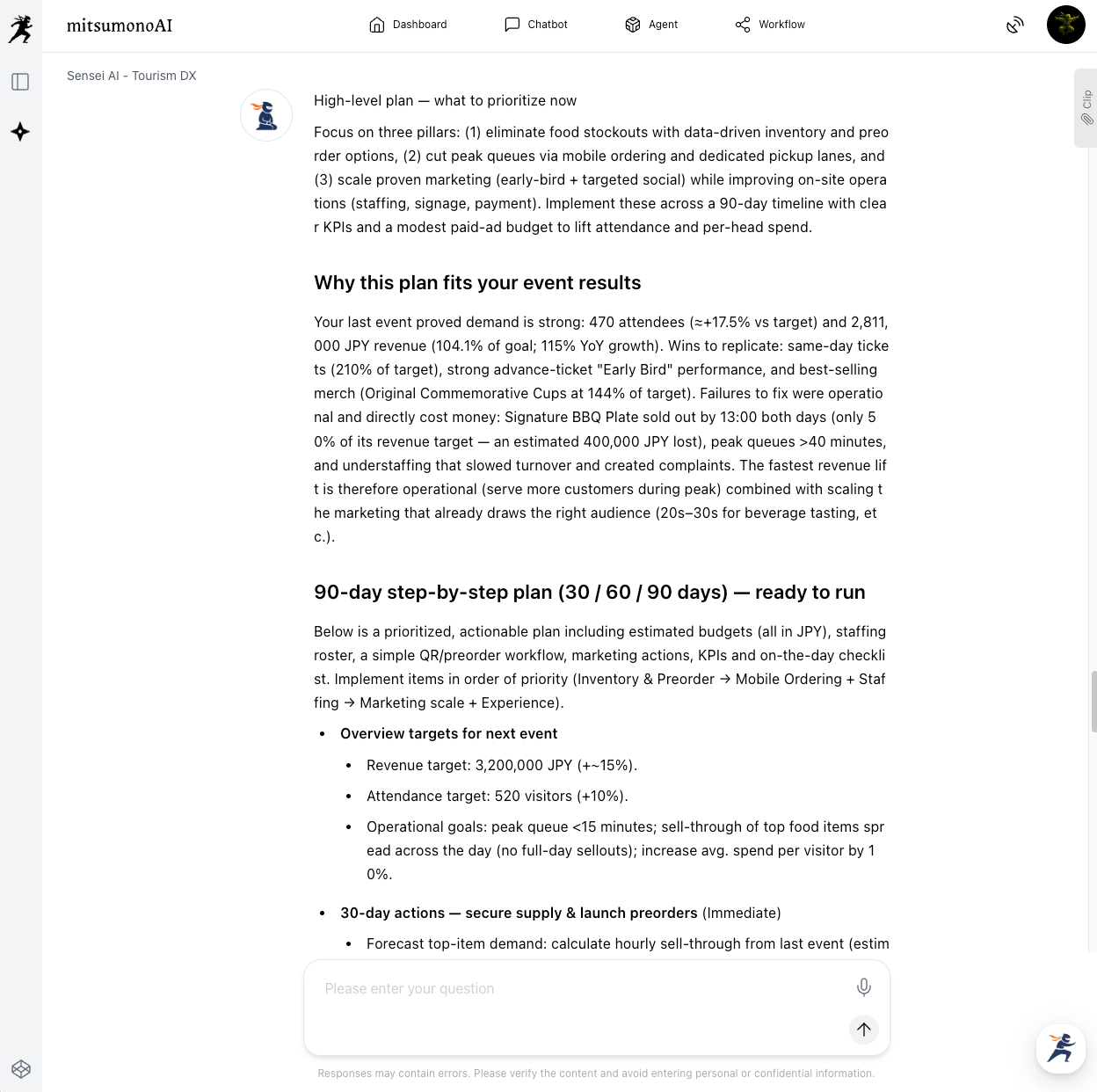
▶ Sensei AI - Tourism DX
Based on the objective analysis results obtained in Step 2, engage in dialogue with Sensei AI (the AI Consultant) to elicit concrete improvement measures and planning ideas for the next event.
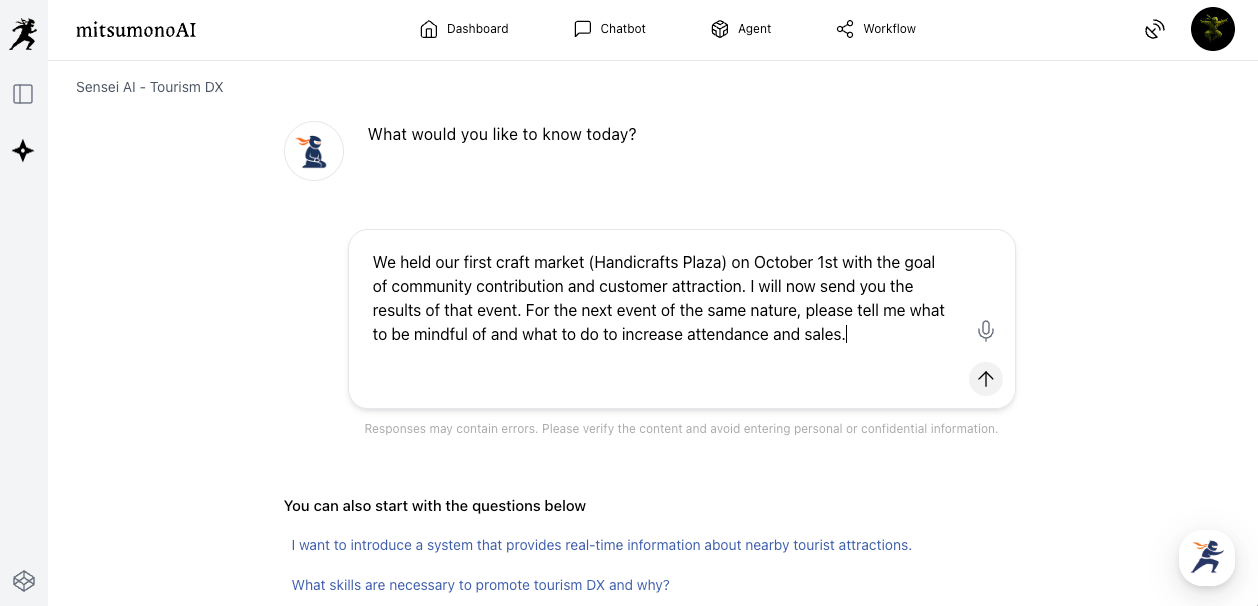
Once the chat starts, immediately paste and send the analysis results you saved to the clip into the chat field.
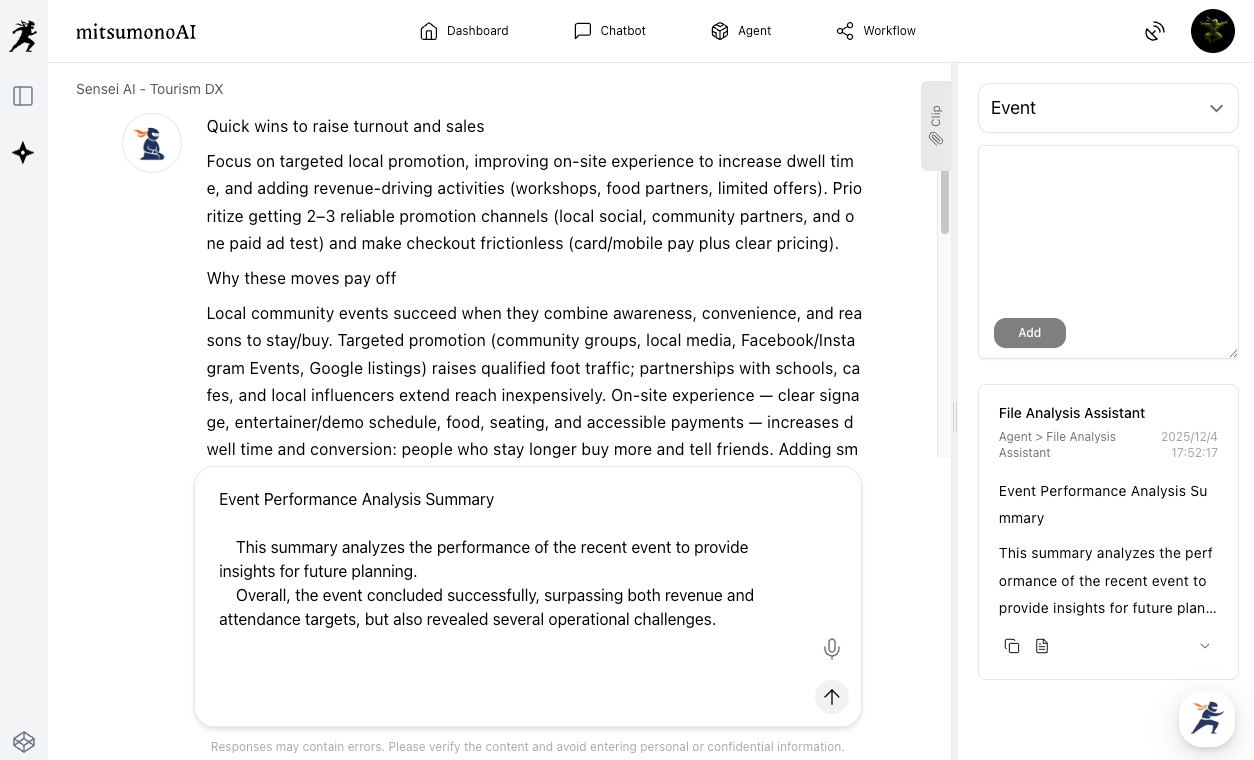
Sensei AI will propose specific measures for improving attendance, increasing revenue, and enhancing operational efficiency for the next event, as well as points to note during the planning process, based on the submitted analysis data.
Step 4: Achieve Data-Driven Decision-Making Based on AI Dialogue Results
You can deepen your thoughts through further dialogue with Sensei AI by asking questions like, "What kind of budget is needed for this measure?" or "Do you have specific SNS post ideas?"
Furthermore, by instructing the AI to "Please create a proposal document for the next event," and answering the questions presented by Sensei AI as necessary, you can generate a draft proposal document and quickly commence discussions regarding the next event plan.
Results Achieved Through Utilization (Examples)
- Objective and Efficient Analysis of Event Performance
The AI comprehensively analyzes quantitative and qualitative data such as sales figures and survey results, allowing for an objective grasp of the event's success factors and challenges. - Data-Driven Planning of Next Initiatives
Based on the AI's analysis results and proposals, data-driven decisions can be made, leading to the planning of more effective next events and improvement measures. - Improved Marketing Strategy Accuracy and Operational Efficiency
The AI consistently supports the process from event performance analysis to the proposal of next initiatives, reducing the burden on staff and increasing the overall accuracy of the marketing strategy.
Target Figures 1 Year After the Event
KGI (Key Goal Indicator):
- Attendance for the Next Event: 15% increase year-over-year
KPI (Key Performance Indicators):
- Event Performance Report Completion Rate: 100%
- Reflection Rate of Event Performance Report in Next Event Planning: 80% or more
- Improvement in "Satisfaction Level" in Post-Event Survey: 5% increase