Building HR Data Governance with AI | How to Prevent Data Leaks and Turn Data into a Strategic Asset
While companies want to utilize HR data, they fear information leaks. We explain three concrete steps using AI to achieve everything from designing secure data utilization guidelines and risk-free data analysis, to improving company-wide security awareness.


Tools Used
- Sensei AI - House Builder
- File Analysis Assistant
- AI Chat (ChatGPT, Gemini, etc.)
- Content Marketing Planner
Preventing Data Leaks and Turning HR Data into a Strategic Asset with AI
"I want to analyze HR data to improve the turnover rate, but I'm concerned about handling personal information."
"How can we prevent information leaks caused by human error, such as mistakenly sending an email?"
"I understand the importance of data utilization, but I don't know how to balance it with privacy protection."
HR data is a strategic asset for a company, but it is also highly sensitive information. For its utilization, robust measures against information leakage risks and company-wide improvement in security awareness are essential.
In this article, we introduce three specific steps to establish and embed a secure data utilization cycle by using AI as a "governance design strategist" and an "internal education implementer."
Specific Procedures
Step 1: Design "Secure Data Utilization Rules" with AI
▶︎Sensei AI - House Builder
The first crucial step is to establish clear rules to follow before starting data utilization. Have an AI, which understands the specific characteristics of your industry, draft your company's exclusive guidelines.
[Input Tip]
Communicate your company's situation and objectives clearly to Sensei AI - House Builder, and ask for its expert opinion.
"We plan to conduct HR data analysis to improve our employee turnover rate. Please create an 'Internal Data Utilization Guideline' to proceed with the analysis safely while complying with the Personal Information Protection Act. Specifically, include concrete procedures on which data should be anonymized or pseudonymized, and how."
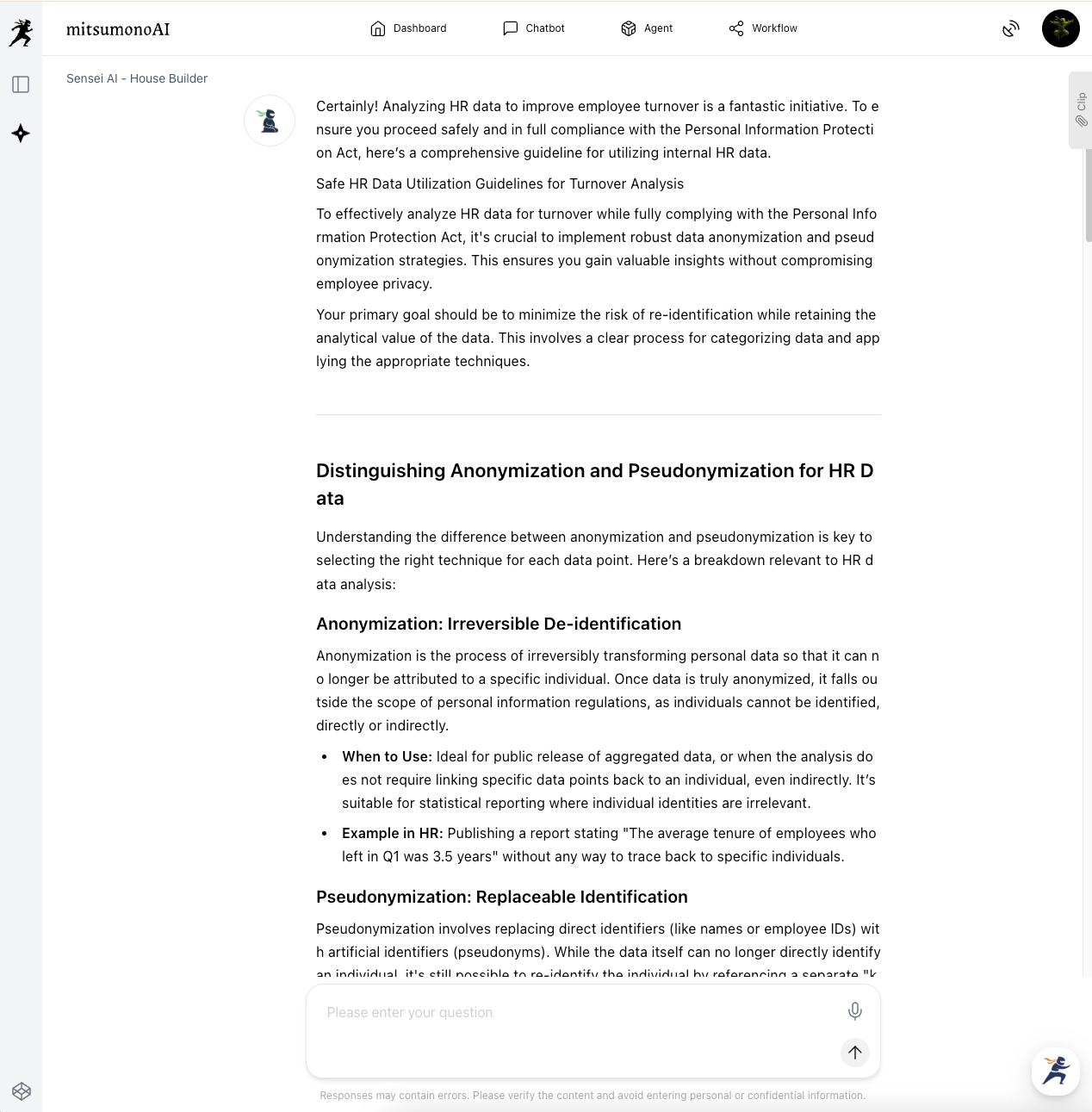
This step allows you to efficiently design the foundational rules that reduce legal risks and enable confident data utilization.
Step 2: Analyze HR Data "Without Risk" and Gain Insights Using AI
▶︎File Analysis Assistant
Analyze the HR data, which has been anonymized according to the guidelines created in Step 1, securely with AI.
[Input Tip]
Upload the HR data (Excel, CSV) to the File Analysis Assistant, ensuring it has been processed according to the guidelines so that individuals cannot be identified (e.g., replacing personal names with employee IDs).
"Analyze the uploaded HR data and list five common trends among employees who resigned in the past three years (e.g., department, average overtime hours, performance review trends), ranked by the strength of correlation."
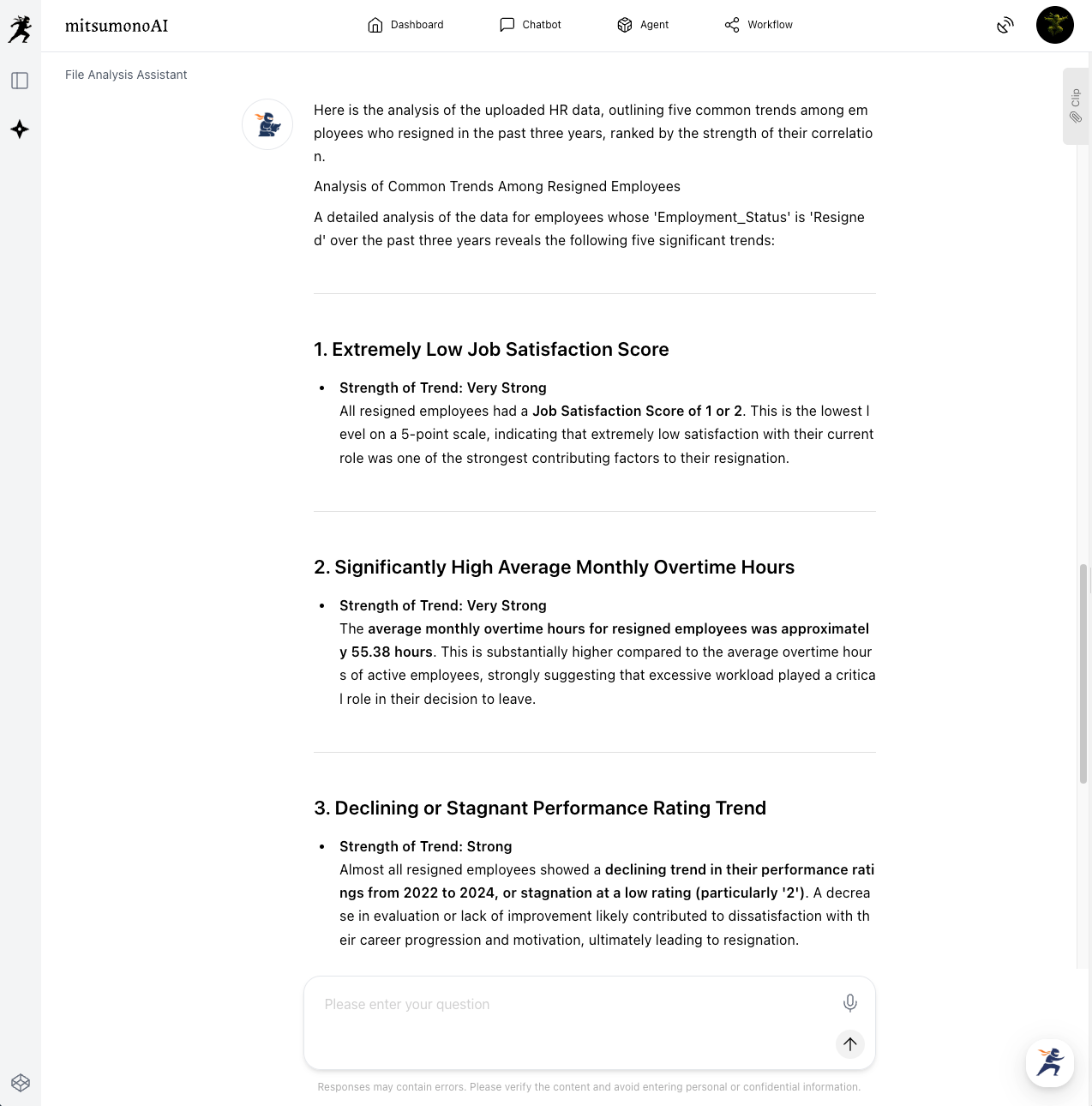
By anonymizing the data, you reduce the risk of information leaks while extracting objective insights that can lead to organizational problem-solving. Furthermore, utilizing this data allows you to develop evidence-based strategies for improving the turnover rate.
Step 3: Foster "Company-Wide Security Awareness" with AI
▶︎ AI Chat (ChatGPT, Gemini, etc.), Content Marketing Planner
Finally, use AI to plan and execute internal enlightenment activities aimed at improving the security literacy of all employees.
1.Transforming Complex Regulations into an Easy-to-Understand Q&A Format
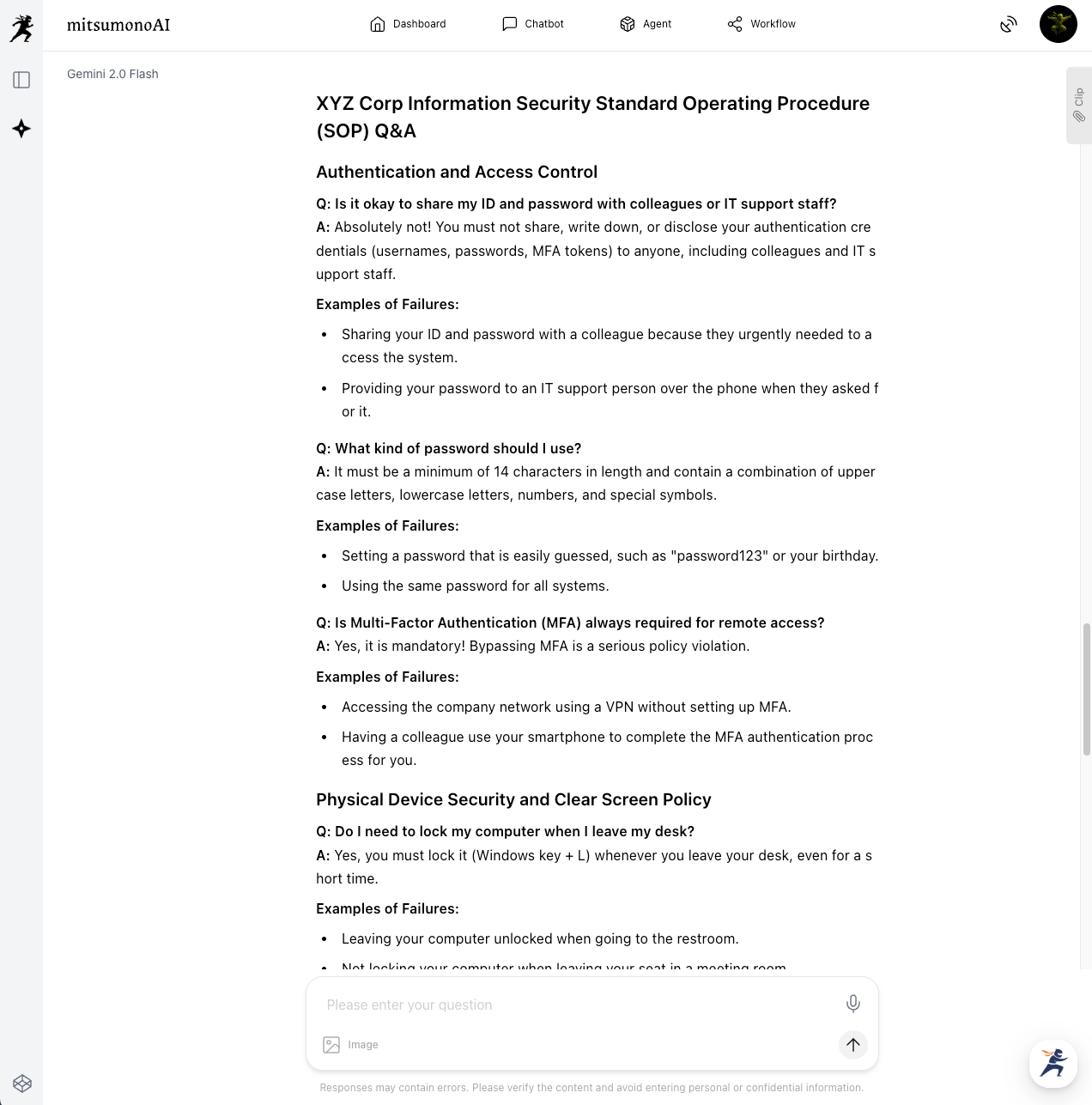
First, input the text of the existing, complex information security regulations into the AI Chat (ChatGPT, Gemini, etc.) and instruct it to convert them into a Q&A format.
"(Paste the regulation text)
Convert the content of this regulation into a Q&A format, including specific examples of failures, so that it can be understood by employees without specialized knowledge."
2.Creating an Information Dissemination Plan
Next, use the Content Marketing Planner based on the generated Q&A to create a plan for a series of articles to be published in internal newsletters or other channels.
Insert the Q&A-formatted regulations into the generated general plan.
"Based on the following content, create the Main KPI, Content Calendar, and KPI measurement methods.
Content Not to Create:
・White papers
・Webinars
Content to Create:
・Internal Newsletter: Must include the security regulation Q&A listed below
・Posting on the employee-facing website
[Security Regulation Q&A]
(Paste the previously generated result)"
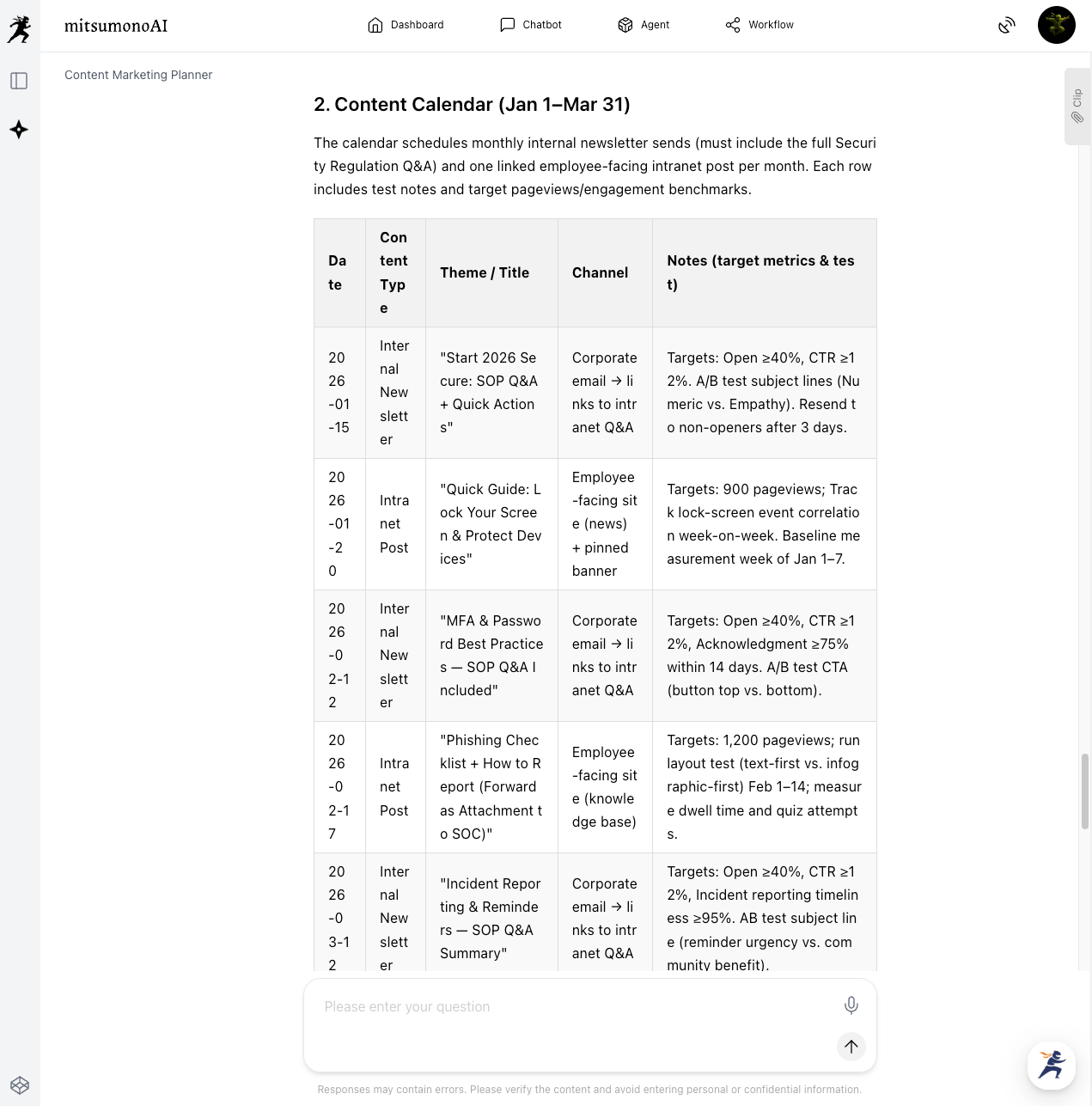
A plan tailored to the regulation content is created. By distributing the internal newsletter according to this plan, a culture is fostered where all employees regularly encounter security information and view the knowledge as personally relevant.
Outcomes Achieved Through Utilization (Examples)
- Establishment of a Secure Data Utilization Cycle
- With AI support, you can efficiently establish both concrete rules for reducing information leakage risks and specific methods for effectively utilizing data.
- Improvement of Company-Wide Security Literacy
- Continuous, easy-to-understand information dissemination raises the security awareness of all employees, suppressing the occurrence of human errors such as mistaken email sending.
- Realization of Data-Driven HR Strategy
- A strong organizational structure is built that allows for the execution of "proactive HR strategies," such as improving turnover rates and analyzing high-performers, while ensuring data protection.
Target Metrics for the 12-Month Period Following the Initiative
KGI (Key Goal Indicator):
- Number of major incidents related to the handling of personal information: 0
KPIs (Key Performance Indicators):
- Completion rate of security training and average score on the comprehension test for all employees: 100% and 90 points or higher
- Number of HR analysis projects utilizing anonymized data: 200% increase compared to the previous year
- Score for "Trust in the company's data handling" in the employee survey: 30% improvement