[For Executives & HR Leaders] Breaking Down Departmental Silos with AI | Designing Company-Wide KPIs and Personnel Evaluation Systems
Isn't it time to end the "Sales vs. R&D" conflict? AI visualizes the "hidden losses" caused by departmental friction. We explain specific methods to design company-wide KPIs and fair evaluation systems that foster organizational unity.

![[For Executives & HR Leaders] Breaking Down Departmental Silos with AI | Designing Company-Wide KPIs and Personnel Evaluation Systems](/content/images/size/w1200/2026/01/meeting-1.png)
Tools to Use
- File Analysis Assistant
- Sensei AI
- Persona Creation Assistant
The Reality of "Hidden Losses" Caused by Departmental Conflict
"Sales only tells customers what they want to hear and signs contracts with impossible designs." "Designers are too picky about details and lack cost-consciousness."
This kind of departmental conflict and lack of collaboration is a deep-rooted issue faced by many home builders and manufacturers. It creates massive "hidden losses" every day, such as wasted overtime due to design reworks, construction delays, and decreased customer satisfaction.
One of the root causes is "fragmented evaluation systems" that are overly optimized for individual departments. In this article, we’ll look at how to use AI to analyze various internal data and design a "company-wide optimal personnel evaluation system" that breaks down silos and fosters unity, using a home builder as our specific case study.
Specific Steps
Step 1: Using AI to Visualize the Reality of Each Department's Contributions
▶︎ File Analysis Assistant
The first step is to objectively understand how the Design and Marketing departments contribute behind the visible figures, such as a sales rep's "number of contracts."
[Tips for Input]
The key is to upload different types of files from multiple departments at once. AI can then cross-analyze this information to visualize hidden collaborations.
・Sales Department: "Closing Reports for Top Sales Cases" (Word)
・Design Department: "Blueprints for Properties with High Customer Satisfaction Scores" (PDF)
・Marketing Department: "Performance Report for Web Ads that Doubled Inquiries" (Excel)
・Cross-Departmental: "Meeting Minutes from Sales-Design-Construction Joint Projects" (Text)
"Cross-analyze the uploaded files and extract three specific facts based on the documents about how the Design and Marketing departments contributed to the 'Top Sales Contract Cases' beyond just the sales numbers."
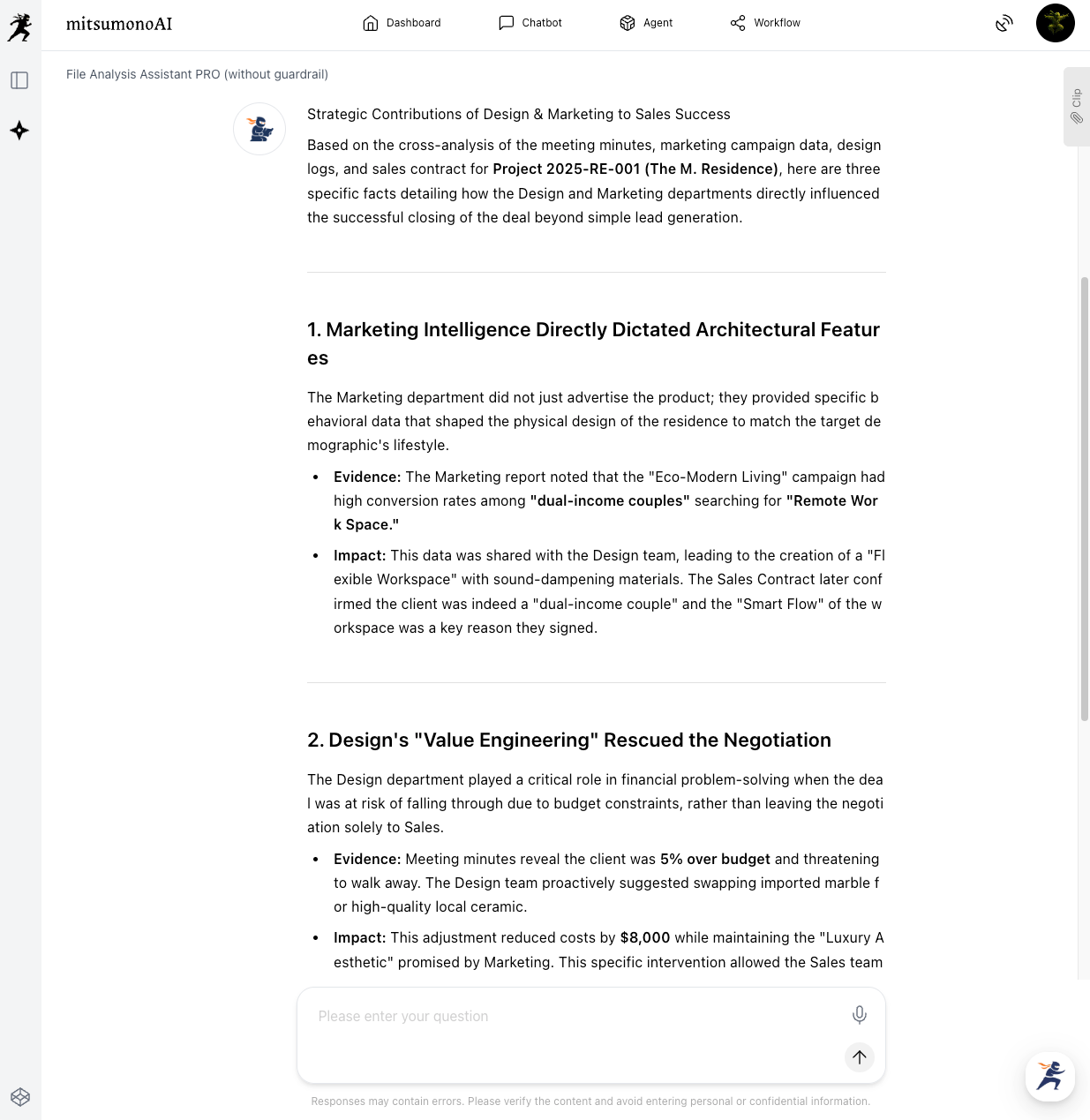
The AI will verbalize departmental contributions that may have previously gone unnoticed.
Step 2: Designing "Company-Wide Optimal Evaluation Axes" with Industry-Specific AI
▶︎ Sensei AI - House Maker
Based on the "reality of contributions" visualized in Step 1, work with an AI that understands the characteristics of the home building industry to design the framework of a new evaluation system.
[Tips for Input]
Request specific outputs from Sensei AI - House Maker.
"(Paste analysis results from Step 1)
Based on these results, please point out the issues with the current departmental KPIs and propose three new 'Common Evaluation Axes (Common KPIs)' to be introduced. Please also explain why these KPIs will lead to better organizational unity."
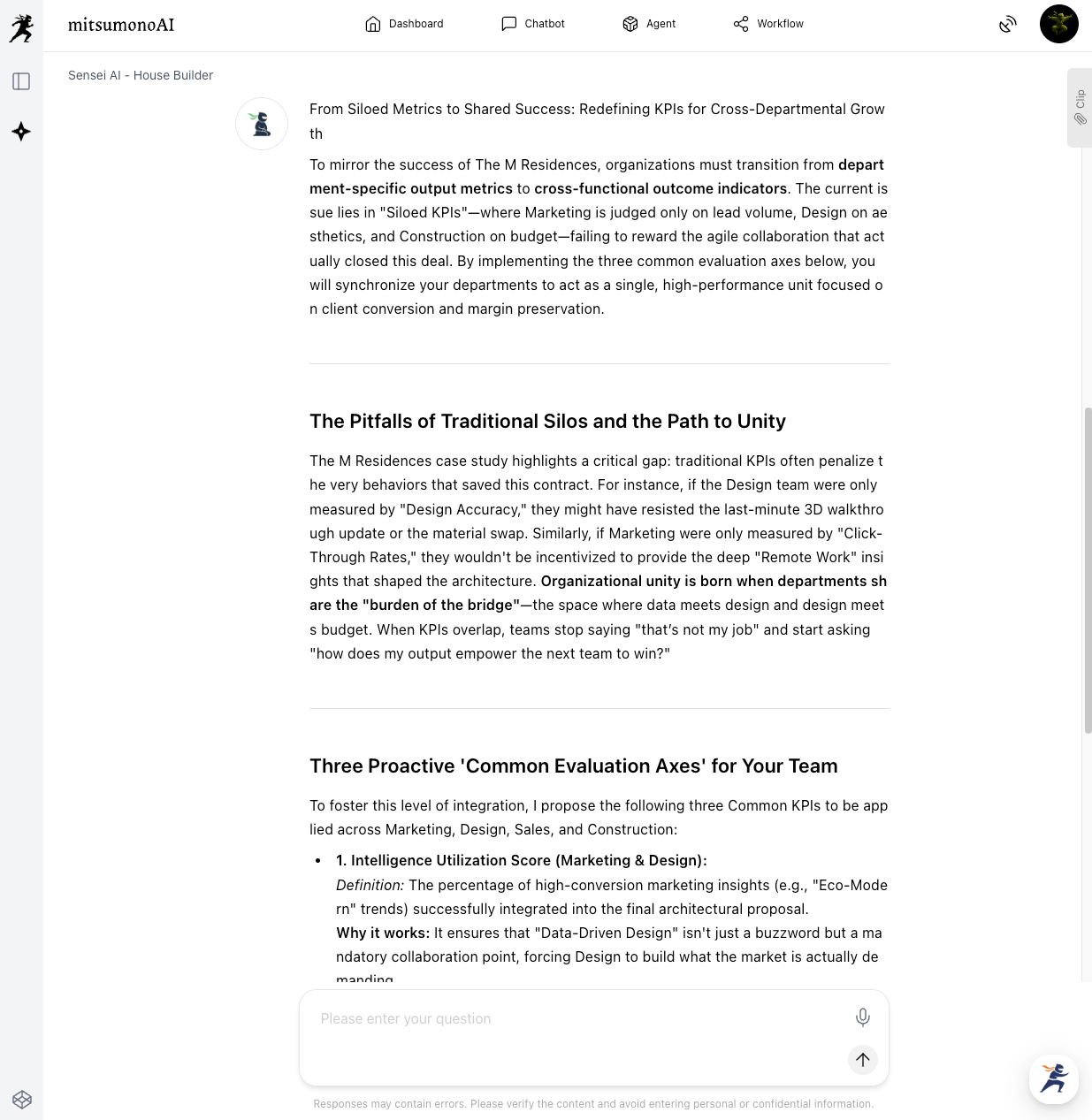
Step 3: Helping Every Employee "Own" the New Evaluation System with AI
▶︎ Persona Creation Assistant
A new evaluation system is meaningless unless it is understood and accepted by all employees. To achieve this, create personas of representative employees from each department and have the AI determine the best way to explain the system to them.
[Tips for Input]
In the target list, specifically describe the values each department’s employees hold, what they find frustrating, and what motivates them. This is the most important information for the AI to understand their "perspective" and "emotions."
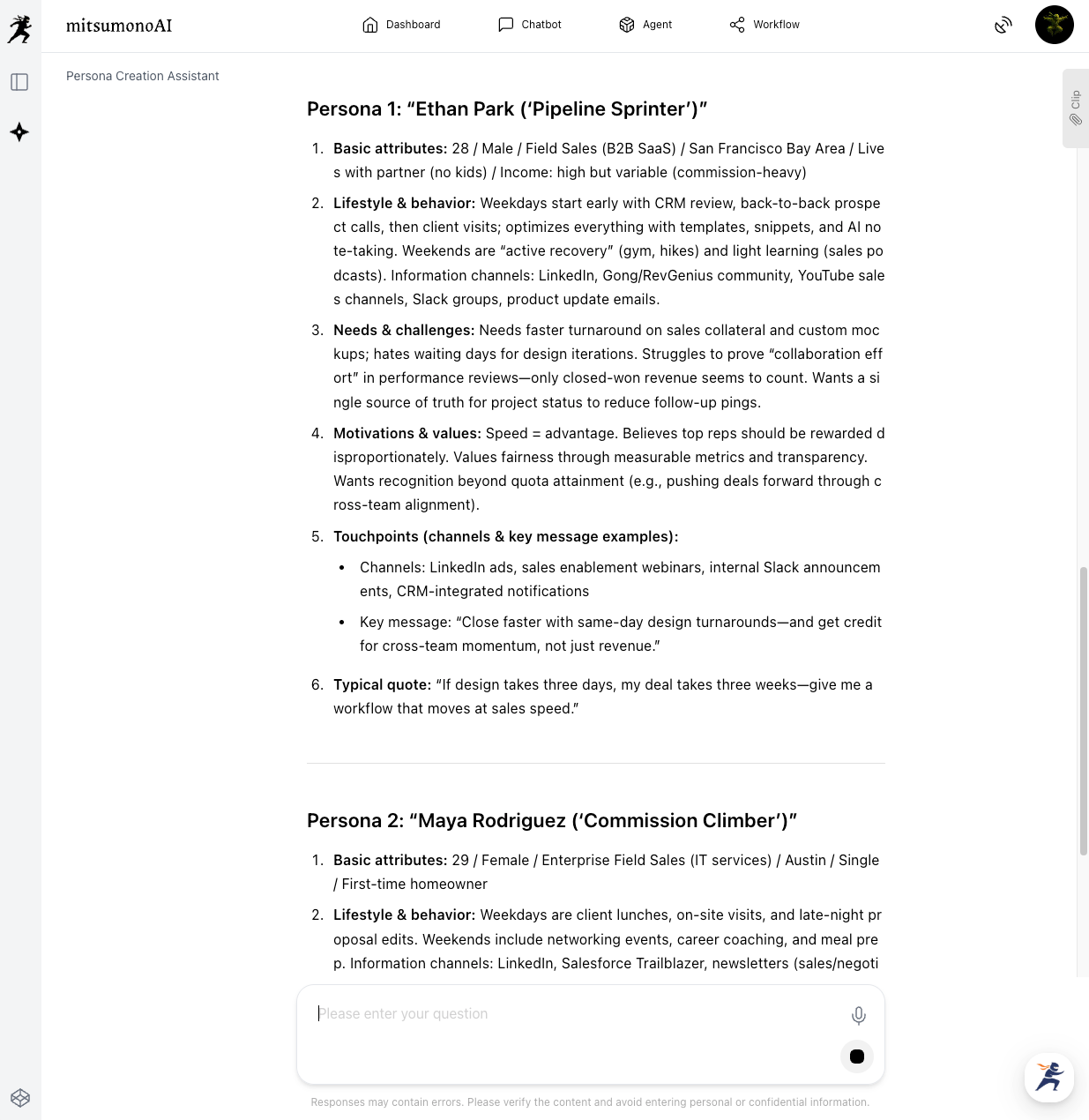
The generated departmental personas will serve as your "communication compass" when rolling out the new personnel evaluation system. For example, when holding a briefing session, rather than giving a uniform presentation, you can instruct the AI: "Create a talk script for the Sales persona (pasted from Step 3) explaining how the new system links to his 'sales target achievement'." Similarly, you can ask it to explain to the Design persona "how the new system evaluates her 'commitment to quality'."
By tailoring the "way you tell the story" to each person's values, employees stop seeing the new system as a top-down mandate and start viewing it as a "personal benefit." This leads to deeper understanding, acceptance, and a smoother implementation.
Results Achieved (Examples)
- Fostering Organizational Unity and Increasing Productivity:
You establish company-wide KPIs and evaluation systems that serve as a "common language" to break down departmental silos. Highly transparent criteria that everyone can agree on lead to a healthier organization and faster strategy execution. - Visualizing Hidden Contributions and Boosting Engagement:
Contributions that were previously hard to evaluate—such as cross-departmental projects or helping other teams—are now properly recognized, increasing employee engagement and motivation. - Strategic Talent Development:
By rewarding those who view the company as a whole, you cultivate a breeding ground for future executive candidates.
Target Metrics After 12 Months
KGI:
- Employee engagement score (all departments): 15% increase
KPIs:
- Average completion rate of cross-departmental projects: 20% increase
- Employee satisfaction with the "Evaluation System" in internal surveys: 30% increase
- Number of negative comments regarding departmental collaboration: 50% reduction
For more use cases and the latest information, visit the mitsumonoAI blog site.