How to Use AI to Improve Manuals and Enhance Business Efficiency
We will introduce a method for creating a manual that allows anyone to proceed with work at the same quality by having AI organize ambiguous expressions and missing information.


Tool Used
- File Analysis Assistant
Ensuring Anyone Can Perform Tasks with the Same Quality
Do you find that the manuals or procedure documents you currently have are difficult to understand, leading to a reliance on others to get work done? Or, do they contain many expressions based on individual experience and subjectivity, causing different interpretations among people? Even manuals created with great effort can fail to fully serve their primary purpose—"ensuring anyone can perform tasks with the same quality"—if they contain ambiguous expressions or missing information.
The "File Analysis Assistant" solves these challenges. AI analyzes your existing manuals in PDF or Word format, efficiently performing checks on the structure, organizing the content, and extracting points for improvement. In this article, we introduce a method for improving manuals using AI to enhance business efficiency and quality across the entire organization.
Specific Steps
1. Prepare the Manuals or Procedures You Want to Organize and Improve
Prepare the manuals or procedures you want to organize and improve in a format readable by the AI, such as PDF, Word, or text files.
2. Execute AI Analysis with the "File Analysis Assistant"
Upload the target manual file to the "File Analysis Assistant."
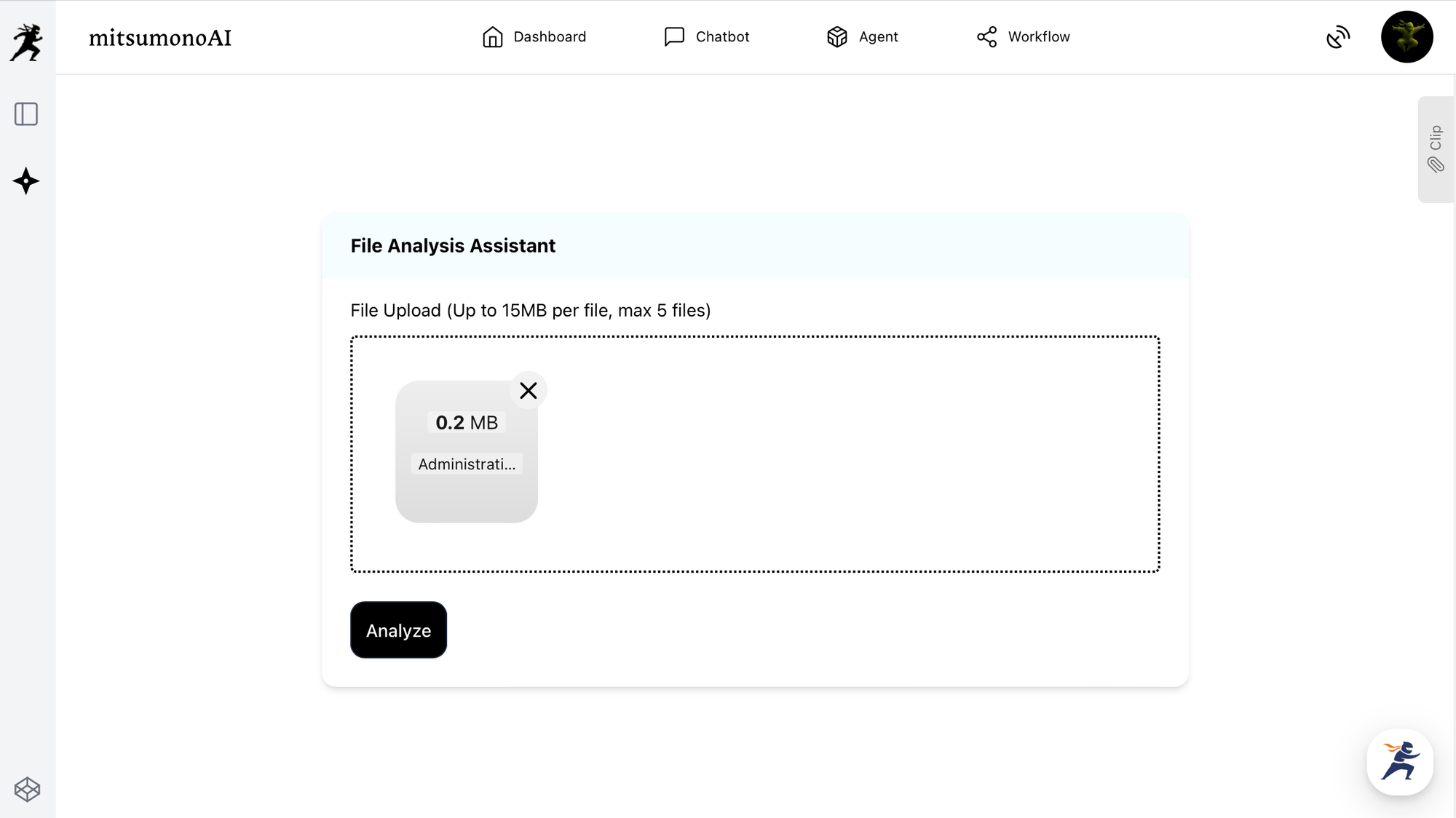
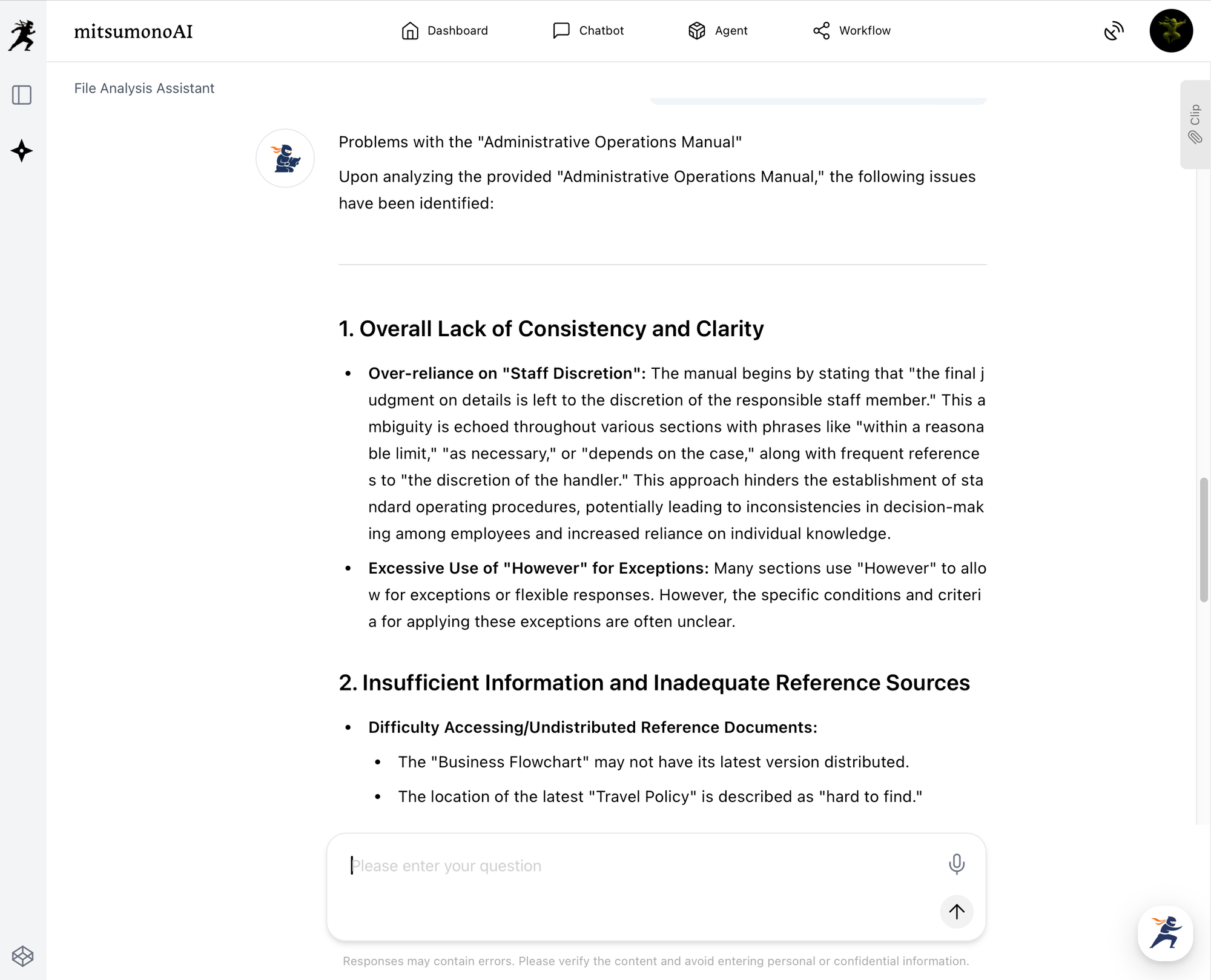
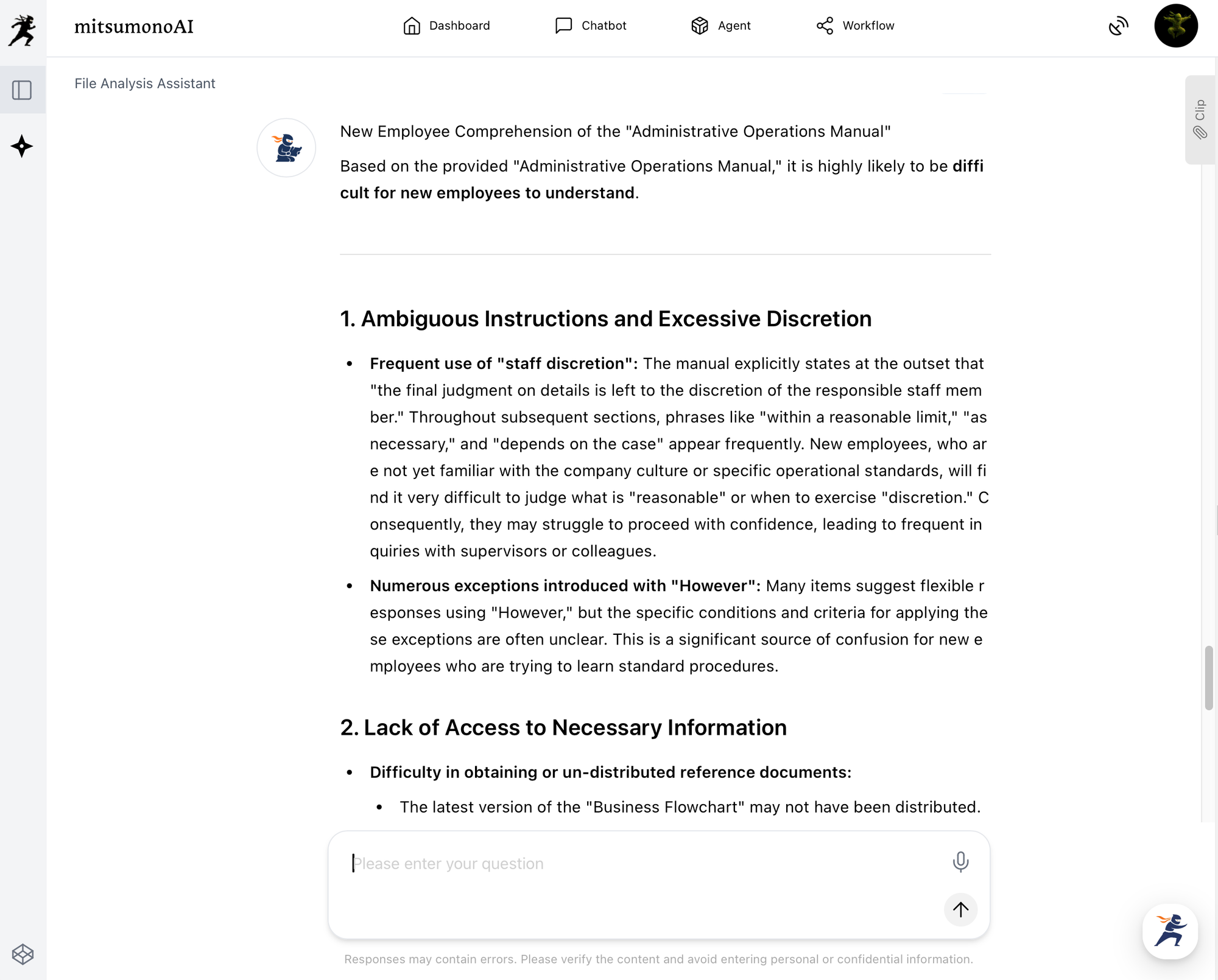
After the upload, ask questions about the file. By posing questions about the manual, as shown below, you can receive answers from the AI.
Prompt Examples:
"Please identify the problems with this manual."
"Is the content of this manual easy for new employees to understand?"
"Can a new employee immediately perform the tasks using this manual?"
3. Output the Revised Manual Text
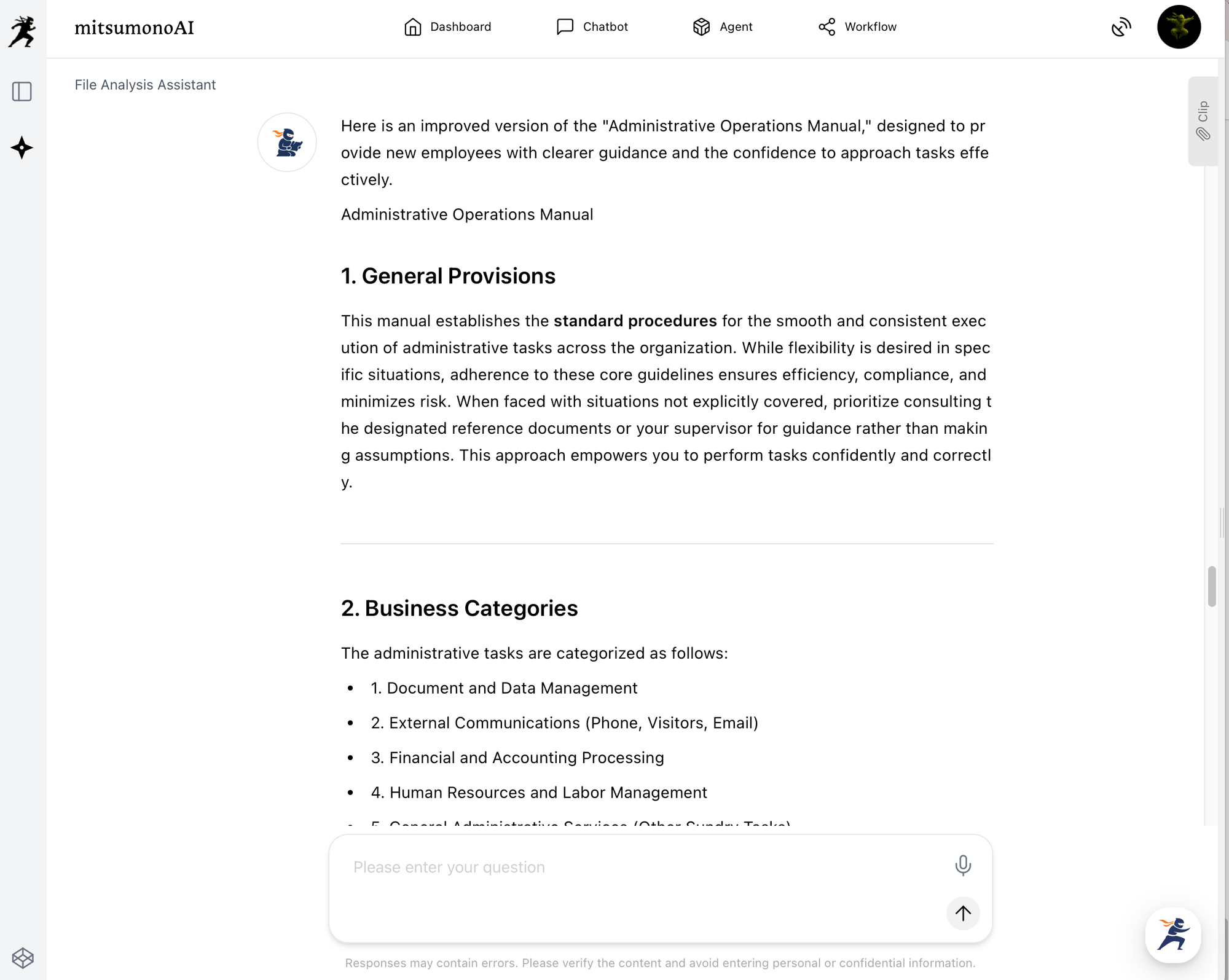
Once you have identified the areas needing improvement, instruct the AI to revise the manual based on that information. At this stage, it is crucial to clearly specify what kind of manual you want to create. By clearly stating whether the target audience is new employees or if it's a checklist for experienced personnel, the revisions will be practical and aligned with actual work.
Prompt Examples:
"Please improve the manual so new employees can approach the tasks with confidence."
"Please change the format to a checklist that experienced staff can use to confirm there are no omissions."
4. Publication and Continuous Improvement of the Manual
The new manual, based on the AI-created suggestions, should be put to use in actual operations, with its effectiveness measured and continuously improved.
[Methods for Continuous Manual Improvement in Business Operations]
- Establish an Operating Structure
Appoint a manual update manager to reflect new information and changes promptly. Creating a system to actively collect employee feedback by setting up a contact point for questions and suggestions will result in a manual that is better accepted by the workplace. - Re-refinement by AI
It is also possible to create revision suggestions through dialogue with the AI regarding sections about which employees have raised doubts or questions.
Prompt Examples:
"A survey of new employees indicated that 'the workflow is difficult to understand.' Based on this, please further simplify the section of the manual related to the workflow for beginners."
"We are still receiving many inquiries about the ... task. To improve this point, please revise the relevant section of the manual to be clearer."
Effects Achieved Through Utilization (Example)
By having AI objectively evaluate and revise manuals that contain much personal subjectivity and ambiguous descriptions, the manuals are improved so that anyone can perform tasks with the same quality. The improved accuracy of manuals and procedure documents enables a significant reduction in training time, contributing to overall organizational efficiency improvement and reduced burden on employees.
Target Metrics for Six Months of Initiative (Example)
KGI:
Improved task reproducibility through manual standardization (Establish a system where anyone—new, mid-career, or experienced—can achieve the same results when performing a task).
KPI:
- Standardization Rate of Manuals Subject to AI Analysis: 80%
- Effectiveness of Reduced Training Time (per new employee): 25%
- Reduction Rate in the Number of Error Reports Related to Tasks Described in the Manual: 15%