Turning "Failed Projects" into "Seeds of a Hit" with AI | Revival Strategies from Shelved Proposals
Analyze past failed proposals objectively with AI. We explain how to pinpoint the gap between a planner's passion and market demand to create "revival product" concepts with high success rates, all while keeping the original vision alive.


Why don't "good" projects sell?
Even if you plan a project with great passion, there are three main reasons why it might not be accepted by the market.
- Passion clouds judgment
When you care deeply about a project, it's easy to think, "customers will definitely understand how good this is." You become blind to flaws like having the wrong target audience, a price that's too high, or a lack of alignment with market needs. - Causes of failure go unanalyzed
When a project fails, the proposal is often shoved to the back of a drawer without a deep dive into why. Valuable lessons are lost, and the risk of repeating the same mistake remains. - Feedback feels like "rejection"
Constructive criticism from colleagues can feel like a personal attack on the planner's passion, making it difficult to accept feedback objectively.
With AI, you can learn from failure and create the next success
mitsumonoAI can help you objectively analyze past failed projects and create new ones that leverage the lessons learned.
The 3 Roles of AI
- Separating "Passion" from "Objective Flaws"
AI analyzes the proposal and calmly distinguishes between the "planner's commitment" and "challenges from a market perspective." It clarifies the causes of failure objectively while respecting the planner's vision. - Turning Failure into "Conditions for the Next Success"
AI treats failure factors as positive constraints—challenges to be overcome next time. Failure is transformed into a roadmap for success. - Proposing Revival Ideas that Leverage Passion
AI suggests multiple concepts that avoid previous pitfalls while keeping the planner’s core commitment intact. It refines the idea into a form the market will accept.
Practice | The Flow of Turning a Past Failure into a Success
Using an example of a "High-End Dressing" that failed to sell, here is the process for reviving it with AI.
Step 1: [File Analysis Assistant] Objectively analyzing the "causes" of the failed project
First, upload the past proposal (Word, PDF, etc.) to mitsumonoAI’s "File Analysis Assistant."
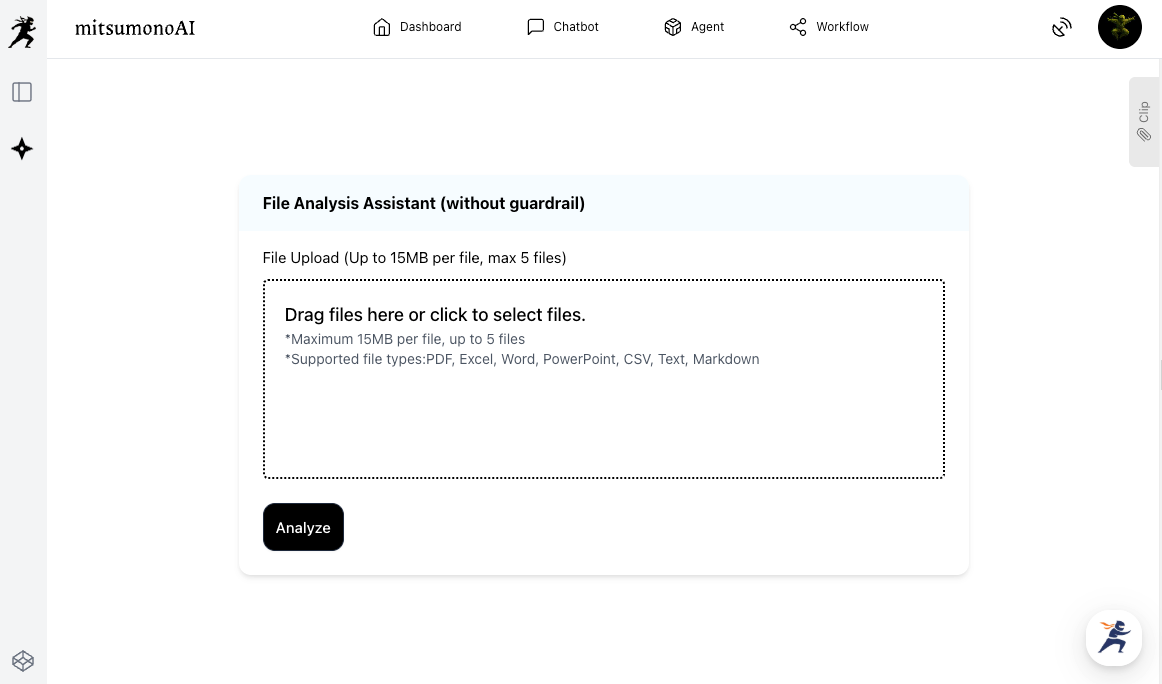
"Please analyze this proposal:
1.Extract the 'non-negotiable points' the planner was most committed to.
2.Point out three 'objective challenges' from a marketing perspective that likely prevented this project from succeeding in the market."
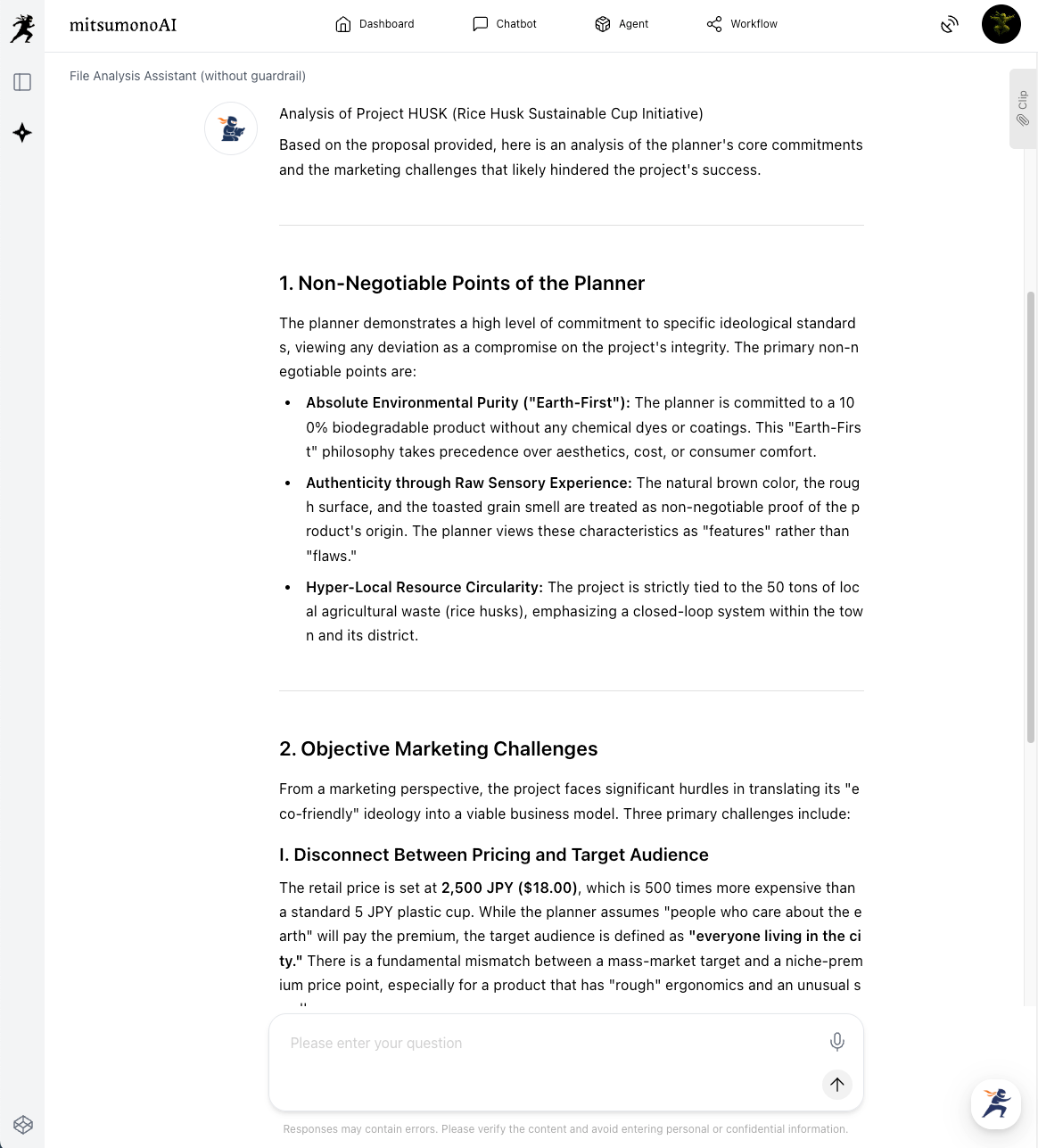
This provides objective analysis results that are easy for the planner to accept.
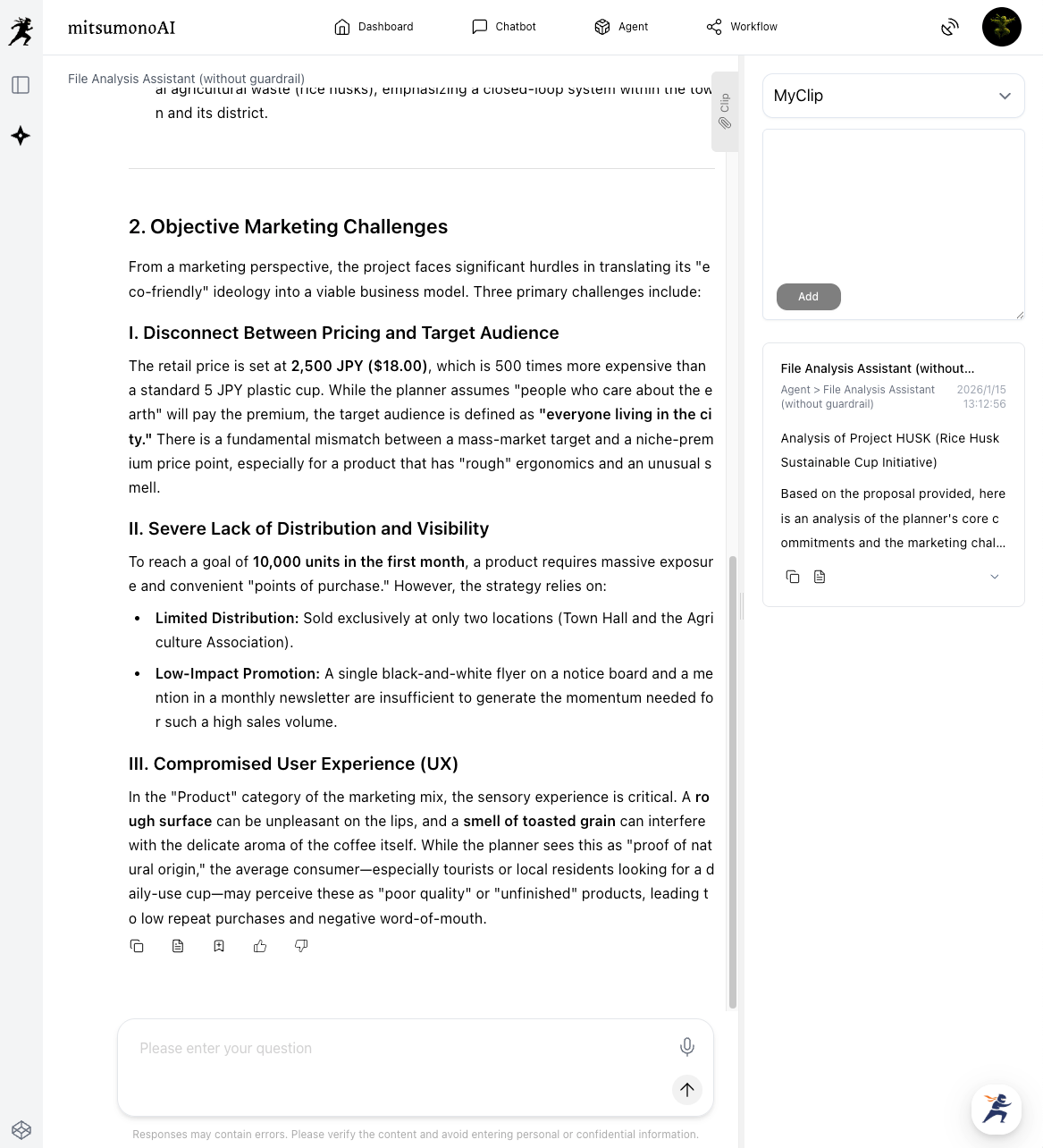
Save the points regarding objective concerns to your "Clips" to use in the next step.
Step 2: [Product/Menu Development Planner] Developing a new project concept
Next, use the "Product/Menu Development Planner" to brainstorm a new product based on the planner's core commitment (e.g., using 100% local organic vegetables).
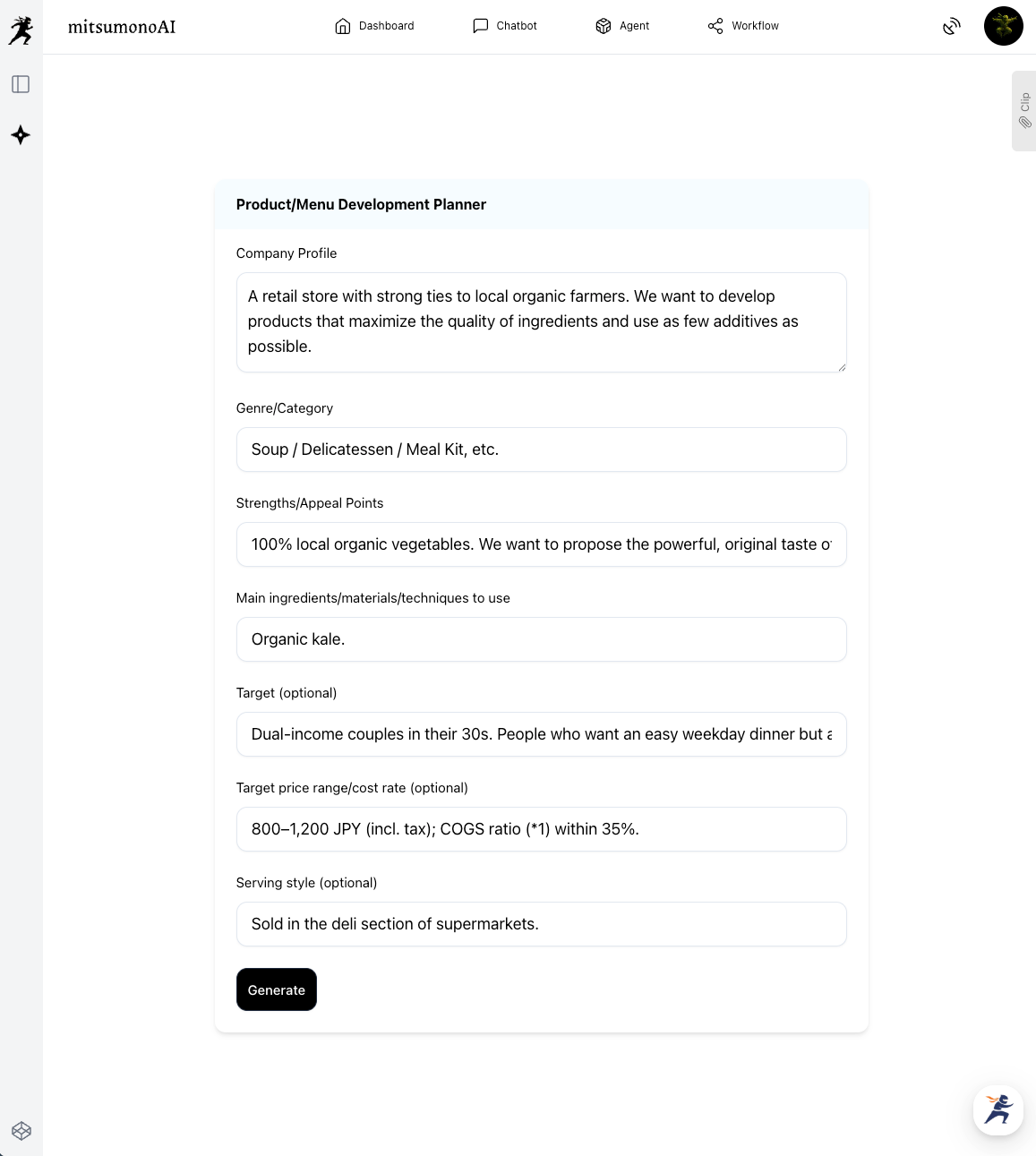
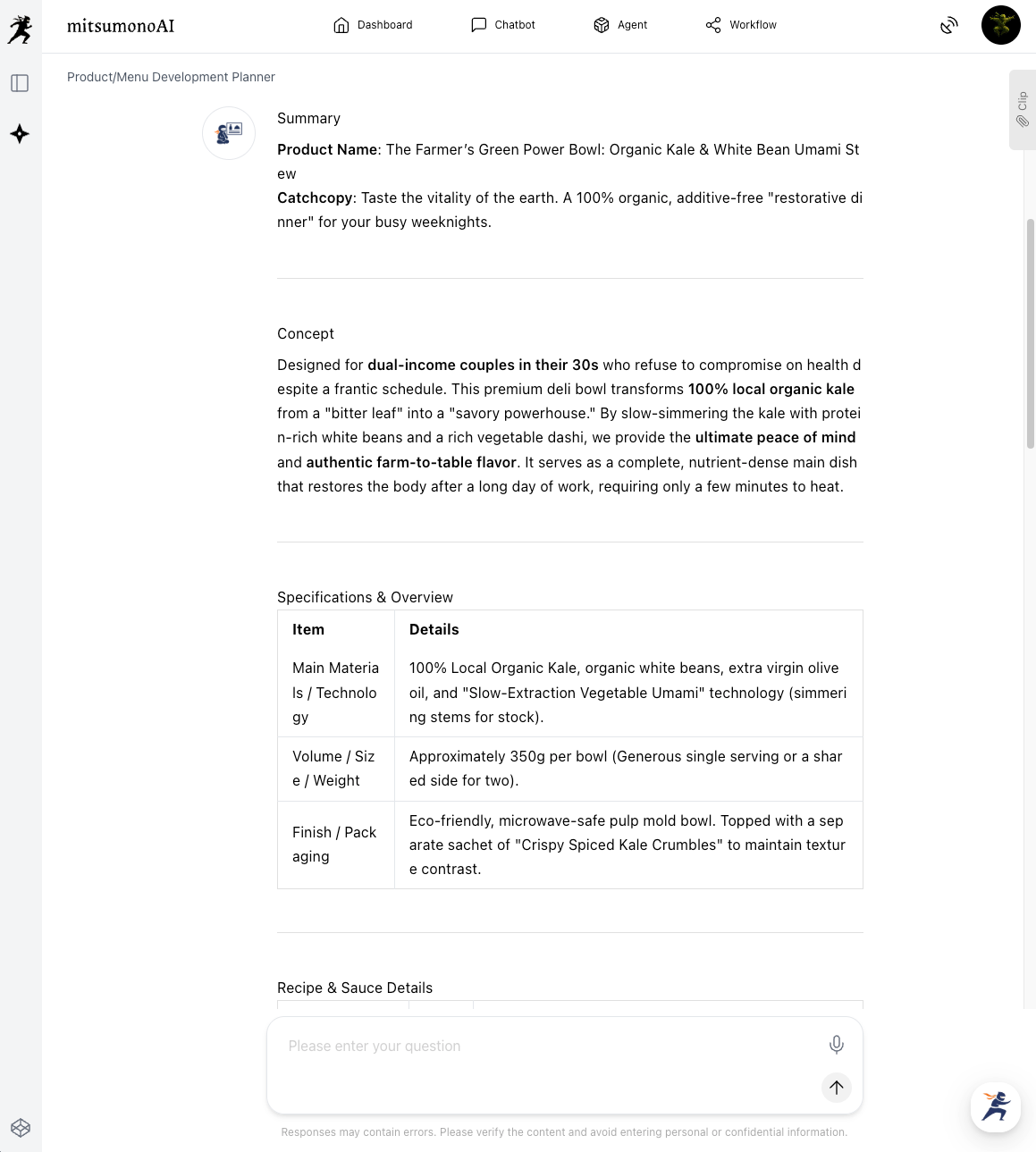
Step 3: Telling AI about "past failures" to increase the probability of success
Once the project takes shape through dialogue, instruct the AI to provide improvements that avoid the "past failure."
"A dressing using these same materials failed in the past. The failure factors were as follows:
(Paste the analysis results from Step 1)
Please propose a final concept draft that includes risk-mitigation improvements to ensure this project does not repeat those mistakes."
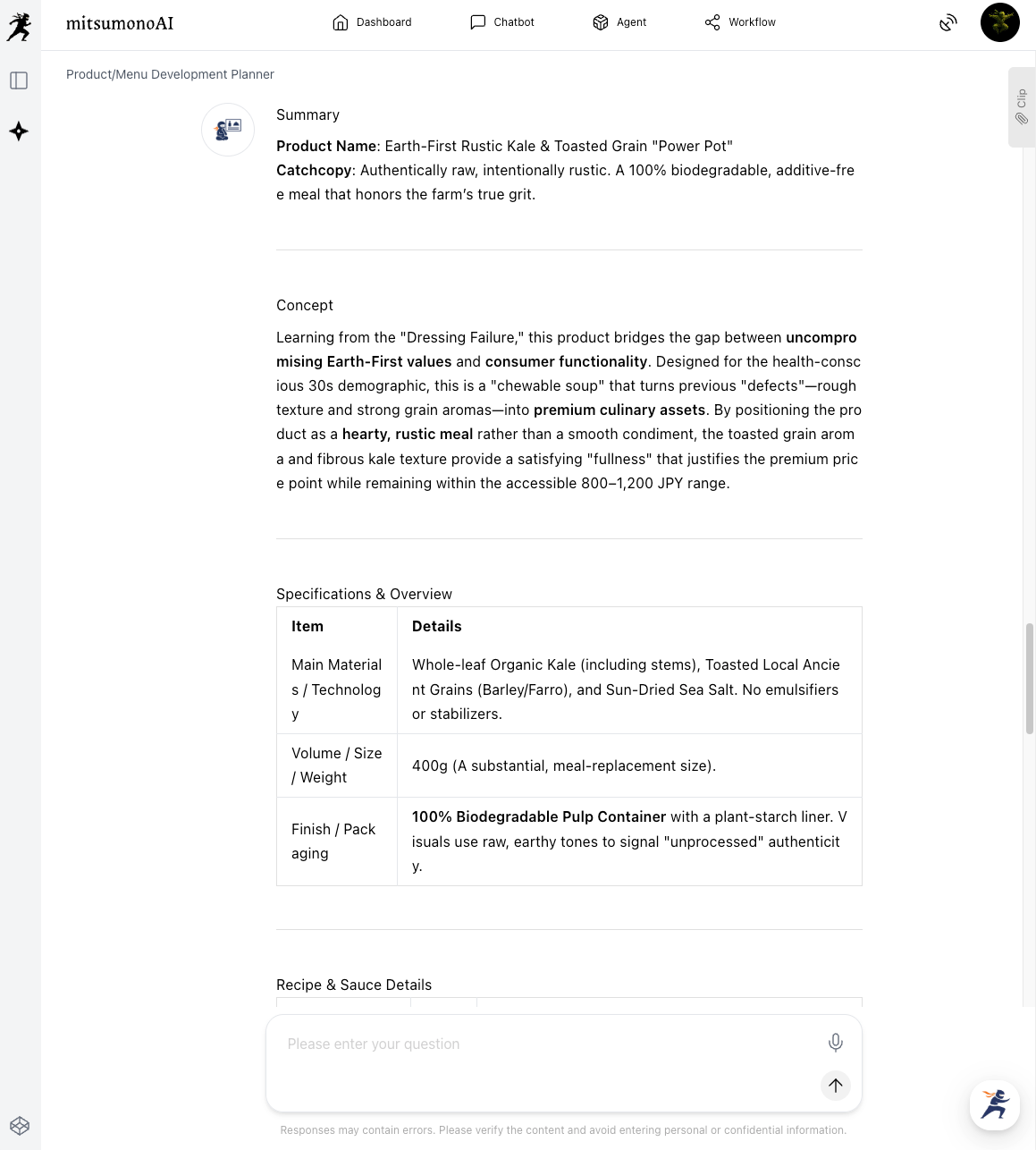
By doing this, the AI corrects the course of the new project with a focus on "how to move closer to success." You end up with a high-probability project that satisfies both the planner's passion and the market's perspective.
✅ Project Completion Checklist
Confirm with the AI whether the revival project is truly valuable.
- Is the failure being utilized?
Does the new project clearly overcome past failure factors (target, price, appeal, etc.)? - Is the passion being carried over?
Does the planner’s "commitment" or "vision" live on as the core of the new project, even if the form has changed? - Is there an objective perspective?
Has the new project avoided falling back into the creator’s "wishful thinking"? Is it based on data and analysis? - Is the customer image clear?
Can you vividly imagine customers who would actually feel "I want this!"? - Is it a positive challenge?
Has the team overcome past failure and reached a point where they feel, "This is going to work!"?
Summary: Failure is the Best Learning Data
Shelved proposals are never a waste. They are unique learning data that your competitors simply do not have.
By learning from those failures with AI as an objective partner and shining a new light on past passions, failure becomes the mother of success.
Why not open those drawers and revisit those proposals once more?
Check out other ways to use mitsumonoAI
mitsumonoAI can be used not only for product planning, but also to solve a variety of business challenges, improve operational efficiency, and create new value.
Other use cases and the latest information can be found on the following website.