Creating Exquisite Allergy-Friendly Menus : Beyond "Restricted Diets" with AI
Stop settling for lackluster allergy-friendly meals. Learn how to use AI to transform restricted diets into luxurious, inclusive culinary experiences that guests will actually prefer.

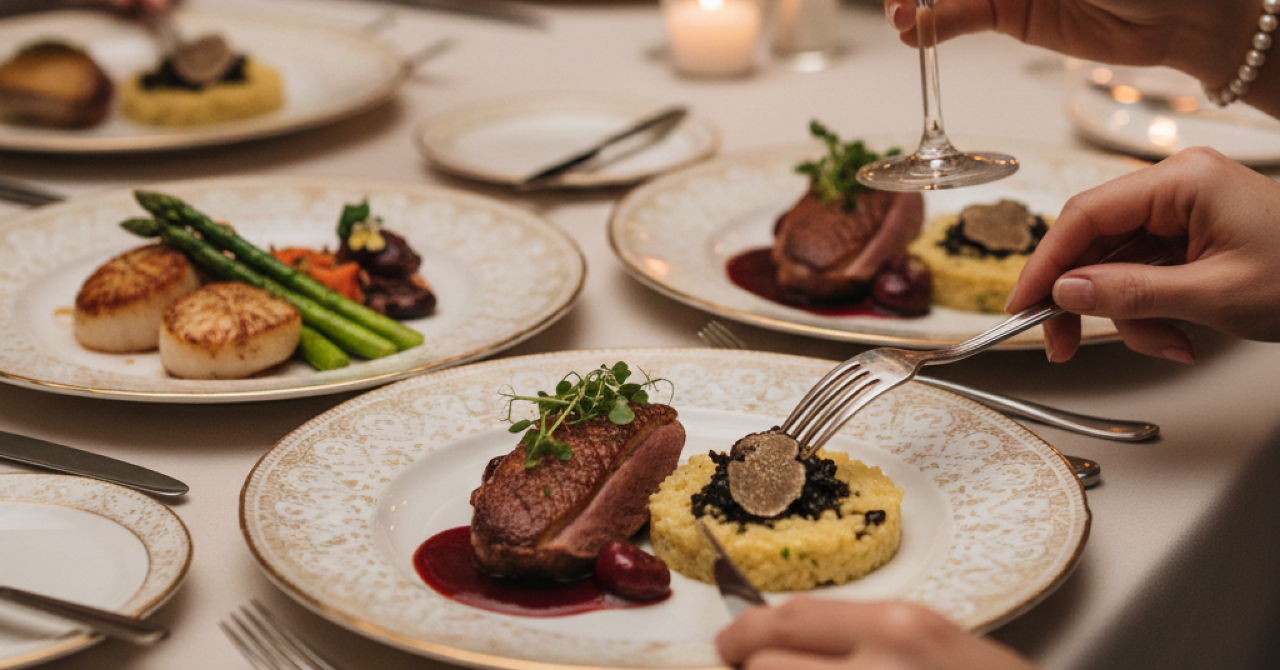
Elevating the Quality of Allergy-Inclusive Dining: AI-Powered Recipe Innovation with Alternative Ingredients
This guide explores how to overcome common pitfalls in allergy-conscious cooking—such as the decline in quality caused by "subtracting" ingredients and the lack of R&D resources. By utilizing AI as a strategic partner for ingredient substitution and recipe generation, you can transform dietary restrictions into high-satisfaction dining experiences for every guest.
Recommended for professionals facing these challenges:
- Menu Disparity: Struggling with lower customer satisfaction because allergy-friendly options feel inferior compared to standard menu items.
- Resource Shortages: Lacking the time or expertise required for complex recipe development using alternative ingredients.
- Creative Stagnation: Seeking to move beyond the mindset of simple "removal" to find innovative cooking methods that turn constraints into added value.
- Operational Balance: Aiming to implement inclusive meal services while minimizing the operational burden on kitchen staff.
Implementation | Step-by-Step Guide
Here, we simulate a case where a wedding venue develops a luxurious alternative menu for a friend of the bride and groom who has egg and dairy allergies, equivalent to the main dish "Lobster Gratin."
Step 1: Define the Goal of Turning Constraints into "Ultimate Hospitality"
First, clearly communicate the "constraints" and the "target goal (luxury)" to the AI.
[Preparation/Execution]
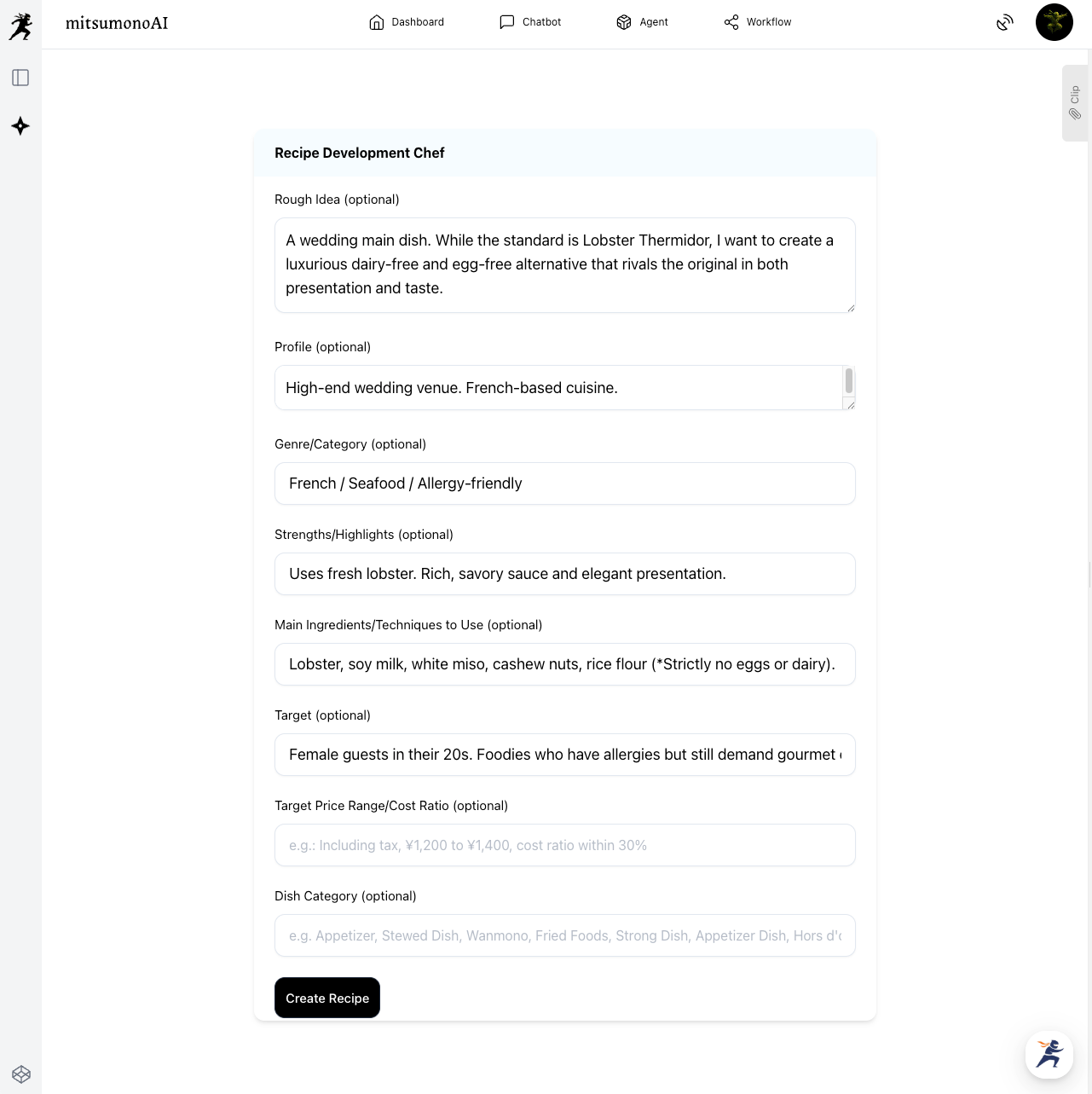
Launch the Recipe Development Chef and input the requirements.
Step 2: Construct "High-Value Alternatives" Equal to Standard Menus
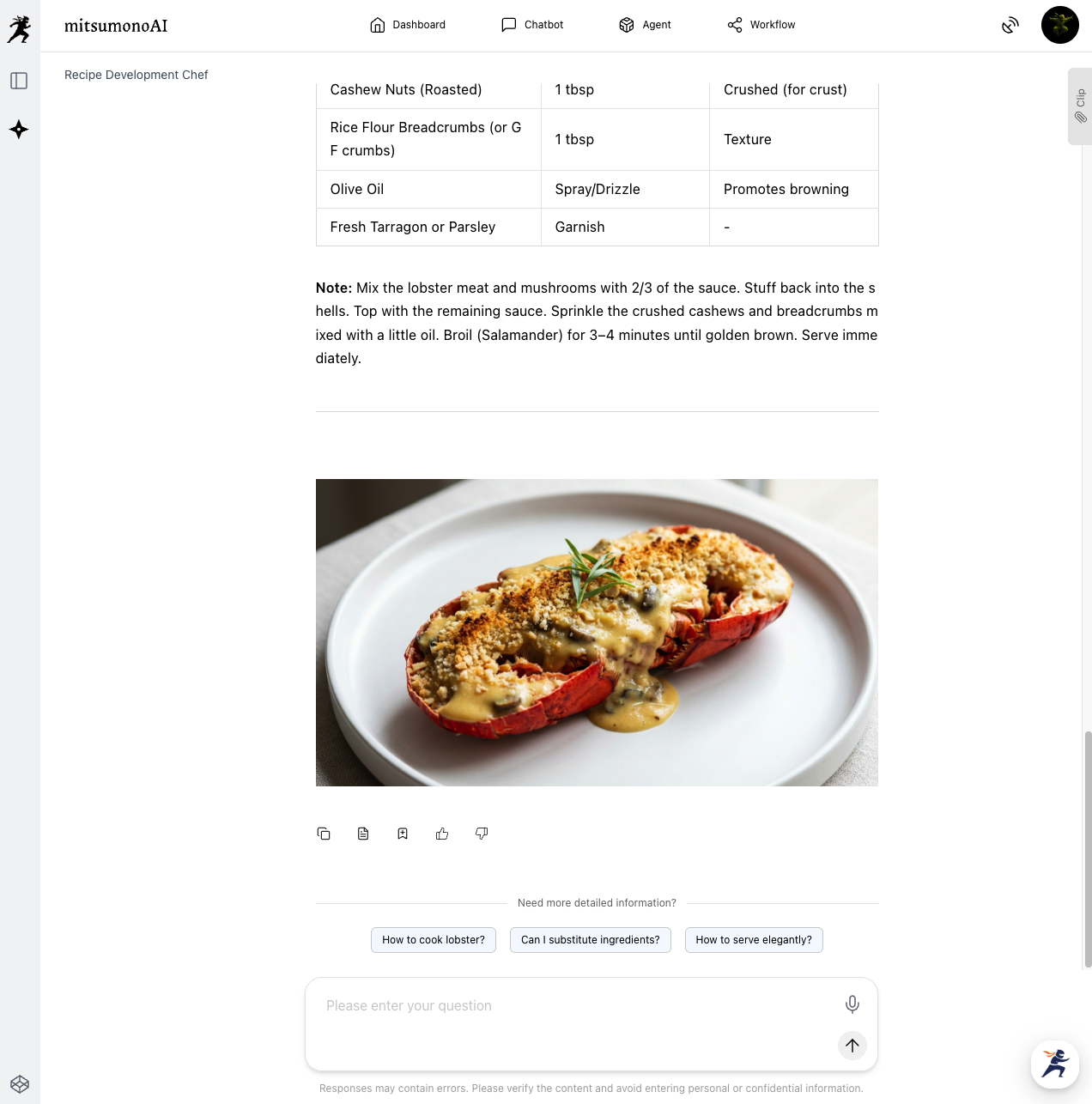
Review the alternative ideas and recipes proposed by the AI. [Preparation/Execution] The AI suggests techniques to create richness using the fats from "soy milk" or "nuts" instead of dairy products.
A proposal has emerged at a level where it will not look inferior even when served alongside the standard menu.
Step 3: Balance On-site Operations with "Guest Delight"
Refine the plating and service methods to make them reproducible on-site.
[Preparation/Execution]
Refer to the "plating design" suggested by the AI in addition to the recipe. In the AI's image, the lobster head was included, but the feedback from the kitchen was that this would be difficult to execute. Therefore, we ask for an alternative plating method.
"Regarding the plating, we cannot include the lobster head. Please change to a plating style that expresses luxury and glamour even without the head."
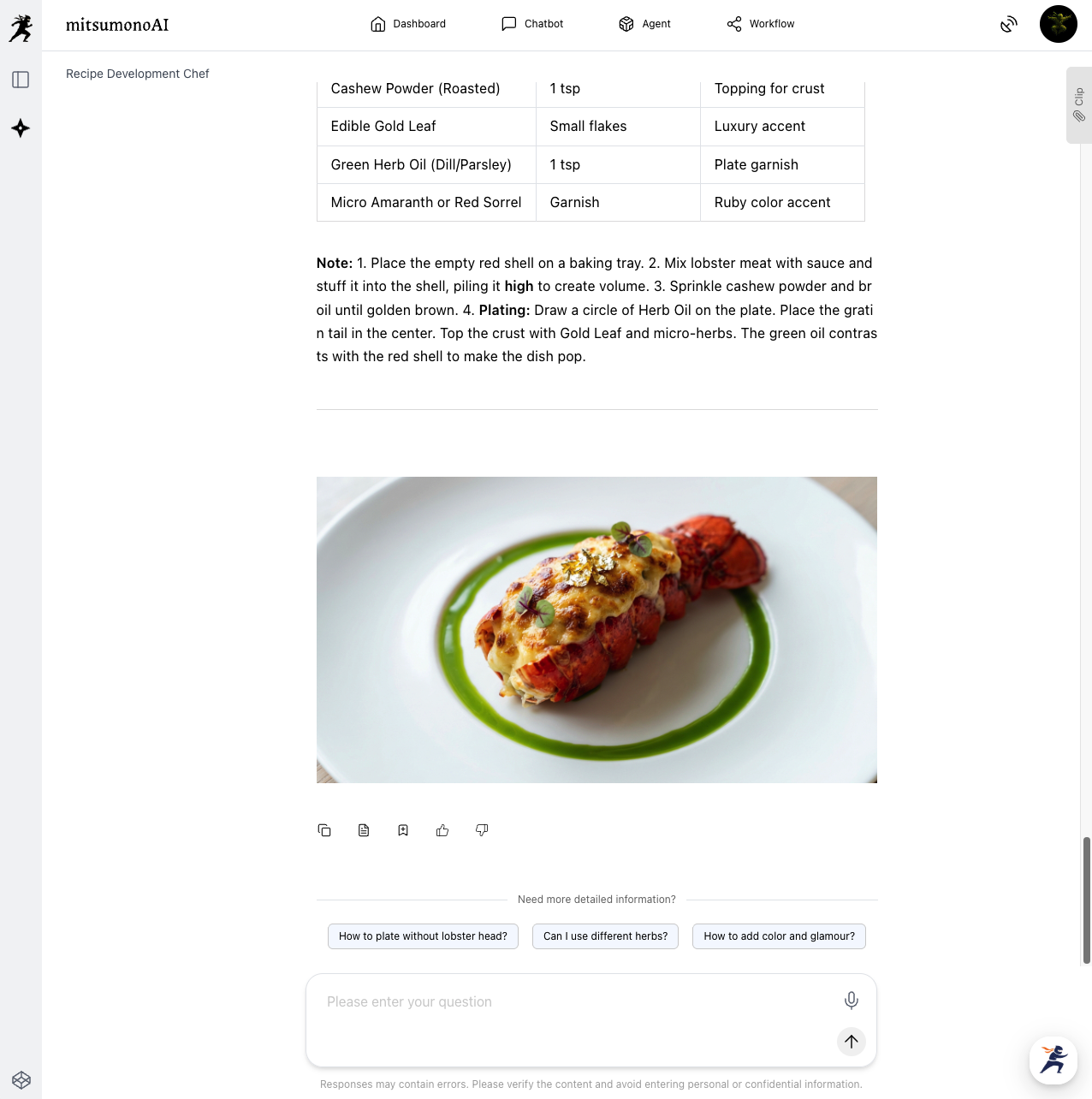
As a result, a dish is completed that is feasible for the staff and makes guests with allergies exclaim "Wow!" just like those around them.
Applications and Expansion (From Kids' Menus to Vegan)
This method of "turning limitations into value" can be widely applied beyond allergy support.
- Development of Low-Allergen Kids' Plates: Create hamburgers or pasta that children love, even without eggs, wheat, or dairy, balancing parental peace of mind with child satisfaction.
- Vegan Wedding Proposals: Develop full-course meals without meat or fish to market as "Vegan Wedding Plans" for inbound tourists or environmentally conscious couples.
- Enhancing Gluten-Free Sweets: Develop moist rice flour cakes or terrines without wheat flour to serve as highlights of a dessert buffet.
Summary
In this article, we introduced recipe development techniques that use AI to sublimate "restricted diets" into "luxurious gourmet cuisine."
- Use the Recipe Development Chef to derive the "logic for reproducing richness and umami" using alternative ingredients.
- Design a satisfaction level equivalent to standard menus without compromising on visual luxury.
- Shift the guest's perceived value from "having to eat it" to "wanting to eat this."
Dietary restrictions are no longer a handicap. They are an opportunity to discover new deliciousness. With a reliable sous-chef like AI, let’s create dishes full of kindness and surprise that all guests can truly enjoy.
mitsumonoAI is equipped with numerous functions to support DX in the hospitality industry, such as data analysis to reduce the risk of managing allergy information and creating considerate invitation texts for guests, in addition to recipe development.
For more use cases and the latest information, please visit the mitsumonoAI blog site.
mitsumonoAI - Idea, Usecase, Update Delivering ideas, applications, and the latest updates.