Scaling Local Reviews to Destination-Wide Insights: How AI Empowers DMOs to Visualize Regional Challenges
mitsumonoAI’s "Review Analysis Assistant" aggregates multi-site reviews to identify regional bottlenecks. It enables data-driven action, linking local efforts to higher brand value for the entire area.


Why Individual Success Doesn’t Always Boost Destination Value
Even when individual hotels or museums work tirelessly to improve, why does the overall satisfaction of a city or region often stagnate? For many DMOs and local governments, the answer lies in "Information Silos."
- Fragmented Data: Managers only see reviews for their own facilities. There is no mechanism to analyze cross-sectional data across the entire region.
- The Flaws of Traditional Surveys: Paper-based surveys are costly, time-consuming, and often suffer from "responder bias," failing to capture the raw, honest sentiments found online.
- Subjective Decision-Making: Improvements are often based on anecdotal evidence or the loudest voices, rather than the collective pain points of the majority.
When individual efforts aren't synchronized, regional bottlenecks—such as poor transit connectivity or a lack of dining options—remain unresolved, damaging the overall Destination Brand.
Translating "Micro Voices" into "Macro Strategy" with AI
The "Review Analysis Assistant" by mitsumonoAI bridges the gap between micro-level feedback and macro-level trends, providing DMOs with the evidence needed for a powerful tourism strategy.
- Seamless Aggregation: Input URLs from major platforms like TripAdvisor, Google Maps, or Booking.com. AI automatically gathers and integrates vast amounts of unstructured data.
- AI-Driven Sentiment Clustering: The AI automatically groups common complaints and praises—such as "connectivity," "multilingual support," or "night-time economy"—across multiple facilities.
- Objective Prioritization: Through an AI-guided dialogue, you can rank regional challenges by severity, facilitating faster consensus among stakeholders.
This shifts the focus from "guesswork" to Evidence-Based Policy Making (EBPM).
Here is how a DMO can use the "Review Analysis Assistant" to turn scattered reviews into actionable regional insights.
Step 1: List Your Key Assets
Identify the primary attractions, parks, and landmarks within your area. Collect the URLs of their review pages.
Step 2: Primary Analysis (Understanding Individual Strengths)
Input the collected URLs into the "Review Analysis Assistant." The AI will perform an initial scan to identify the unique strengths and weaknesses of each facility.
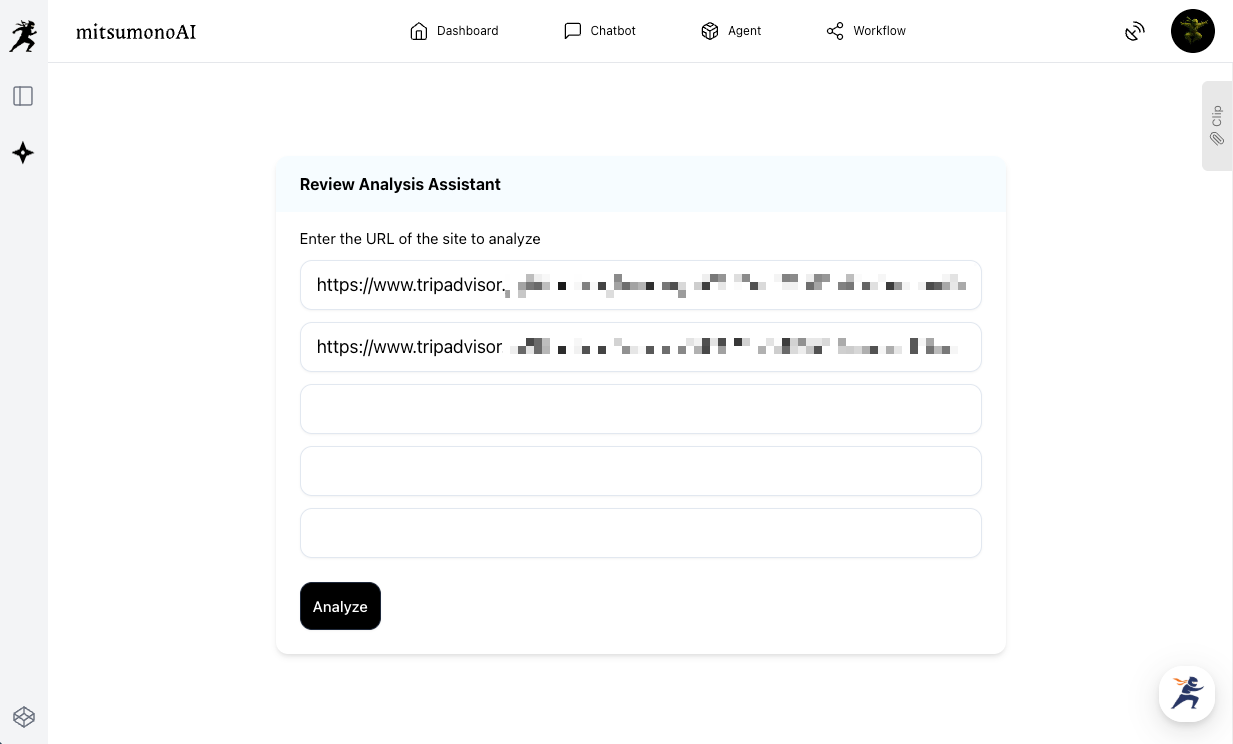
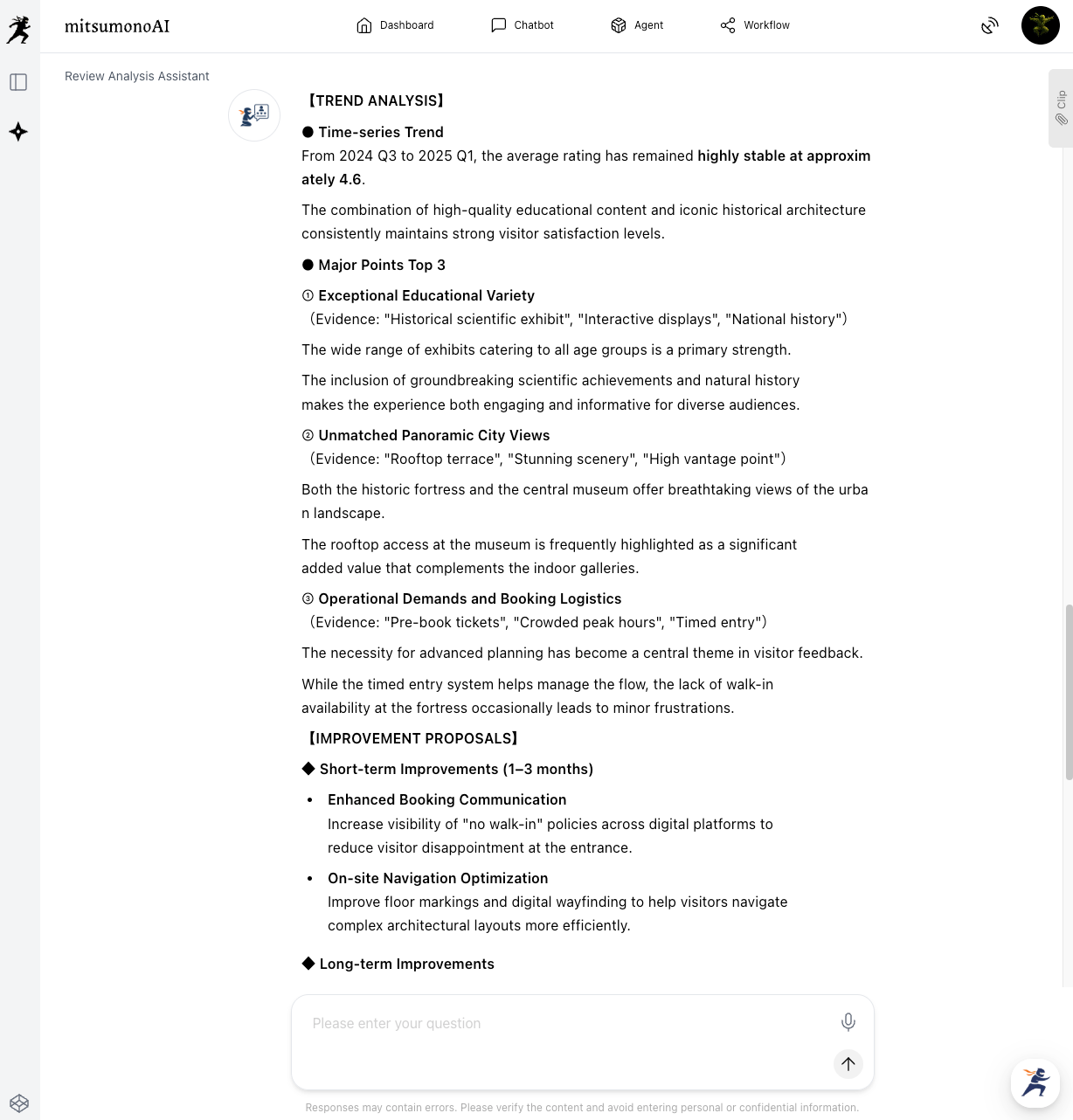
This provides the necessary context before looking at the region as a whole.
Step 3: Integrated Macro Analysis (Ranking Regional Issues)
Now, instruct the AI to perform a cross-sectional analysis to uncover common bottlenecks.
Prompt Example:
"Analyze the reviews from these facilities and identify the top 5 'Destination-Wide Challenges' that we should prioritize. Provide a summary of the evidence for each ranking."
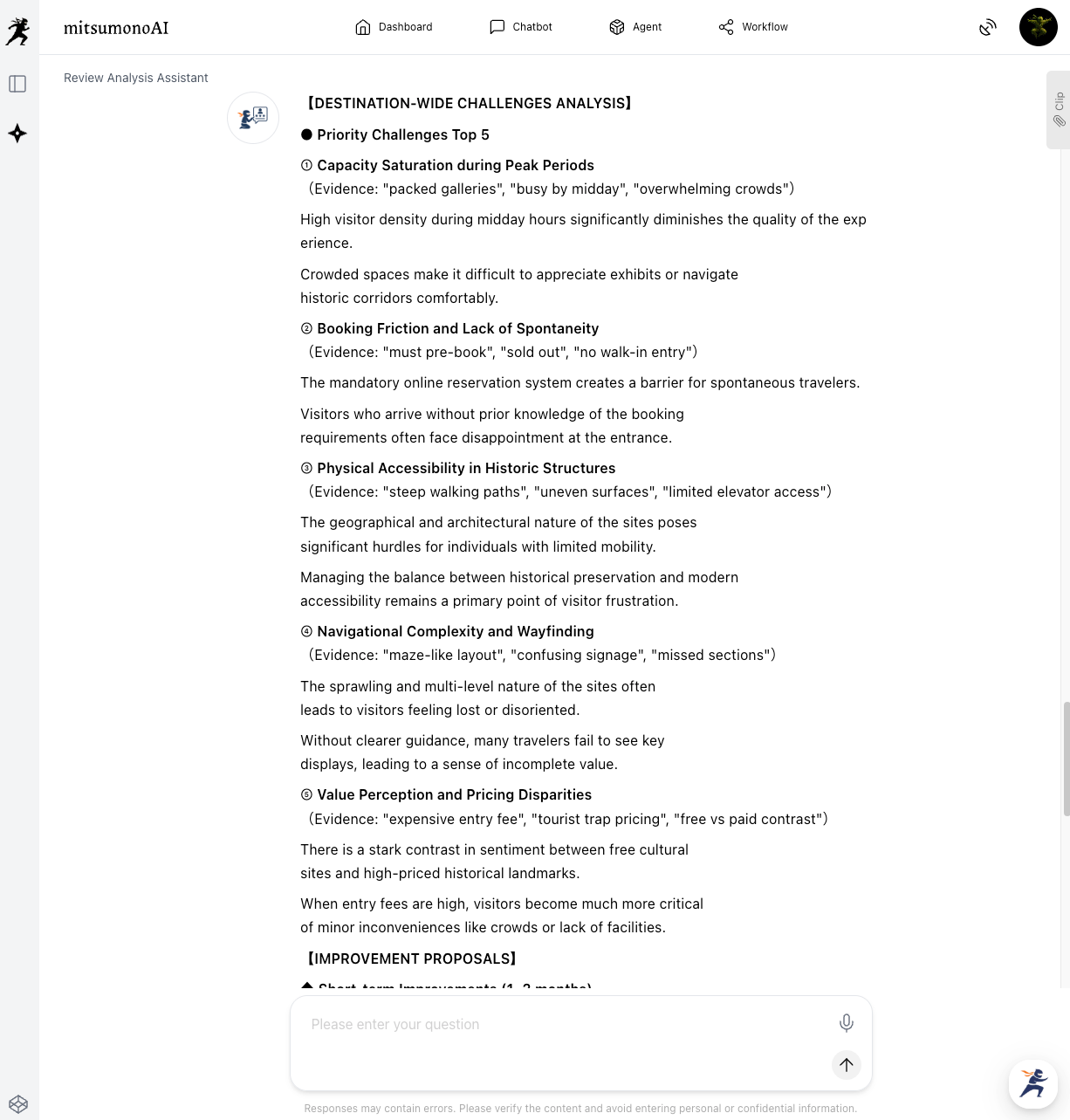
The AI might reveal issues that individual facilities cannot solve alone, such as:
- “Lack of evening dining options causing tourists to leave the city early.”
- “Inconsistent signage between transit hubs and major attractions.”
Step 4: Co-Creating Solutions with AI
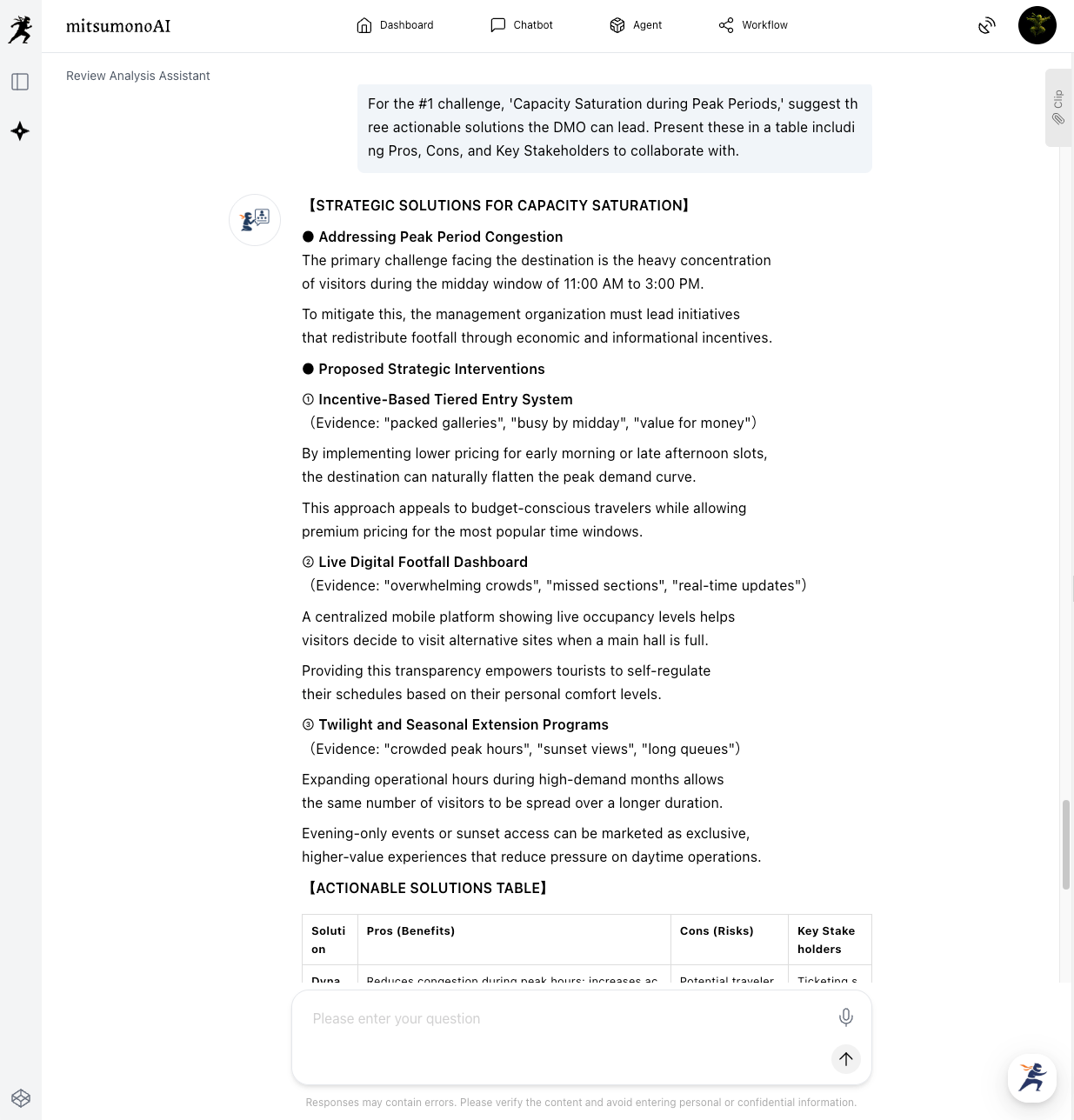
Once the top priority is identified, use the AI as a consultant to brainstorm specific interventions.
Prompt Example:
"For the #1 challenge, 'Lack of Connectivity,' suggest three actionable solutions the DMO can lead. Present these in a table including Pros, Cons, and Key Stakeholders to collaborate with."
From "Crisis Management" to "Destination Value Creation"
This AI-driven approach goes beyond just fixing problems; it uncovers the Unique Selling Proposition (USP) of your region.
- Targeted Persona Insights: Ask the AI, "Filter reviews from 'Solo Travelers' and identify what triggers the highest satisfaction." This allows for hyper-targeted marketing campaigns.
- Competitive Benchmarking: Analyze a rival destination’s reviews and ask, "What does our region offer that [Competitor Region] lacks?" This helps redefine your destination's unique value in the global market.
- Budget Optimization: Use AI-generated rankings as objective evidence for budget allocation. It becomes much easier to explain to taxpayers and board members why a specific project is being funded.
Conclusion: Turning Local Data into a Global Compass
By connecting the "dots" (individual facilities) into a "plane" (the region), mitsumonoAI clarifies the path forward for sustainable tourism development.
AI-driven social listening isn't just about reading reviews; it’s about listening to the heartbeat of your destination. Start using data to turn the voices of your visitors into a compass for your region's future.
The "Review Analysis Assistant" can be used not only for the issue analysis introduced here, but also for service improvements and promotional measures based on customer feedback.
We also introduce other specific use cases, so please take a look at our official blog.