A Guide to Reviewing Your "Product Lineup" Through Dialogue with Personas
Learn how to effectively revamp your product lineup by capturing the needs of your target audience through realistic dialogues with AI-generated "personas." This guide explains the specific steps to translate these insights into better sales.

Tools to Use
- Persona Creation Assistant
Solving Product Lineup Issues with "Personas"
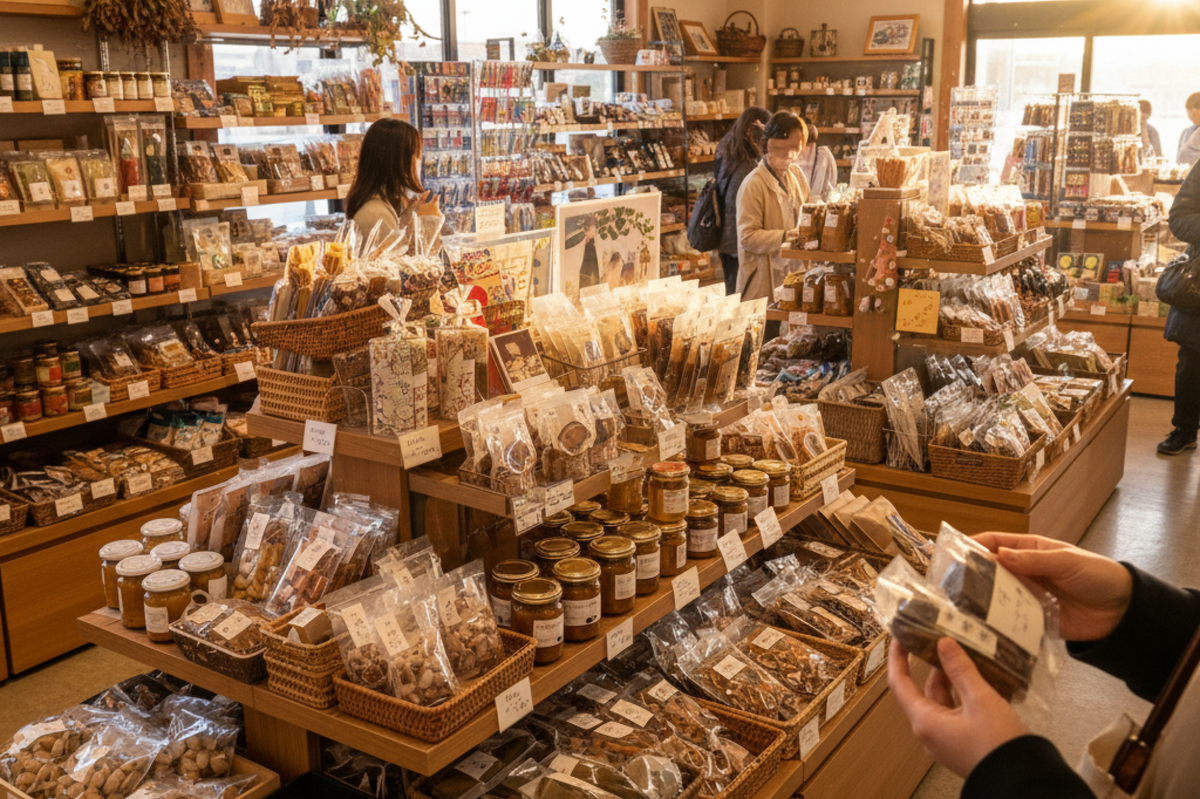
Retailers, souvenir shops, and roadside stations (Michi-no-Eki) often face a common hurdle: sticking with the same product lineup for too long makes it difficult to attract new demographics.
Even rearranging displays or swapping items may not lead to better sales if the core strategy is outdated. To improve this, customer analysis using "personas" is highly effective. By creating a "vivid profile of a customer," you can see what guests are truly looking for.
In this article, using a fictional "Roadside Station" as an example, we will introduce specific methods to revamp a product lineup that resonates with younger generations.
Specific Steps
Step 1: Register the Mission for the Product Lineup Review Project
▶︎ Mission Registration
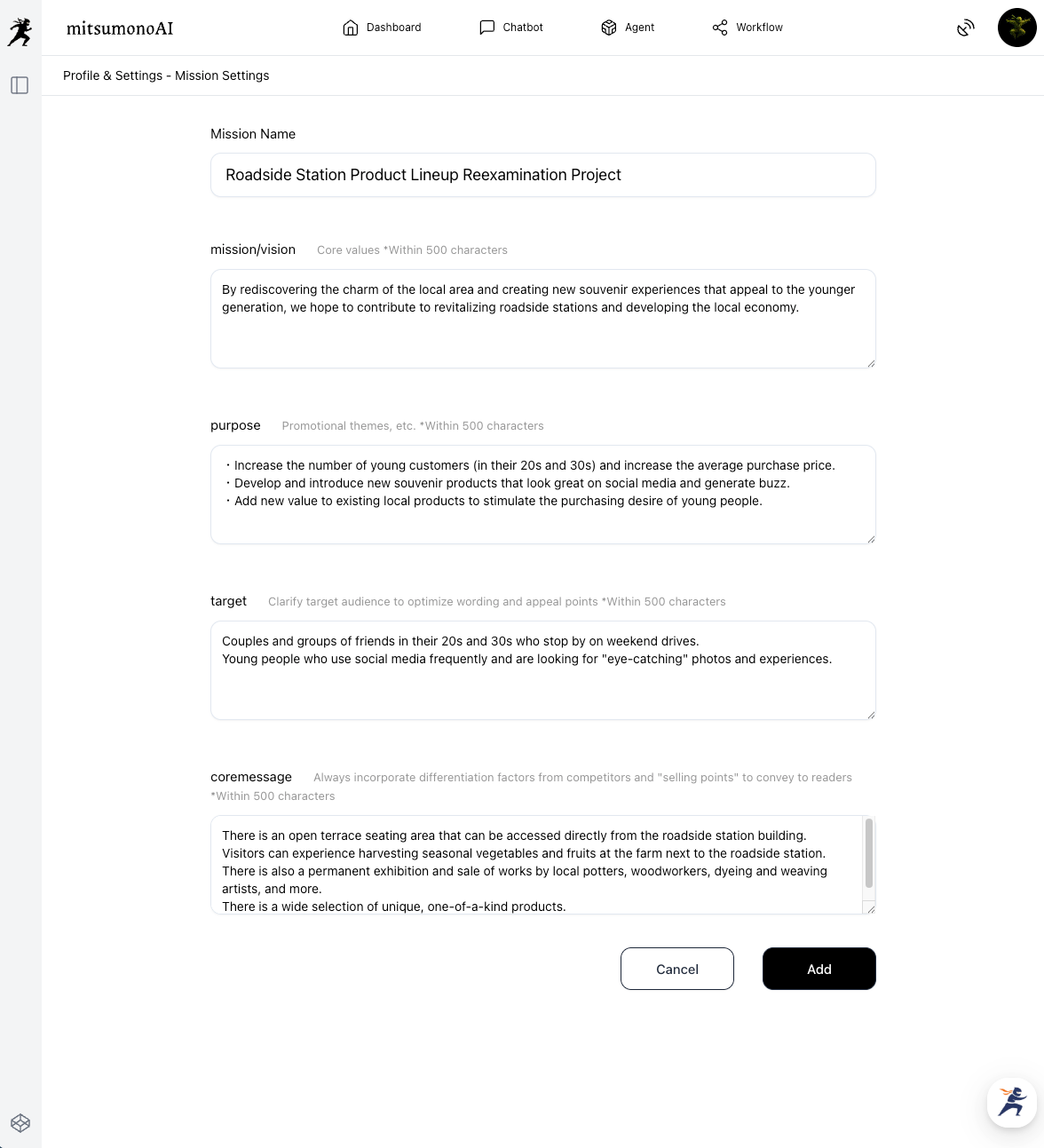
Register the background and goals of your souvenir shop’s product review project as a "Mission."
Step 2: Create Personas and Deep Dive into Youth Needs
▶︎ Persona Creation Assistant
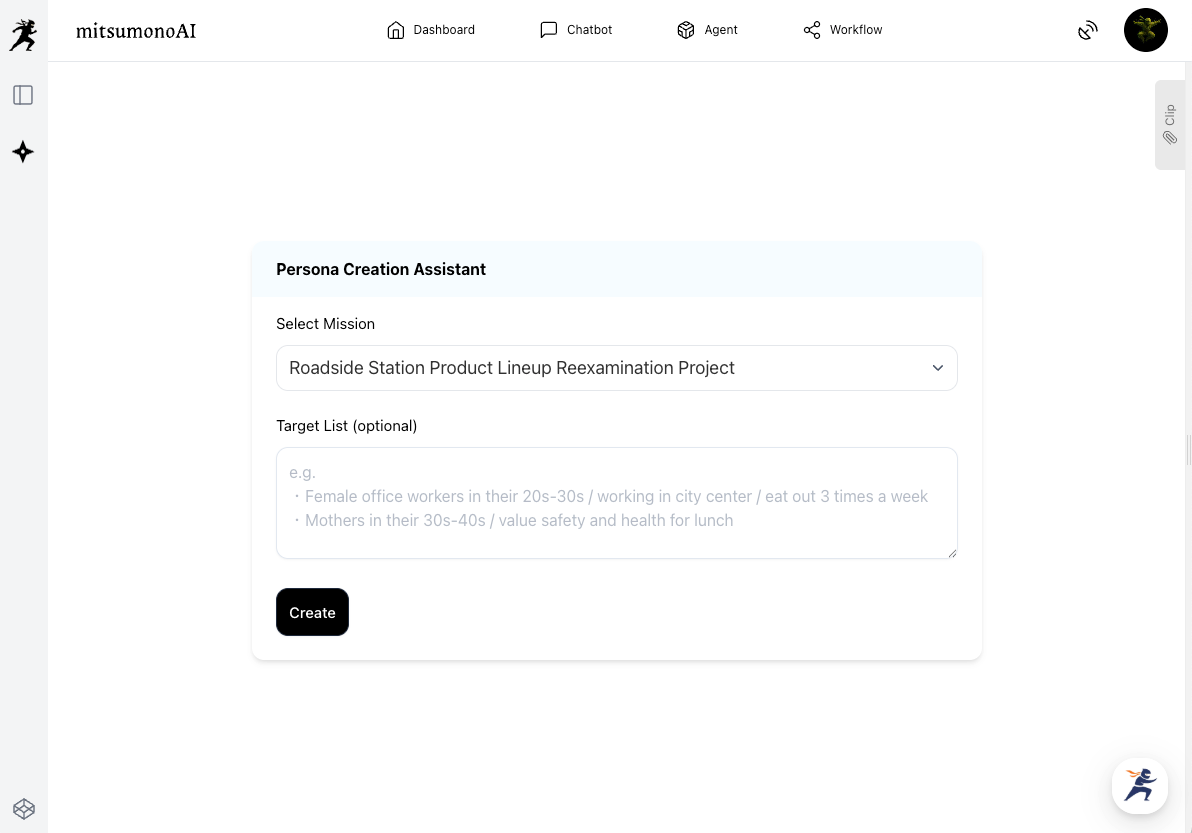
Based on the mission registered in Step 1, have the "Persona Creation Assistant" generate a list of target personas from the younger demographic. First, select your mission, then click "Create" to output the persona list.
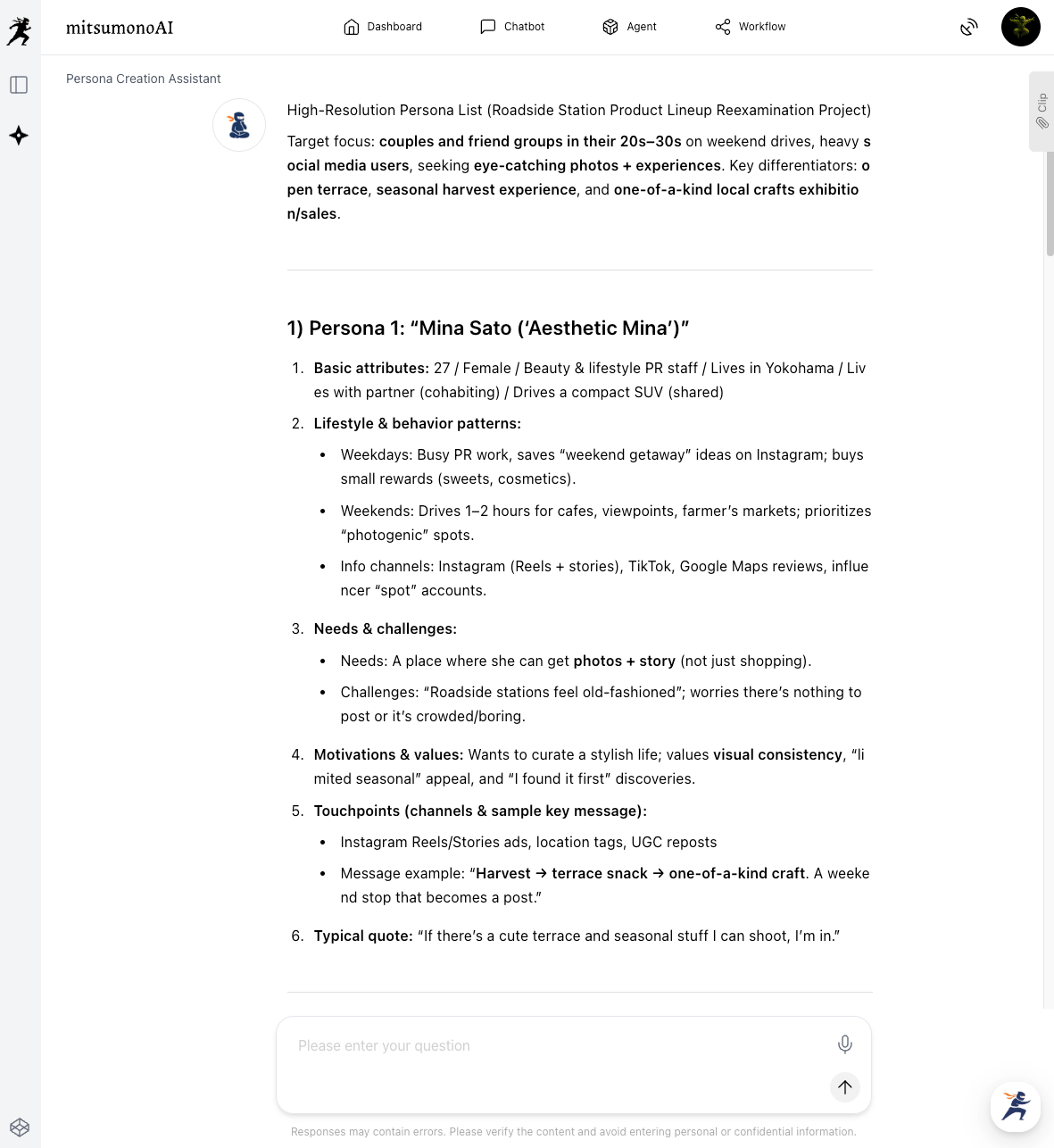
From the multiple persona options presented by the AI, choose a few individuals you wish to target in the future.
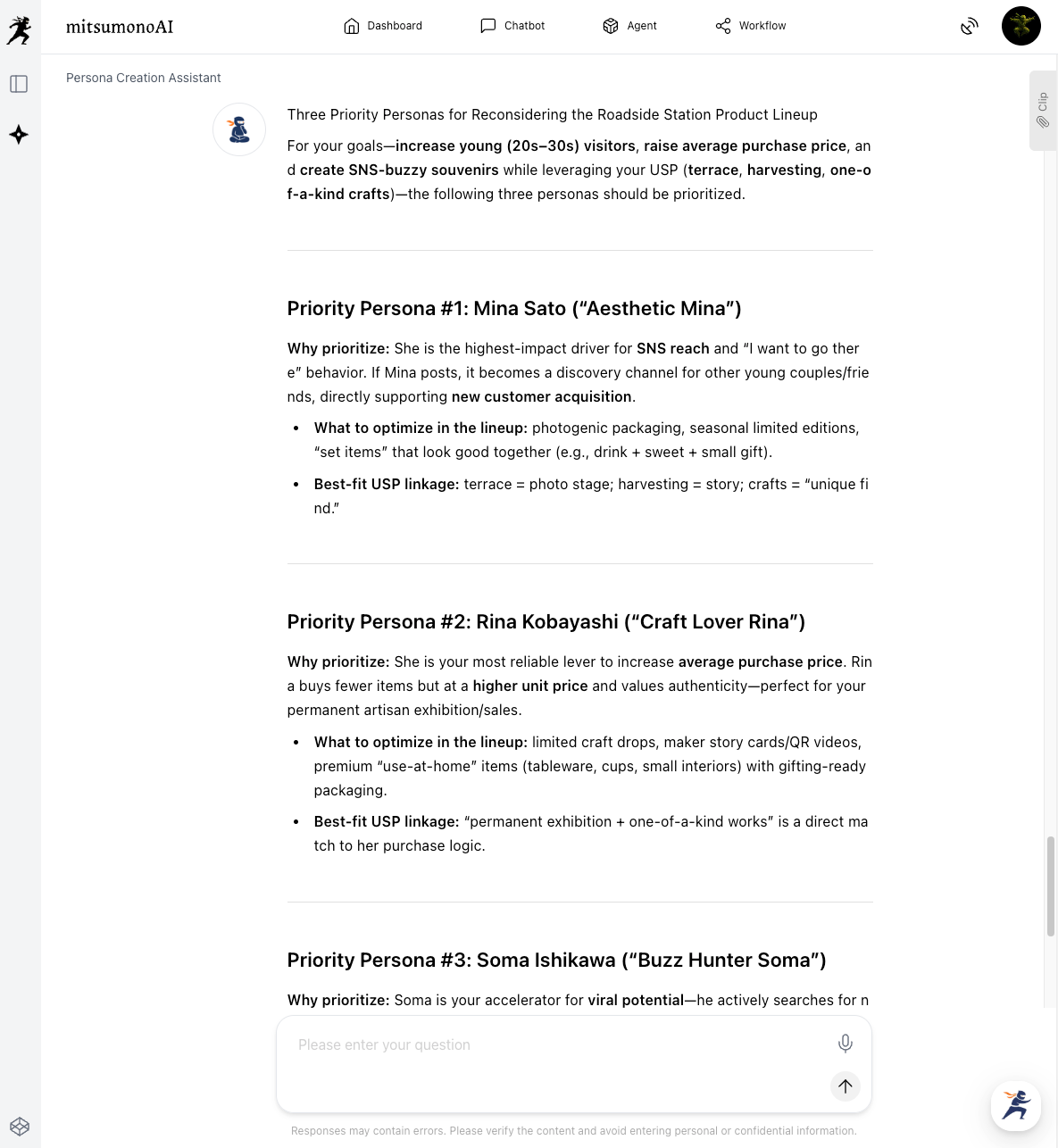
Step 3: Consult the AI for Souvenir Ideas That Delight Your Personas
Ask the selected personas for their honest opinions and impressions.
1.Our current flagship products are locally grown vegetables and fruits, traditional crafts like hand towels and woodwork, and popular sake and sweets from neighboring municipalities.
2.What kind of products make you think, 'I definitely want to buy this!' or 'I want to give this to a friend!' at a rural roadside station?
3.*Add more points as needed."
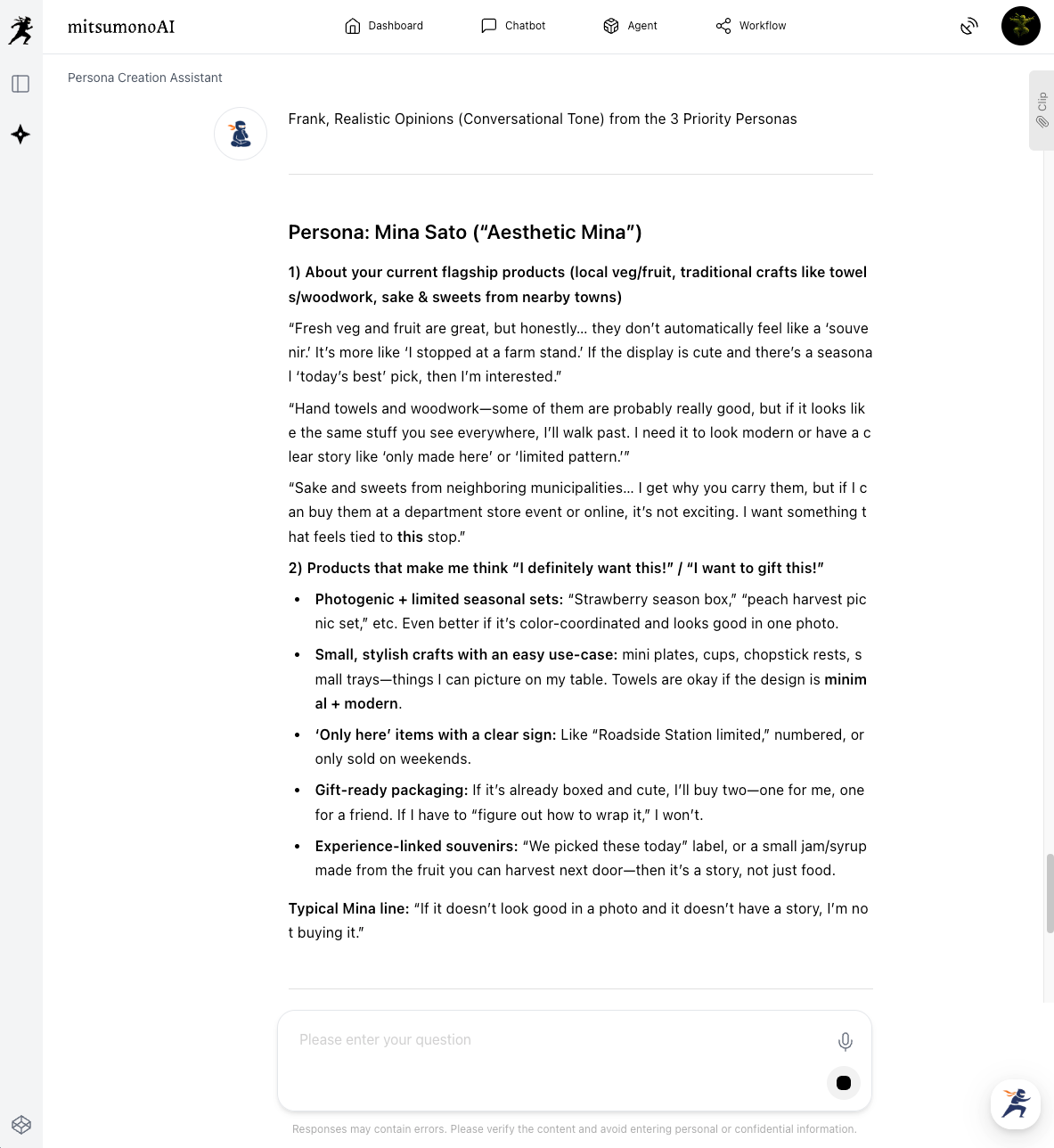
You can also ask follow-up questions. For instance, if the region is famous for plums, you can ask what specific plum products they would want.
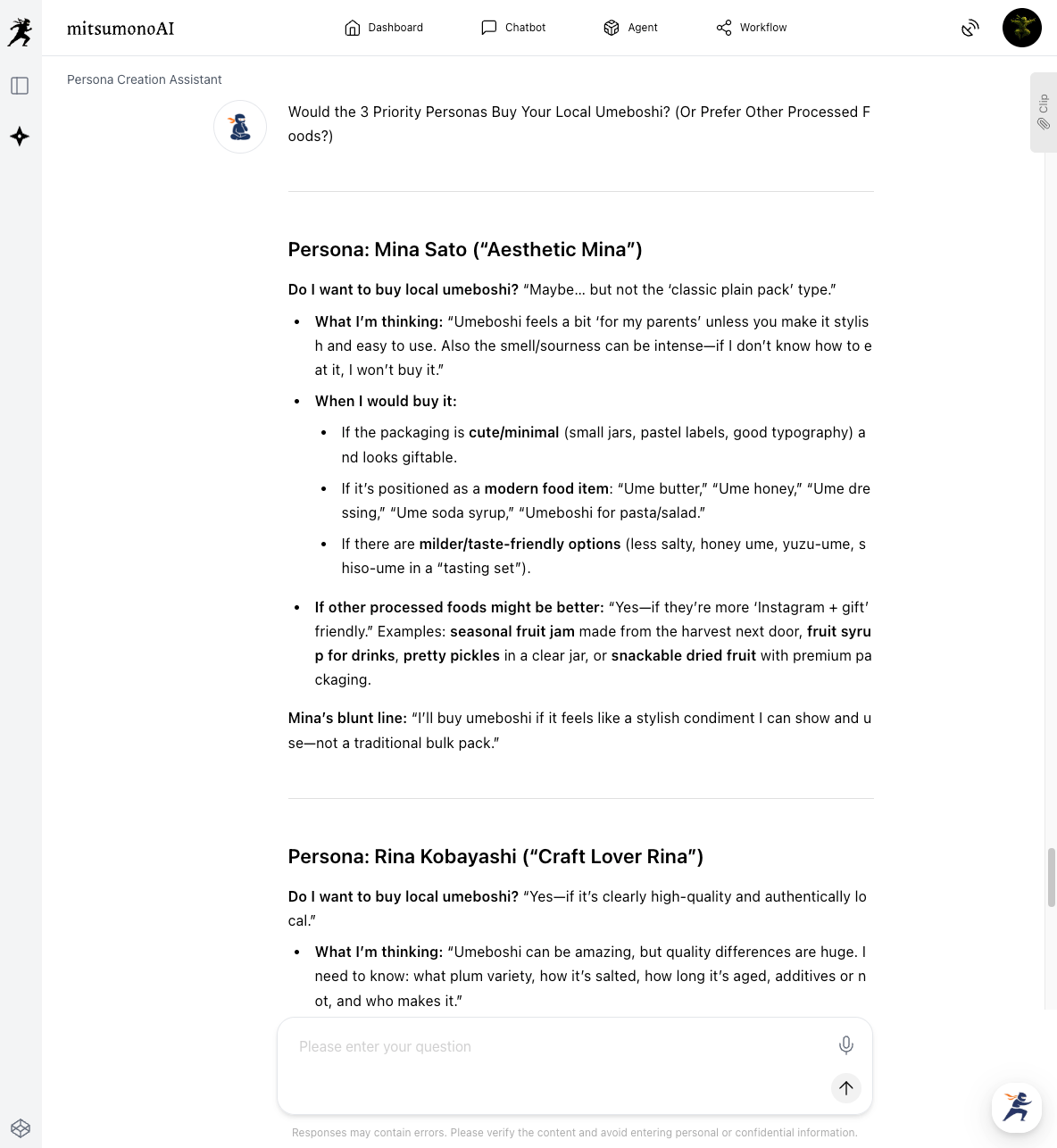
Step 4: Reviewing the Product Lineup
Share the AI-generated persona opinions internally to lead to new inventory stocking, lineup revisions, or product development.
Example Review Procedure:
- Sharing Persona Analysis Results
Share the AI-generated opinions with internal stakeholders—such as the shop manager, sales staff, and product developers—to clarify current issues and the desired direction. - Defining Souvenir Ideas for Younger
Guests Based on persona feedback, decide on specific souvenir concepts, product specifications, package designs, and price ranges. - Executing Product Development and Sourcing
Proceed with developing prototypes for new souvenirs, renewing existing products, or selecting new suppliers. - Revamping Display and Sales Strategies
Refer to persona opinions (e.g., setting up a "Youth Corner" or increasing tasting opportunities) to review how products are displayed and sold in-store. - Formulating Promotion Plans
Strengthen outreach to younger generations through SNS updates, collaborations with influencers, and planning experience-based events.
Expected Results (Examples)
- Realizing a Souvenir Lineup That Matches Youth Needs
AI-driven persona analysis provides specific hints about what younger guests "really want," leading to higher conversion rates. - Expanding Customer Base and Increasing Sales
By developing products that meet the needs of a new younger demographic, you can increase visitor numbers and average spend per customer. - Discovering and Promoting New Local Attractions
Rediscovering local resources from a persona's perspective strengthens the shop’s role as a hub for promoting the region's overall charm.
Target Metrics After 3 Months
KGI (Key Goal Indicator):
- Number of souvenirs purchased by the younger generation (20s–30s): 40% increase compared to the first month.
KPIs (Key Performance Indicators):
- Monthly sales of new/refreshed products based on persona analysis: 100+ units.
- Number of official SNS posts regarding new products: 10+ per month.
- Number of visitors in the younger demographic (20s–30s): 15% increase compared to the same month last year.