Procurement Revolution 2026 : Data-Driven Fair Pricing and the Future of Strategic Sourcing DX
Discover how mitsumonoAI calculates "should-be costs," accelerates onboarding for new staff, and transforms procurement across industries like manufacturing and real estate through specialized Sensei AI agents.


In the procurement landscape of 2026, relying on traditional "experience and intuition" has reached its limit. To maintain a competitive edge, data-driven decision-making powered by AI is no longer optional—it is essential. This article explores the specific benefits of AI integration and the broader vision of Procurement Digital Transformation (DX).
1. Direct Benefits of AI Integration
Preventing Unfair Pricing: Shifting to Data-Driven "Fair Prices"
Traditional negotiations often relied on the individual's memory, "previous prices," or simply accepting the supplier's quote. AI evolves this process into negotiations based on logical "Should-be Cost" analysis.
- Automated "Should-be Cost" Calculation:
AI analyzes CAD drawings to predict processing time and material yields, integrating the latest market prices for raw materials to derive an objective cost. - Anomaly Detection and Alerts:
By cross-referencing vast historical procurement data, the AI automatically flags outliers—such as items priced 15% higher than the average for similar components. - Direct Impact on Profitability:
Improved estimation accuracy has been reported to boost project profit margins significantly (e.g., from 15% to 21%), turning data-driven negotiations into millions in cost savings.
Empowering New Hires: Turning Veteran "Tacit Knowledge" into Shared Assets
Procurement expertise has long been considered a "craft" requiring years to master. The Sensei AI within mitsumonoAI has learned this tribal knowledge, providing powerful support for newer staff members.
- Advice from a Virtual Expert:
Sensei AI provides multifaceted insights from a veteran’s perspective, such as identifying shapes prone to warping during machining or noting tolerance requirements that drive up costs. - Dramatic Reduction in Training Time:
The onboarding period for junior staff, which typically takes six months, can be slashed to approximately two months (a 67% reduction). - Standardization of Judgment:
By following industry-specific checklists provided by the AI, organizations can maintain consistent, high-quality negotiation strategies regardless of an individual's experience level. - Consistency via "Mission Registration":
By registering project goals and targets as a "Mission" beforehand, the AI’s output remains aligned with business objectives, ensuring high-precision proposals for any user.
2. The Big Picture of Procurement DX: Beyond Automated Estimates
AI's role in procurement isn't limited to the "point" solution of cost calculation. Real-world operations involve massive, labor-intensive tasks like organizing expenditure data, supplier evaluation, and global risk management.
According to research by KPMG, over half of procurement tasks can be automated. By handling these pre- and post-estimation processes, AI transforms the procurement department from a "clerical hub" into a "strategic center" directly impacting corporate earnings.
| Feature | Benefit |
|---|---|
| Spend Analysis | Automatically organizes purchasing history. Identifies unnecessary spend and enables cost reduction through price consolidation. |
| Risk Management | Detects disasters, geopolitical shifts, or signs of bankruptcy from news and social media to prevent supply chain disruptions. |
| Supplier Selection | AI scores delivery performance and quality data to recommend the optimal supplier based on objective metrics. |
3. Industry-Specific Scenarios: Solving On-Site Challenges
AI implementation eliminates the risks associated with "siloed expertise" and elevates the performance of the entire organization.
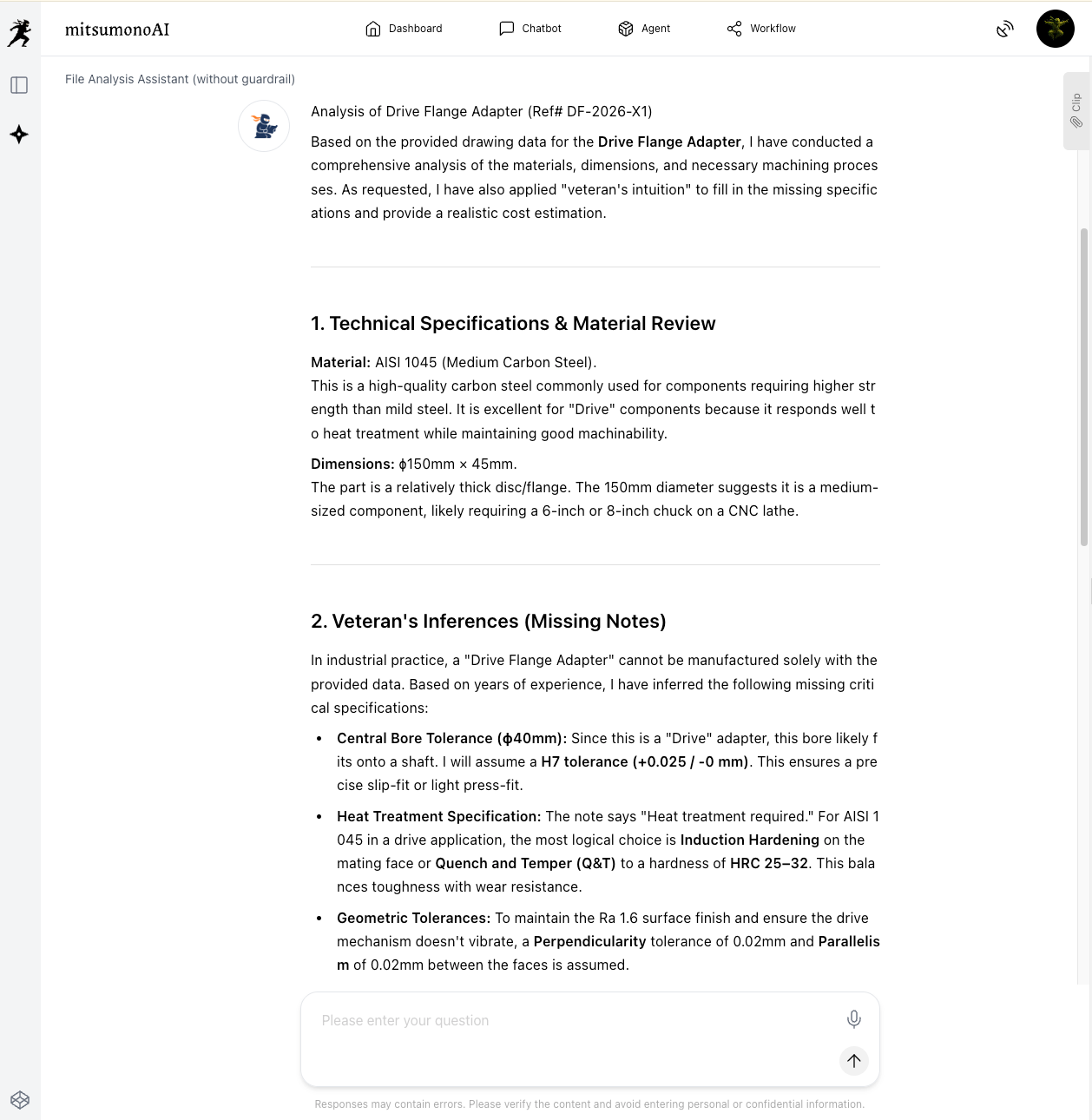
[Manufacturing] Automating Drawing Analysis and Visualizing "Should-be Cost"
Detailed analysis is performed using the File Analysis Assistant to handle technical drawings.
- Use Case: Predicting machining processes and estimating costs from 2D drawings.
- Tool Used: File Analysis Assistant PRO (without guardrail) (Attach drawing PDF)
Analyze the attached 2D drawing to identify material, dimensions, and machining processes.
If notes are missing, infer them from a veteran's perspective and calculate the
estimated "Should-be Cost."
Prompt Example
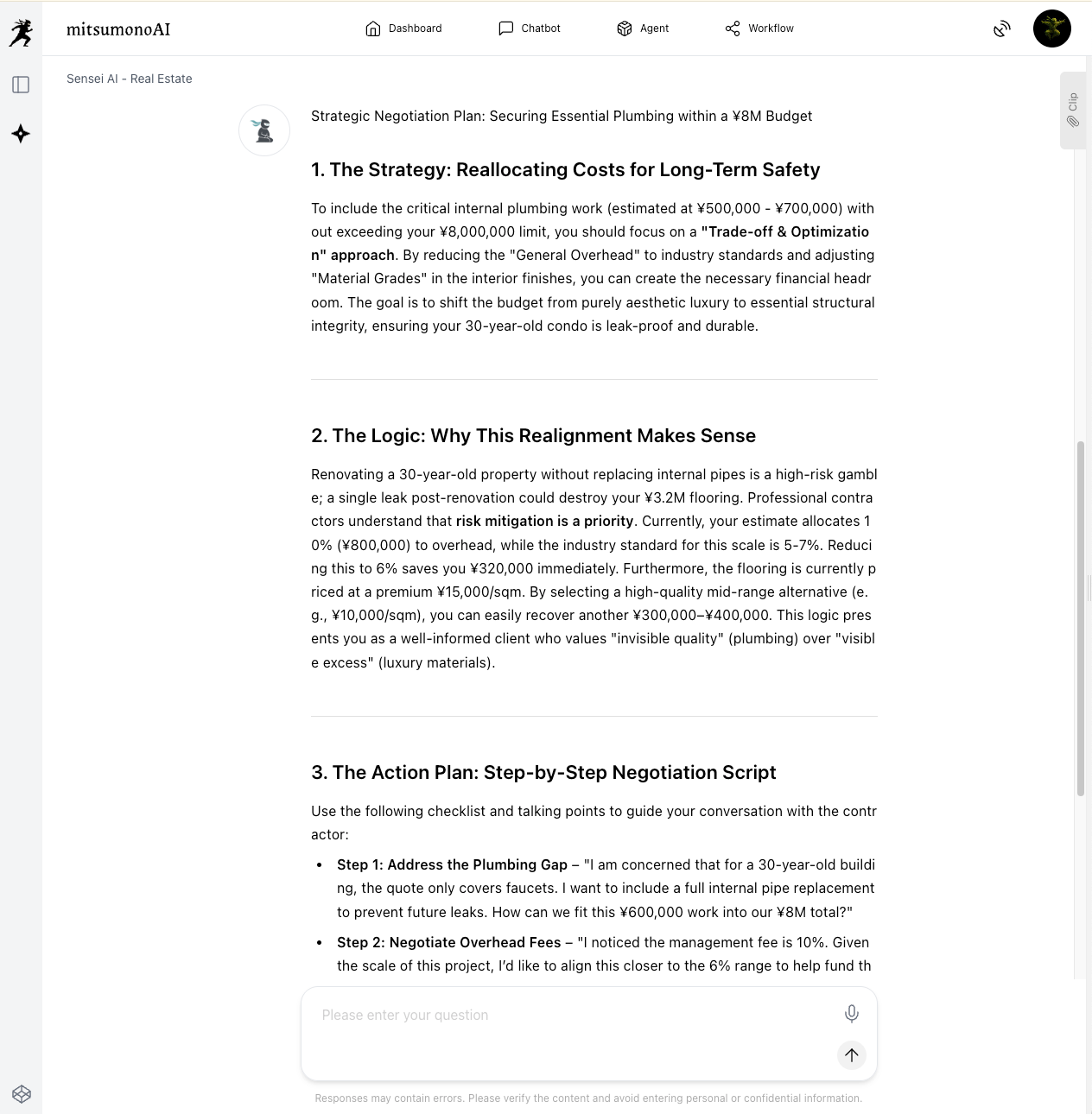
[Real Estate] Standardizing Renovation Estimates and Digitalizing Expertise
Organize estimates with the File Analysis Assistant and receive expert advice from Sensei AI - Real Estate.
- Use Case: Identifying repair risks and checking estimates based on property condition.
- Tool Used: Sensei AI - Real Estate (Referencing file analysis results)
Based on the estimate analysis, missing plumbing work and high overhead costs were identified.
Create a negotiation plan to include the plumbing work without changing the 8-million-yen budget.
# Estimate Analysis Results: [Paste File Analysis results here]
Prompt Example
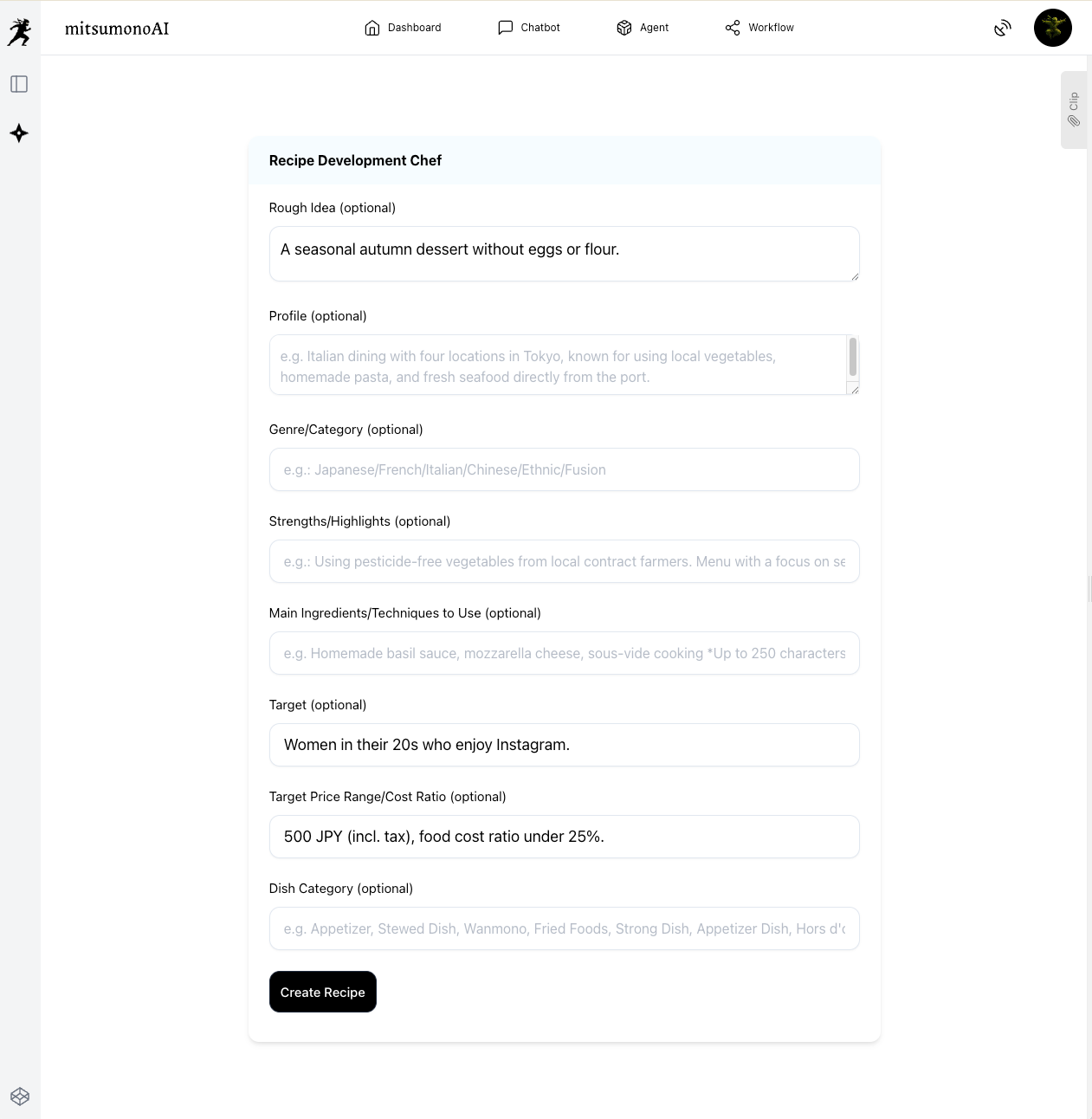
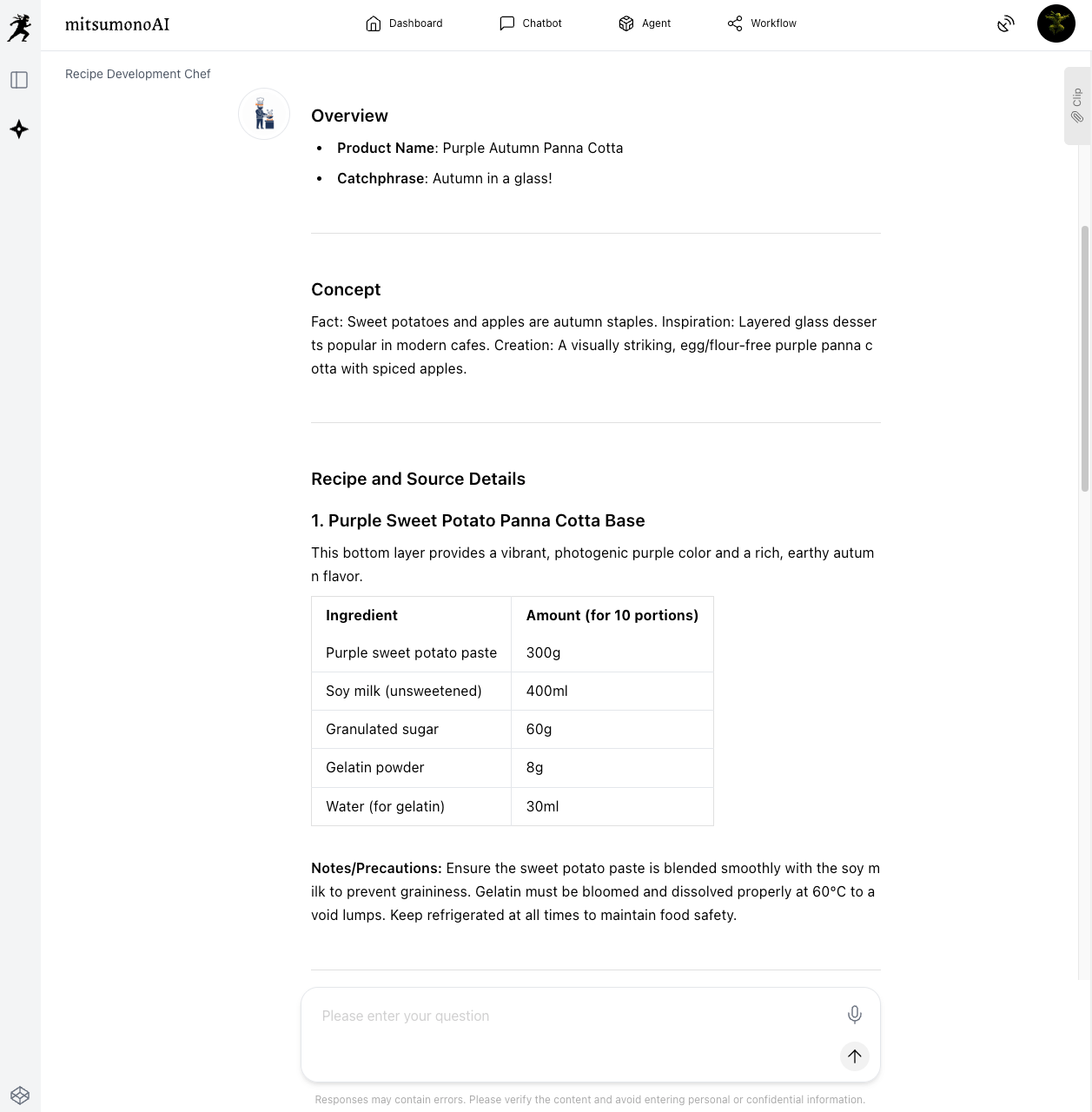
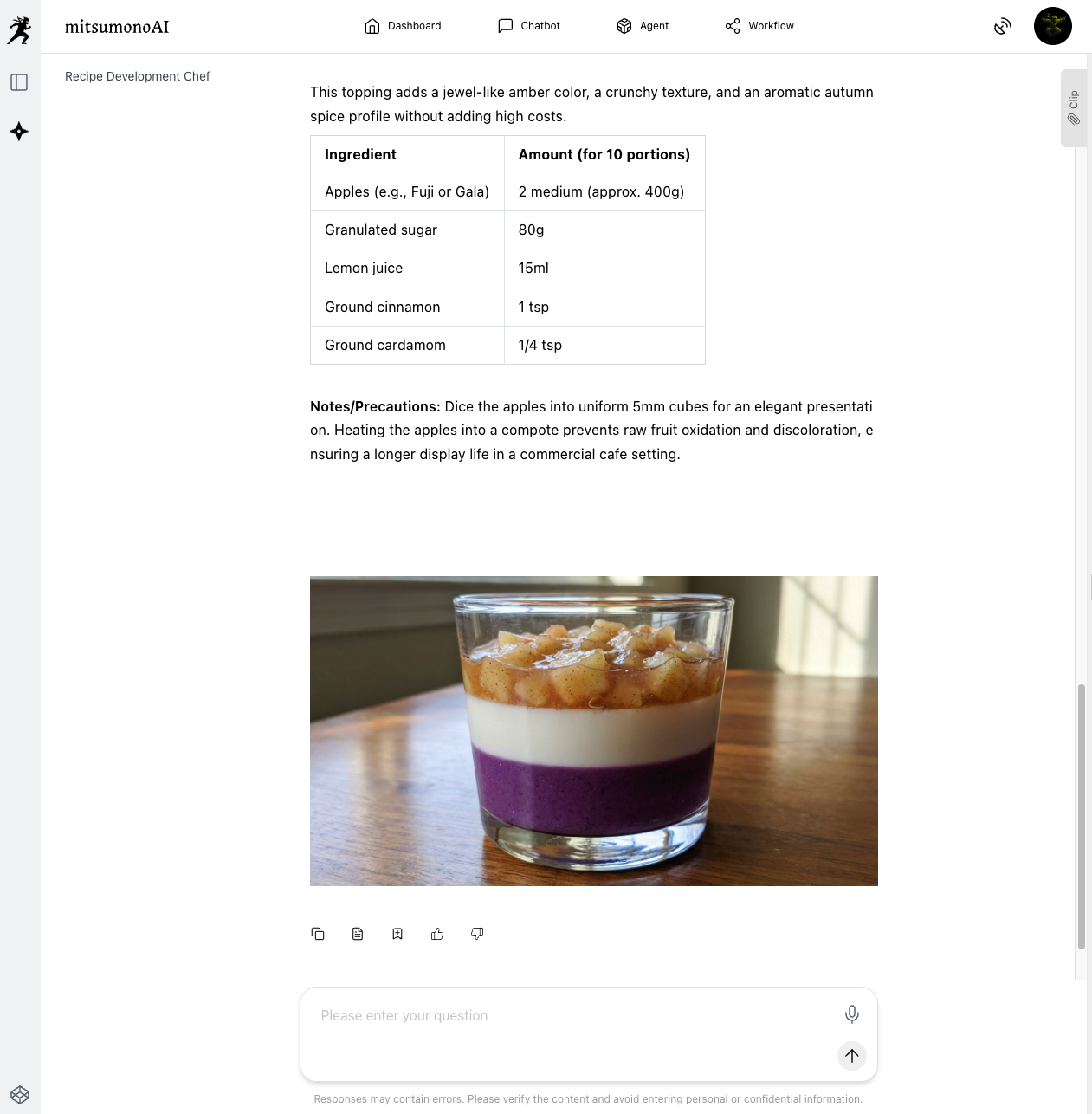
[Restaurant] Responding to Rising Ingredient Costs and Developing "Aggressive Menus"
Use the Recipe Development Chef tool to plan menus that maintain profit margins despite price fluctuations.
- Use Case: Developing new menus with controlled food cost ratios.
- Tool Used: Recipe Development Chef
Input Example:
- Rough Idea: A seasonal autumn dessert without eggs or flour.
- Target: Women in their 20s who enjoy Instagram.
- Target Price/Cost Ratio: 500 JPY (incl. tax), food cost ratio under 25%.
4. Why mitsumonoAI is Chosen Over General AI
It is natural to wonder if general AI like ChatGPT is sufficient for Procurement DX. However, in procurement—where precise numbers and speed directly affect profit—general AI carries specific risks.
1)The Limits of General AI: "Inaccurate Responses" that Hinder Negotiation
General AI possesses "hallucination" tendencies, where it may generate plausible-sounding lies. It lacks the reliability required for the "logical evidence" needed in price negotiations. Furthermore, getting high-quality answers requires complex prompting skills, leading to a new form of "AI skill dependency."
2)The mitsumonoAI Advantage: Precision of "Sensei AI"
Our system does not rely on a single AI model. It uses Sensei AI, which is tuned with practical industry knowledge. It integrates multiple LLMs (Large Language Models) to ensure high-precision proposals that reflect the latest market trends.
3)Operational Efficiency and Security
Designed for business, it minimizes operational effort through "Mission Registration," ensuring consistent, goal-oriented answers without repetitive input.
5. Conclusion: Standardizing Procurement Through AI
By 2026, depending on "individual experience" in procurement is a business risk. Implementing objective data analysis via AI is the new standard for maintaining profit margins.
By adopting mitsumonoAI, you achieve:
- Quantifiable Decision Evidence: Eliminate groundless negotiations via File Analysis Assistant.
- Shared Expertise: Ensure high-quality judgment across the organization using Sensei AI and Recipe Development Chef.
- Process Efficiency: Shift resources from clerical tasks to strategic supply chain management.
AI is more than an automation tool; it is practical infrastructure to maximize your organization's procurement power. Start by verifying the precision of AI-generated analysis in your own operations today.