Event Planning from a $350 Budget : Strategic Methods Using the Product/Menu Development Planner
This article demonstrates how to repurpose the "Product/Menu Development Planner"—originally designed for dish and product creation—as a powerful tool for event planning. Learn specific methods to generate innovative, budget-friendly event ideas that maximize attendee engagement.

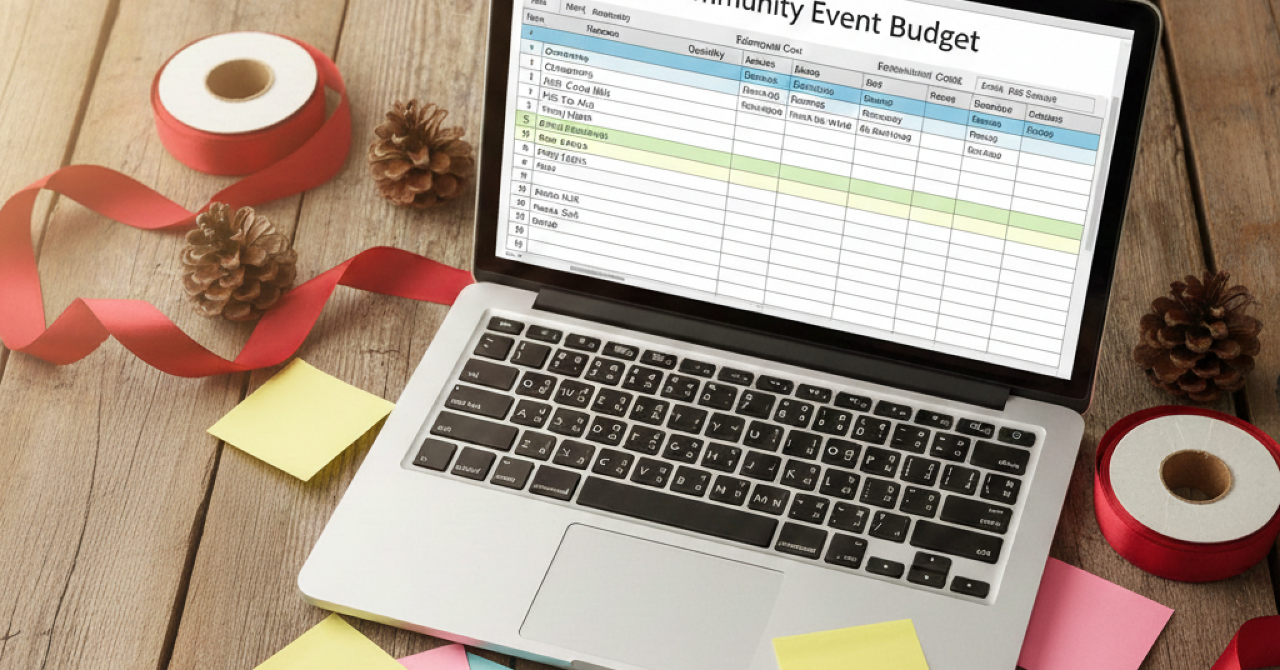
Why Use the "Product/Menu Development Planner" for Event Planning?
The "Product/Menu Development Planner" is a feature designed to generate ideas for new products or menus based on specific criteria such as target audience, budget, and available materials. An "event" is essentially a "product" that provides a specific "experience" to its participants. By applying this logic, you can unlock several professional advantages:
- Breaking the Mold: Leverage the AI’s vast knowledge and creative capacity to generate fresh ideas that transcend past event patterns.
- Objective Planning: By inputting concrete constraints like budget and target demographics, you can efficiently extract realistic and effective proposals.
- Drastic Reduction in Brainstorming Time: Save time spent struggling to create ideas from scratch, significantly shortening planning meetings.
By utilizing these benefits, you can obtain ideas that are more attractive and reach a wider audience than traditional planning methods.
In this guide, we assume a case where an "Event Coordinator for the Mitsumono City Community Development Promotion Council" is looking to revitalize a stagnant annual event with a budget of 50,000 JPY (approx. $350).
STEP 1: Inputting Event "Ingredients" into the Product/Menu Development Planner
First, provide the AI with the basic requirements for the event you want to plan. In this scenario, we are planning a "Christmas event for families with a 50,000 JPY budget."
Input Fields for the Product/Menu Development Planner:
- Company Profile: A brief overview of the organizing body and its typical activities.
- (Example): Mitsumono City Community Development Promotion Council. We aim for regional revitalization and promote community interaction by planning and managing seasonal events.
- Genre/Category: The specific type or theme of the event.
- (Example): Christmas Event / Family-oriented / Experiential / Community Exchange
- Strengths/Selling Points: Strengths of the organization or region, or successes from past events.
- (Example): Access to the vast space of Mitsumono Central Park.
- Primary Materials/Ingredients/Technologies: Specific resources, ideas, or skills available.
- (Example): Park trees, local volunteer staff, simple craft materials, Christmas music BGM, Santa costumes.
- Target Audience (Optional): The specific demographic you want to attend.
- (Example): Local families with children ranging from infants to early elementary school age.
- Target Price Range/Cost Ratio (Optional): Budget, participation fees, and cost per participant.
- (Example): Free admission (potential for paid workshops) / Total event budget within $350.
- Delivery Format (Optional): The format, location, and time of the event.
- (Example): Outdoor (Mitsumono Central Park) / Afternoon (approx. 3 hours) / Focused on participatory workshops.
After entering this information, click the "Generate" button.
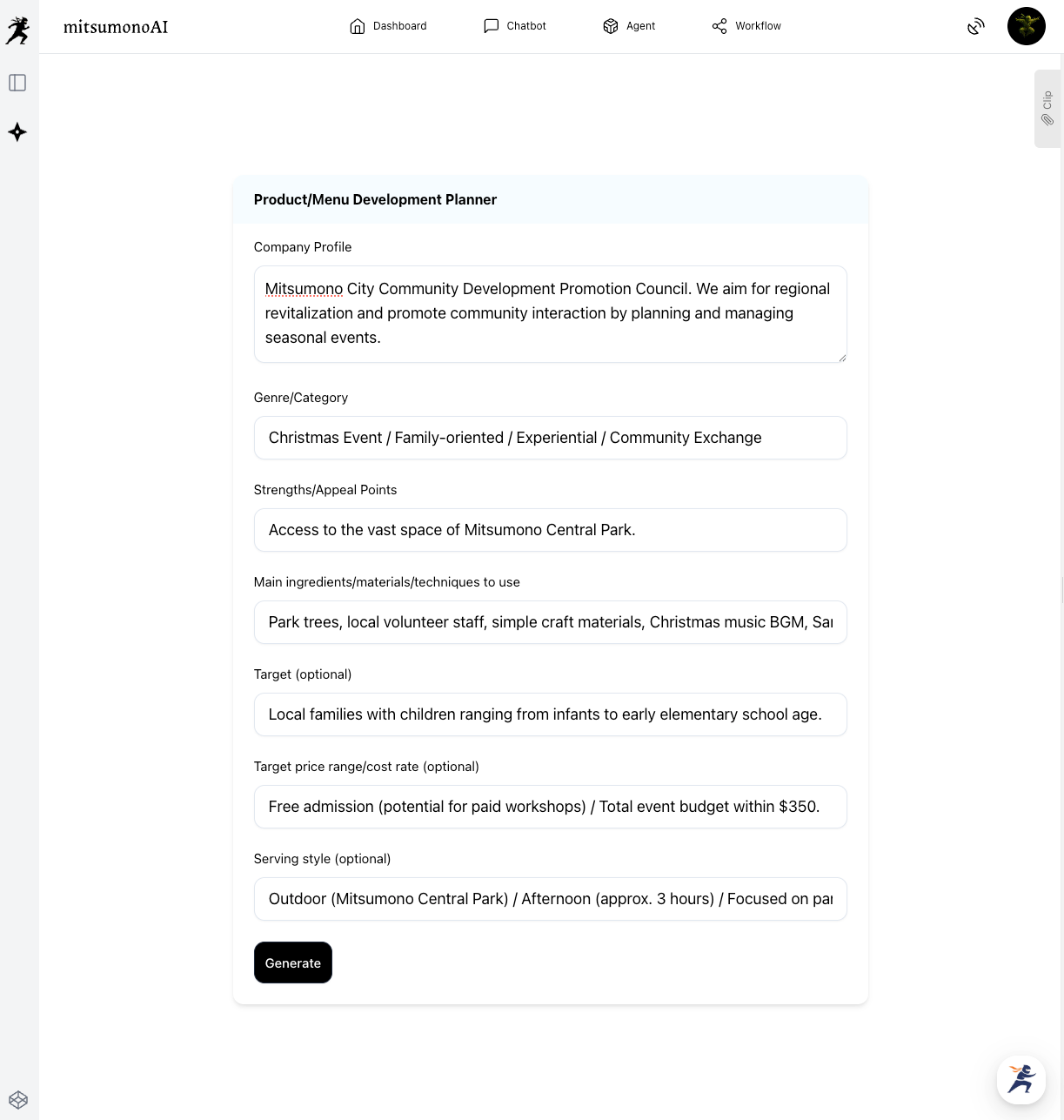
The AI will interpret your requests and propose event ideas tailored to your budget and conditions.
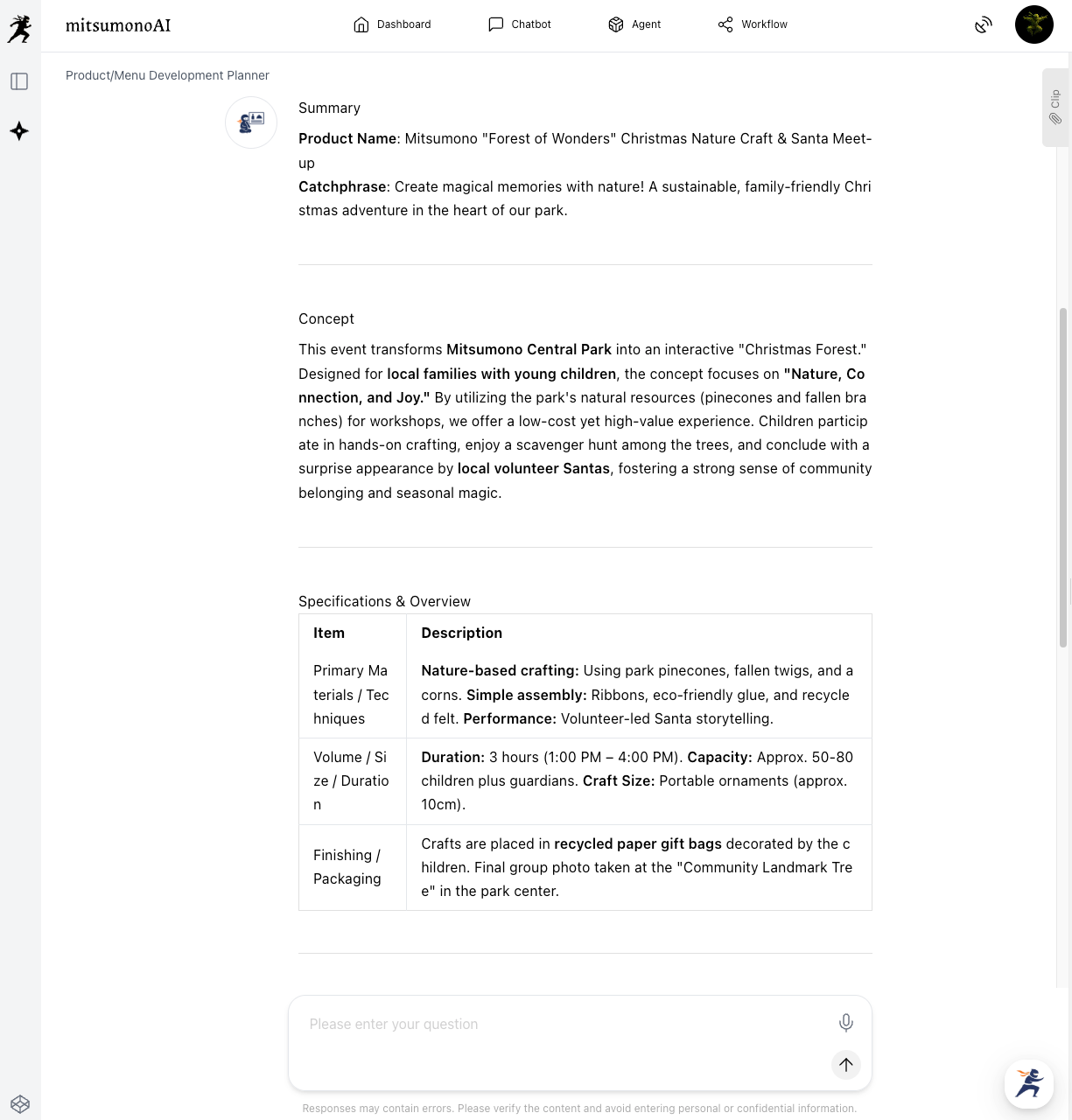
STEP 2: Refining Ideas into Actionable "Plans" through AI Dialogue
The initial output from the AI is the "seed" of an innovative event. By deepening your dialogue with the AI, you can grow that seed into a more concrete and attractive plan. The key is to provide follow-up instructions (prompts) that focus on budget, target, and objectives.
Sample Follow-up Prompts:
Deep-diving into Feasibility:
"Please provide a specific implementation plan and a cost breakdown to stay within the total budget of $350."
Enhancing Appeal to Target Segments:
"To maximize the satisfaction of 'families,' suggest specific ways to incorporate elements children will love (e.g., characters, interactive games) into [Specific Idea Name]."
Maximizing Attendance:
"Suggest three catchy post ideas to ensure this event 'gets seen by many people' on social media (Instagram, X, etc.)."
By adjusting through dialogue, the process evolves from simple brainstorming to creating a highly feasible event plan that delivers maximum impact within budget.
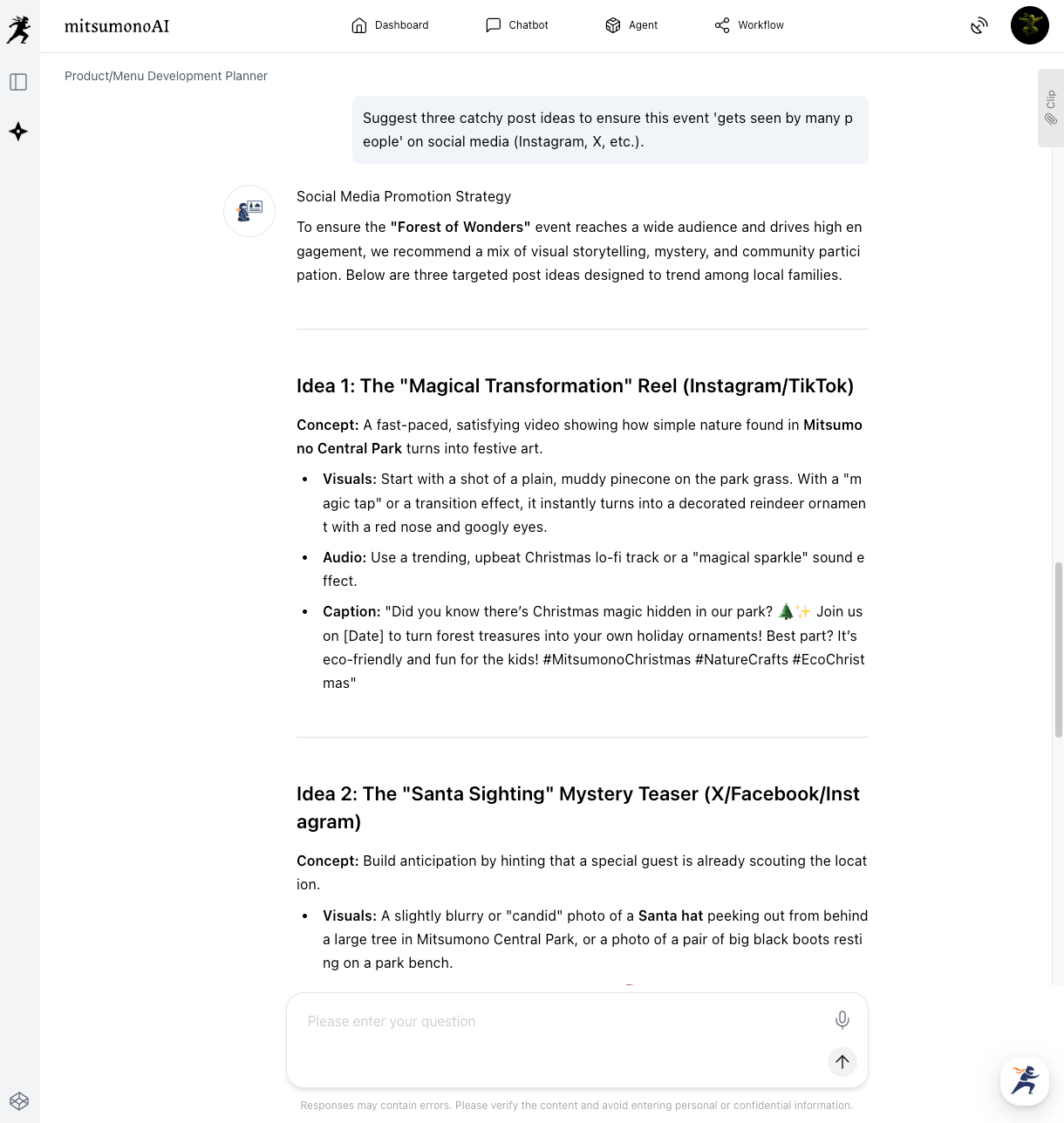
STEP 3: Moving the Finalized Event Plan into Action
Once the plan is finalized through AI dialogue, move into the execution phase.
- Drafting the Proposal: Create a formal proposal based on the detailed content. Clarify schedules, role assignments, necessary supplies, and PR strategies to ensure smooth operations.
- Coordination with Stakeholders: Use the proposal to coordinate with and secure cooperation from local residents, government offices, partner organizations, and volunteers.
- Executing PR Activities: Use social media, community bulletin boards, newsletters, and websites to spread the word. You can extract effective catchphrases and announcement texts directly from the ideas generated by the Product/Menu Development Planner.
Summary: Co-creating New Events with AI
By repurposing the Product/Menu Development Planner as an "Event Planning Planner," you can transform repetitive event formats into innovative, high-attendance attractions.
- Reduce event brainstorming time by 80%, allowing you to focus on essential preparations.
- Improve participant satisfaction and attendance rates through AI-generated novel ideas.
- Efficiently draft plans that achieve maximum impact even with limited budgets.
Use this article as a guide to make mitsumonoAI a powerful partner in your event planning, creating events that bring smiles to your community.
mitsumonoAI is equipped with many features useful for those in charge of event management and planning.
Please see the following articles for a detailed explanation of other applicable functions.
 mitsumonoAI