Guide to Developing Simple Recipes and Creating Reel Videos for Agricultural Product Sales Promotion
We'll show you how to devise "simple recipes" tailored to your target audience to communicate "how to cook the produce deliciously," and how to create a "Reel video script" that stimulates purchasing intent.

Tools Used
- Product/Menu Development Planner
- Video Script Creation Workflow
How to Make People Want to Buy Local Vegetables
When consumers purchase agricultural products, what they most want to know is "how to cook them deliciously." Especially for unfamiliar vegetables or ingredients whose cooking method is unknown, it may be difficult for them to even pick them up in the store.
The effective solution here is the combination of "easy-to-make recipes" and "recipe videos." Reel videos on social media can convey the image of cooking quickly, which can encourage actions like "I could make this" and "I'll buy it and take it home."
This time, we will introduce a practical workflow for developing a "simple recipe" and creating a "Reel video script" that stimulates purchasing intent, using "kale," which is drawing attention due to the rising health consciousness, as an example.
Specific Steps
Step 1: Devising Easy-to-Make Recipes
▶︎ Product/Menu Development Planner
Develop simple recipes for the agricultural products you want to boost sales for at the direct sales outlet (e.g., specific seasonal vegetables, specialty fruits, items the producer focuses on), considering the needs of the target customer segment.
After entering the required fields and clicking "Generate," recipe ideas will be outputted.
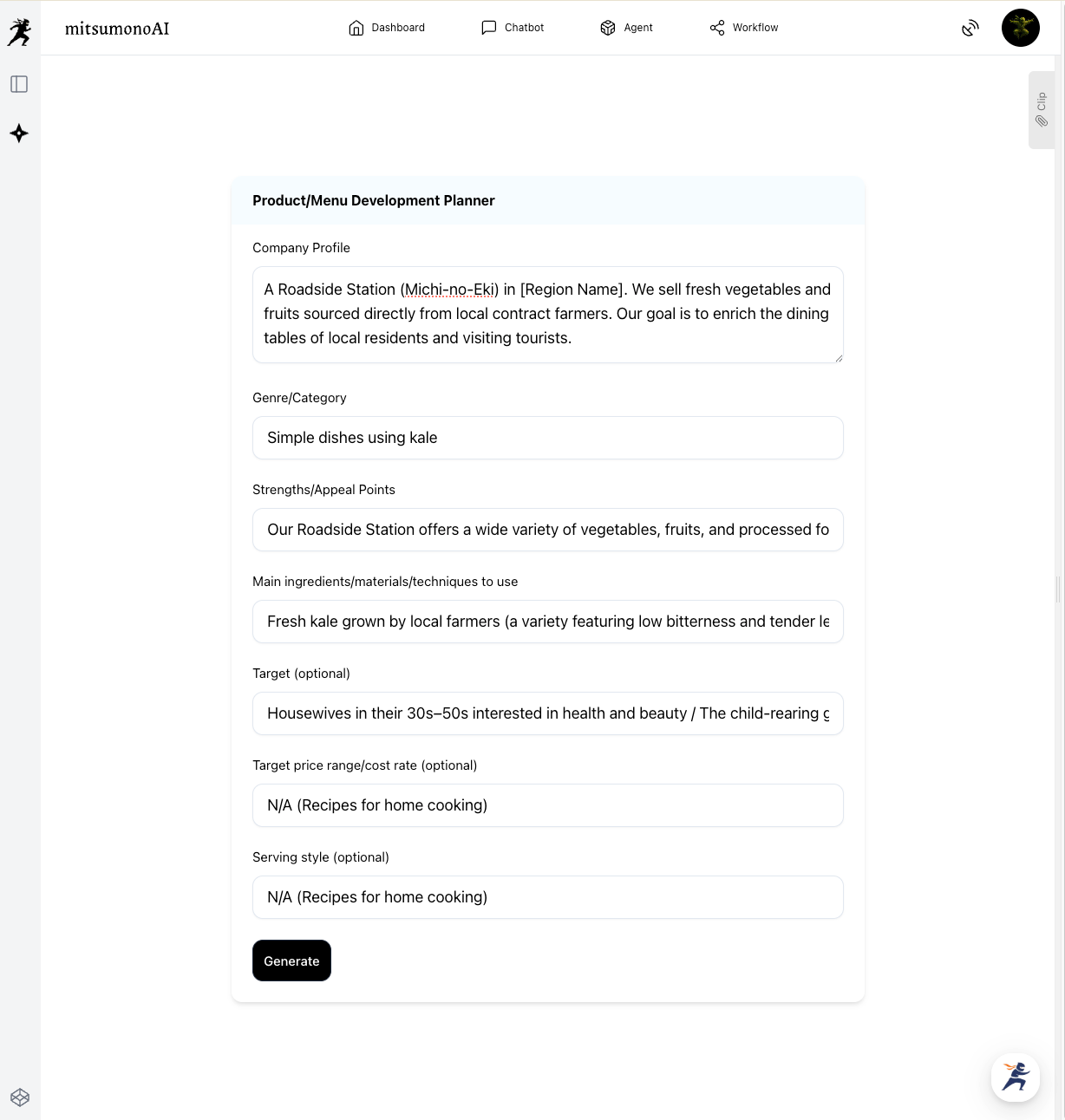
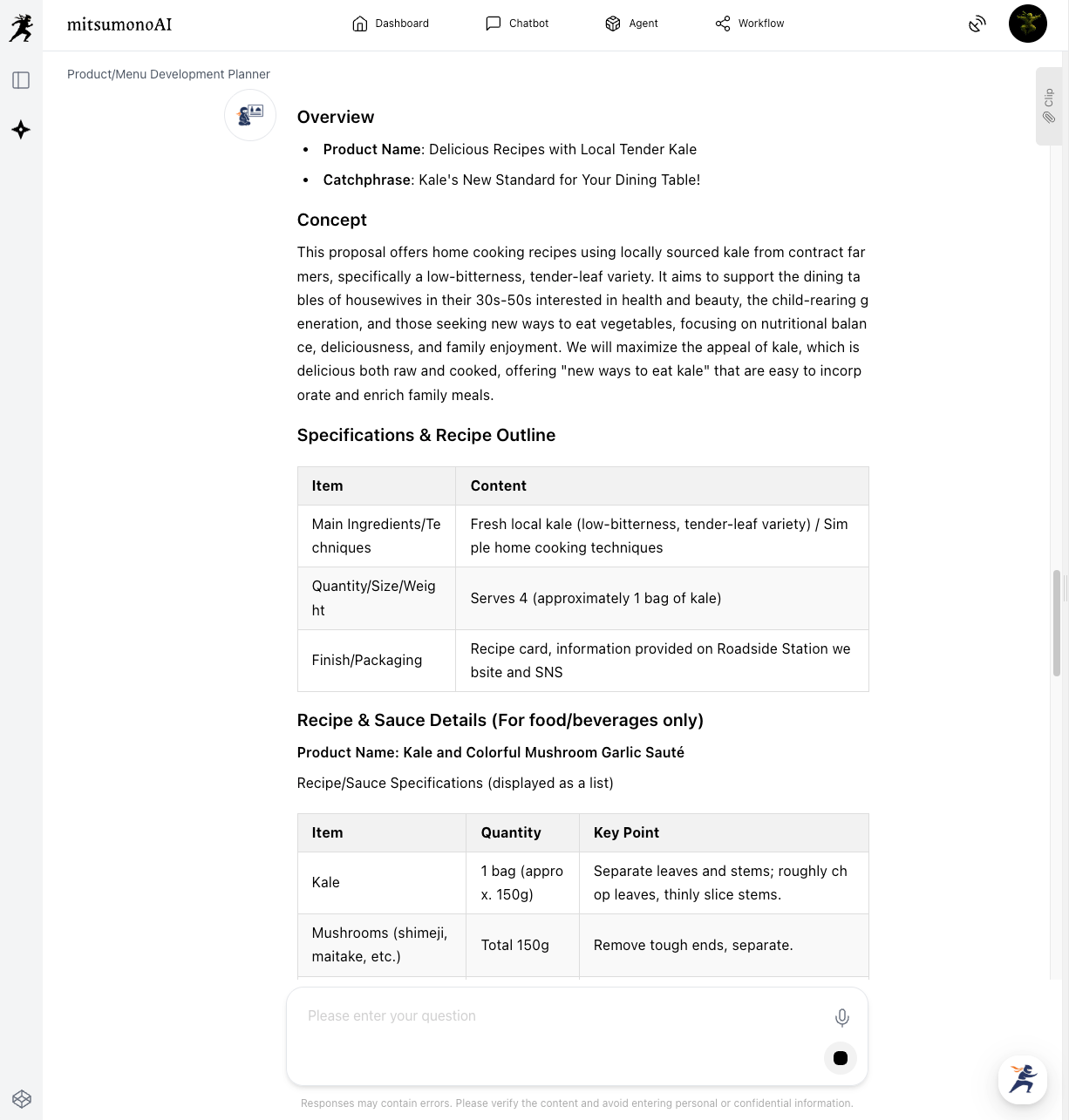
By giving additional instructions, such as those below, you can make the recipe more realistic, convenient, and appealing to people who have purchased kale.
・"Please make the recipe easy to prepare with seasonings typically found at home."
・"Suggest three recipes that can be completed within 5 minutes of cooking time."
・"Consider cooking methods that maximize the nutritional value of kale. "
This recipe should actually be test-cooked to confirm if it is a simple and attractive recipe that a kale purchaser can easily try with ingredients they already have at home.
Preparation for the Next Step
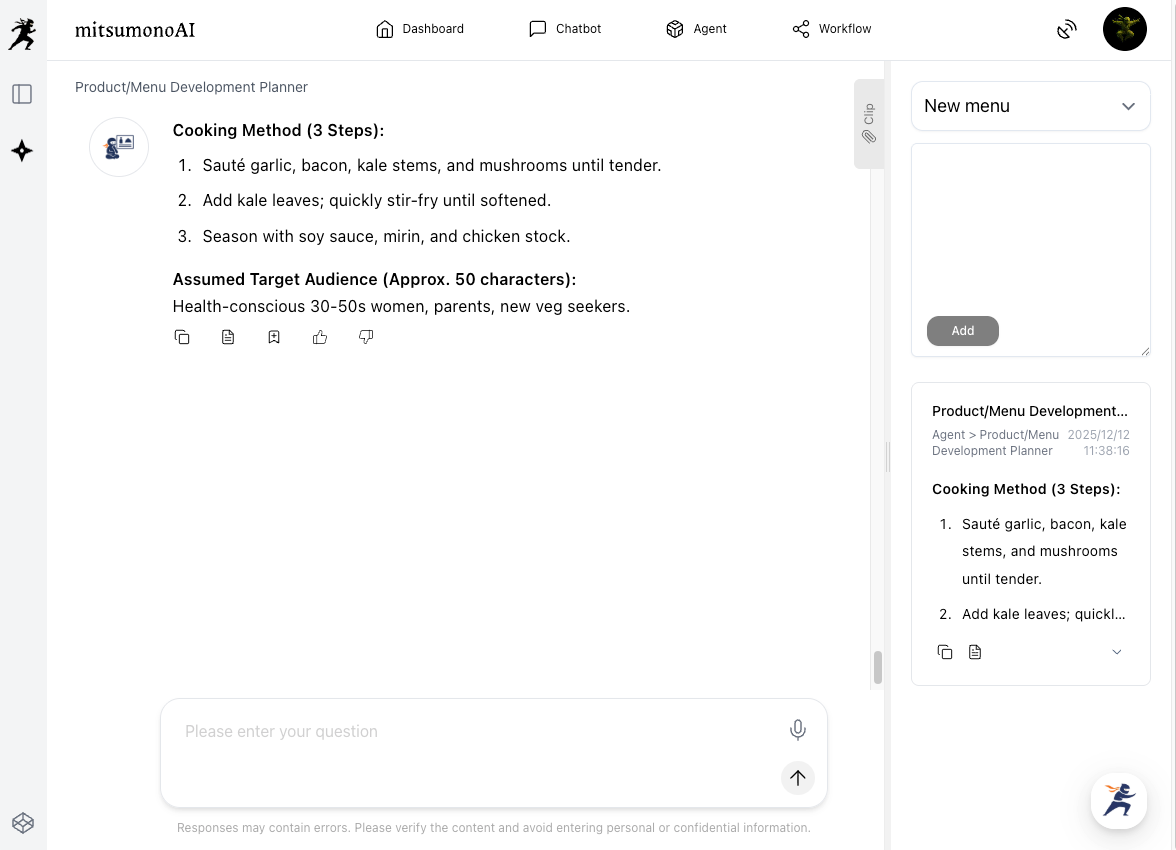
For use in the next step, summarize the following content with AI and save it in a clip.
- A summary of how to make the recipe in 3 steps, within 200 characters.
- A summary of the assumed target audience, in about 50 characters.
Step 2: Creating the "Reel Video" Script
▶︎ Video Script Creation Workflow
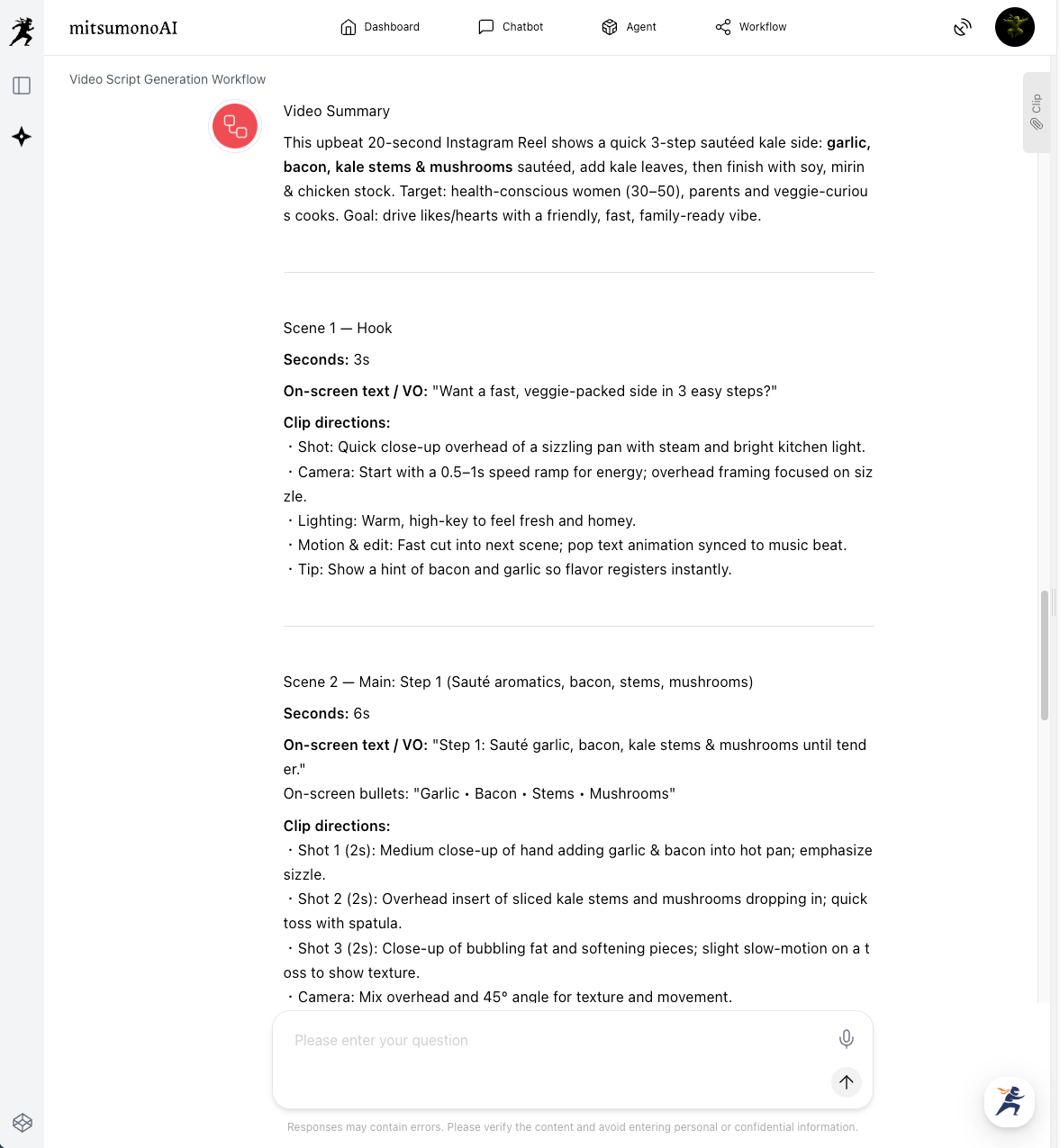
The recipe devised and test-cooked in Step 1 will be finalized into an effective Reel video script that stimulates the target audience's purchasing intent.
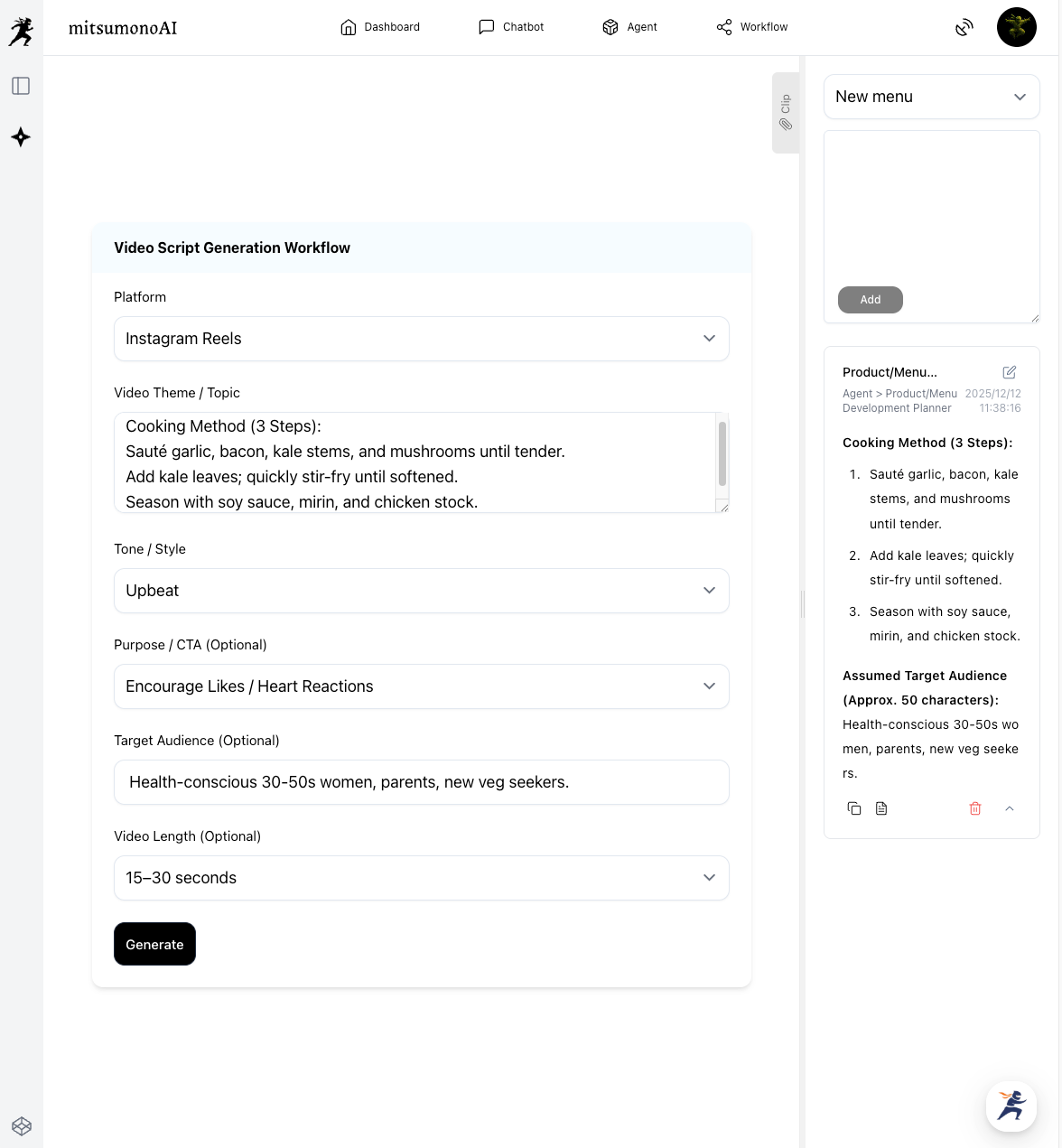
Enter the required fields into the "Video Script Creation Workflow" to create a video script that conveys the image of "easy to make." (Paste the text saved in the clip from Step 1 into "Video Theme/Topic" and "Target Audience (Optional)," respectively.)
Verification and Production of the Video
Script After verifying the video script draft, edit the video according to the content and create the post. Specifically, check the following points:
- Does the content align with the brand image of the direct sales outlet or the producer?
- Are the messages like "easy," "delicious," and "nutritious" consistent?
- Is the language appealing to the target audience?
Step 3: Dissemination of Recipes/Videos and Performance Verification
After disseminating the created recipes and videos on social media and websites, conduct data-driven performance verification and continuous improvement.
Measure the effect from both sales data and SNS data
If successful, apply the same method horizontally to other agricultural products and establish it as a success pattern. If the expected results are not achieved, analyze the cause from the following perspectives and review the content.
- Sales Data
- Changes in kale sales volume (year-on-year, month-on-month), changes in purchaser demographics
- SNS Data
- Number of Reel video views, likes, comments, engagement rate, and change in follower count
Expected Outcomes from Implementation (Examples)
- Increased Sales of Agricultural Products and Enhanced Brand Value
- Attractive recipes and Reel videos devised by AI promote the sales of the target agricultural products at the direct sales outlet. The agricultural product establishes its brand value as a "best-selling item," leading to an increase in sales volume and unit price.
- Strengthened Customer Engagement and Fan Acquisition
- By clearly communicating the appeal and cooking methods of agricultural products through Reel videos, points of contact with customers are created. Sharing recipe usage examples and the producers' dedication deepens customer attachment to the produce, helping them grow into repeat customers and fans.
- Contribution to the Local Economy and New Business Opportunities
- Strengthened cooperation between direct sales outlets and local businesses promotes the revitalization of the regional economy. Effective information dissemination using AI generates future business opportunities, such as the development of new sales channels and increased recognition of the regional brand.
Target Figures After 3 Months of Implementation
KGI (Key Goal Indicator):
- Sales of the target agricultural product at the direct sales outlet: 20% increase compared to the same month last year
KPI (Key Performance Indicators):
- Total views of the Reel videos for the developed recipes: Target 10,000 views
- Number of purchasers of the target agricultural product at the direct sales outlet: 15% increase compared to the same month last year
Number of comments/shares related to the agricultural product on SNS: 30% increase compared to the previous month