How to Redesign Experiential Value from the Customer Perspective and Plan Marketable Tourism Experience Menus
Have materials but no content plan? AI proposes stories from the target's perspective. Learn a method to design profitable "chosen experience products" focused on commercialization and monetization.

Tool Used
- Product/Menu Development Planner
Avoiding Stalling in the Initial Stage of Experience Creation
When creating experiential content at tourist spots, it is common to encounter situations where "we have the materials, but we don't know how to structure them as an experience."
With mitsumonoAI's "Product/Menu Development Planner," you can quickly materialize the structure, flow, and ways to enjoy the experience from the customer's perspective, allowing anyone to finish with a "marketable experience proposal" in a short time.
Specific Steps
Step 1: Organize Materials, Location, and Resources to Utilize
First, identify the natural materials, facilities, and local resources you want to use (e.g., old folk houses, wild vegetables, wood-burning stoves, etc.), and organize "what experiential elements are possible."
・Bamboo Grove:Bamboo cutting experience, bamboo craft workshop (tableware, lanterns, etc.), nagashi somen (flowing noodles) event
・Wood-burning Stove (Maki Stove):Firewood splitting experience, pizza or bread baking using the wood stove, stew cooking in a Dutch oven, gathering around the fire for relaxation and healing time watching the flames
・Loom:Weaving experience using thread dyed with local plants, making original coasters or small fabric items
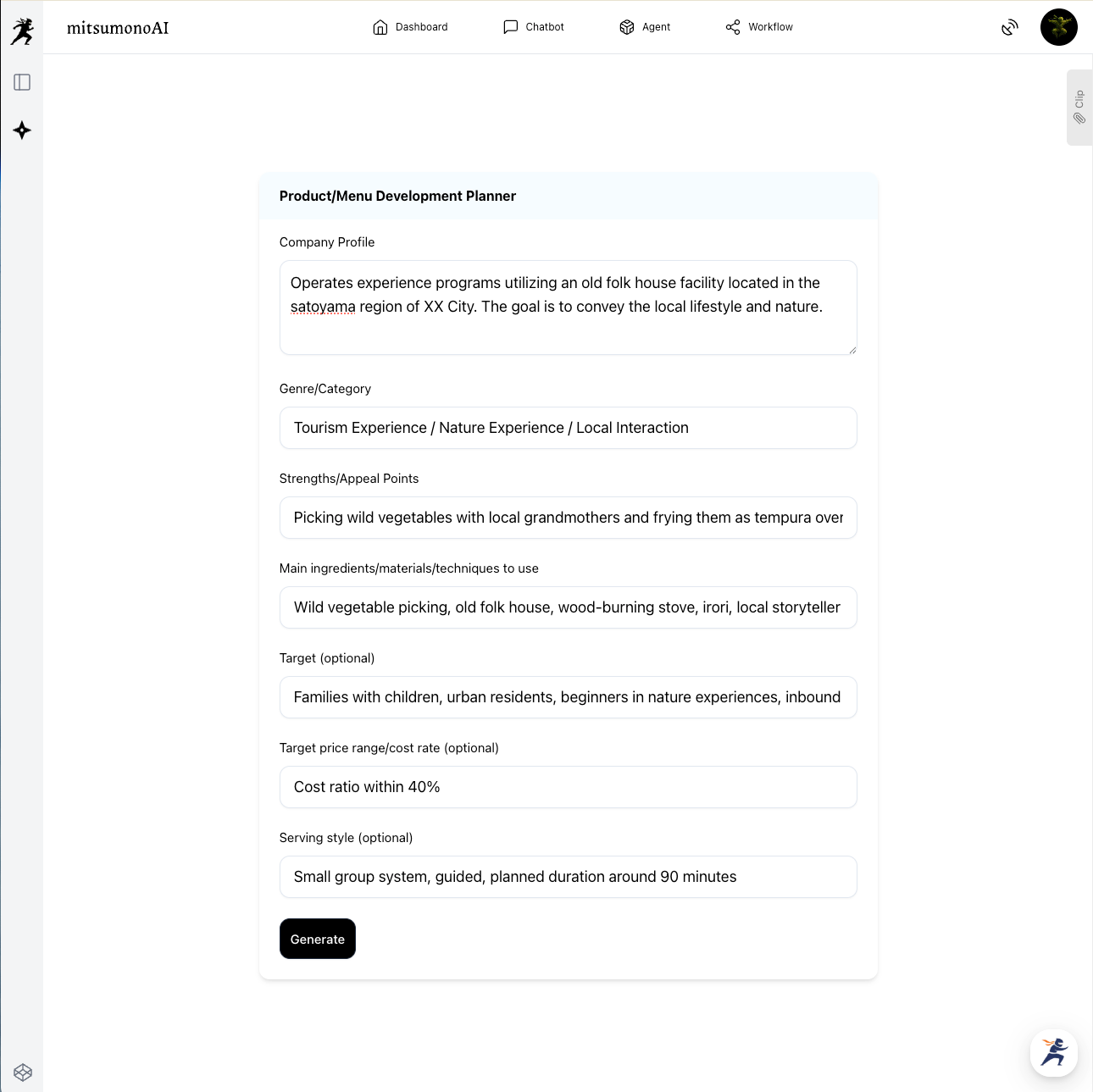
Step 2: Input Information into the "Product/Menu Development Planner"
Following the form items below, input information relevant to your tourist spot.
Step 3: Adopt the Generated Experience Proposals After Comparison and Optimization, and Communicate them as Local Attraction
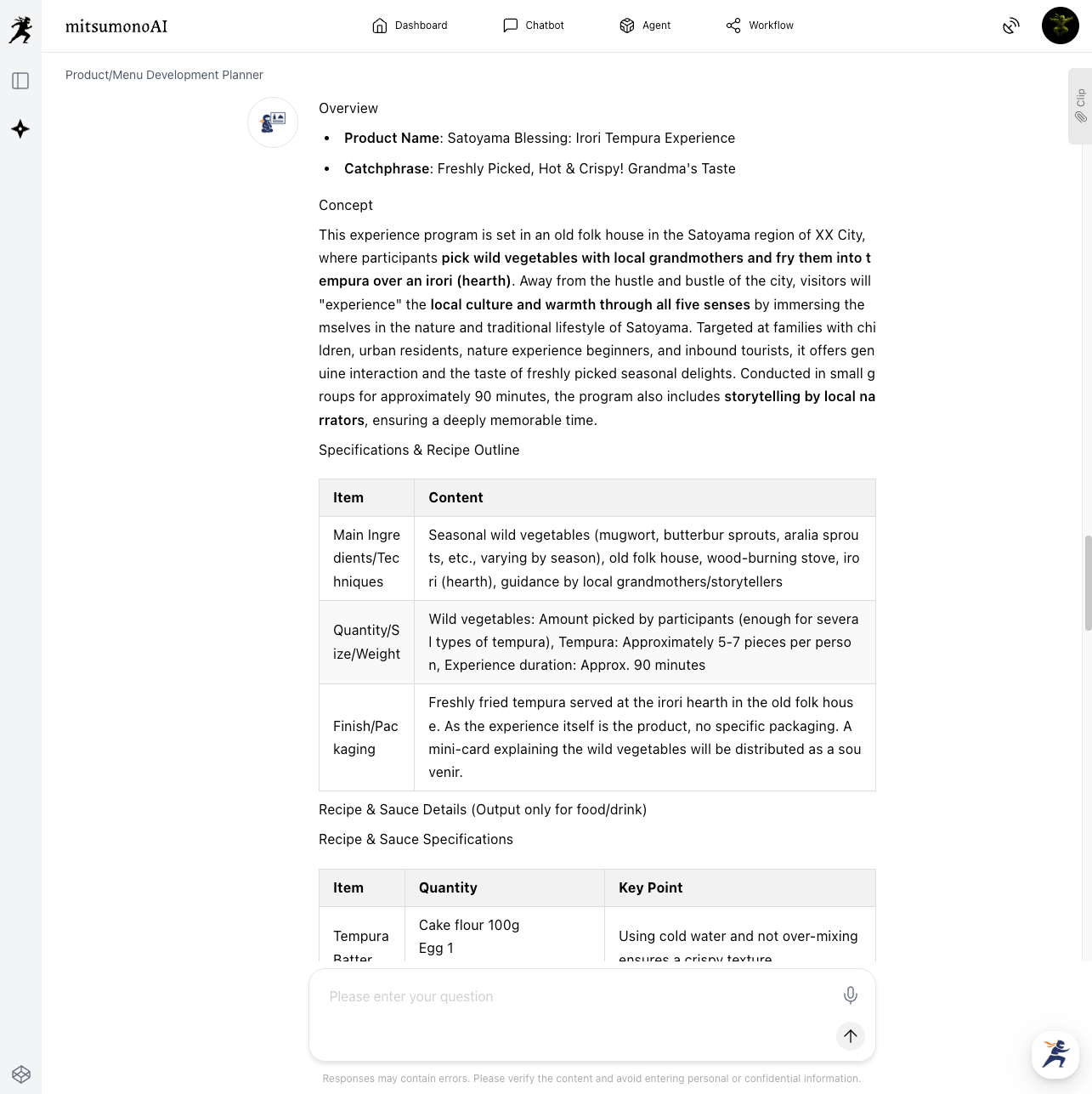
Compare the multiple experience proposals generated by the AI (e.g., proposals for a structured story, ways to enjoy, and names), optimize them according to your organization's theme and seasonality, adopt them, and actually implement them.
They can also be deployed in facility brochures, tourism websites, and SNS.
Expected Outcomes of Implementation (Reference Example)
By redesigning the materials and locations for tourism experiences from the customer's perspective and planning marketable experience menus with concrete ways to enjoy them and a storyline, you can maximize the communication of the region's appeal.
This develops a "chosen experience product," increases tourist interest and willingness to participate, improves the tourist destination's ability to attract visitors, and realizes monetization from the experience menus.
Target Figures for the Initial 6 Months of Implementation
KGI:
- Sales revenue from the newly planned tourism experience menu: Cumulative ¥500,000
KPIs:
- Number of reservations (or participants) for the planned tourism experience menu: Cumulative 100 people
- Average time spent on the website page listing the experience menu: Increase by 20 seconds from the current level
- Participant satisfaction survey rating for the experience menu: 4.5 points or higher (out of 5 points)
- Number of new inquiries regarding the experience menu: 15 per month