AI Utilization Methods for Accommodation Facilities | A Practical Method Connecting Planning, Communication, and Article Creation
We introduce an efficient method for connecting the entire process, from planning experience packages that maximize local charm to disseminating information and creating blog articles.


Tools Used
- Sensei AI - Accommodation
- Content Marketing Planner
- Blog Article Creation Workflow
An End-to-End Workflow Realized by AI: From Experience Package Planning to Customer Acquisition Article Creation
Many ryokans (Japanese inns) wish to plan attractive experience packages in collaboration with their local region and execute effective customer acquisition strategies. However, the current reality is that the entire process—from information gathering to plan development and finally dissemination—usually requires a significant amount of time and effort, making the barrier to implementation high.
Solving this challenge are three AI tools: "Sensei AI - Accommodation Industry," "Content Marketing Planner," and "Blog Article Creation Workflow." By utilizing these tools sequentially, you can efficiently and consistently execute the entire process: from planning experience packages that maximize local charm, to devising a content marketing strategy to promote the plan, and finally, creating blog articles that lead directly to customer acquisition.
Please use this guide to confirm the entire process of creating special experiences and disseminating information, leveraging the power of AI to guide customers into becoming fans of the ryokan and fans of the region.
Step 1: Plan Ideas for the Experience Package
▶︎ Sensei AI - Accommodation
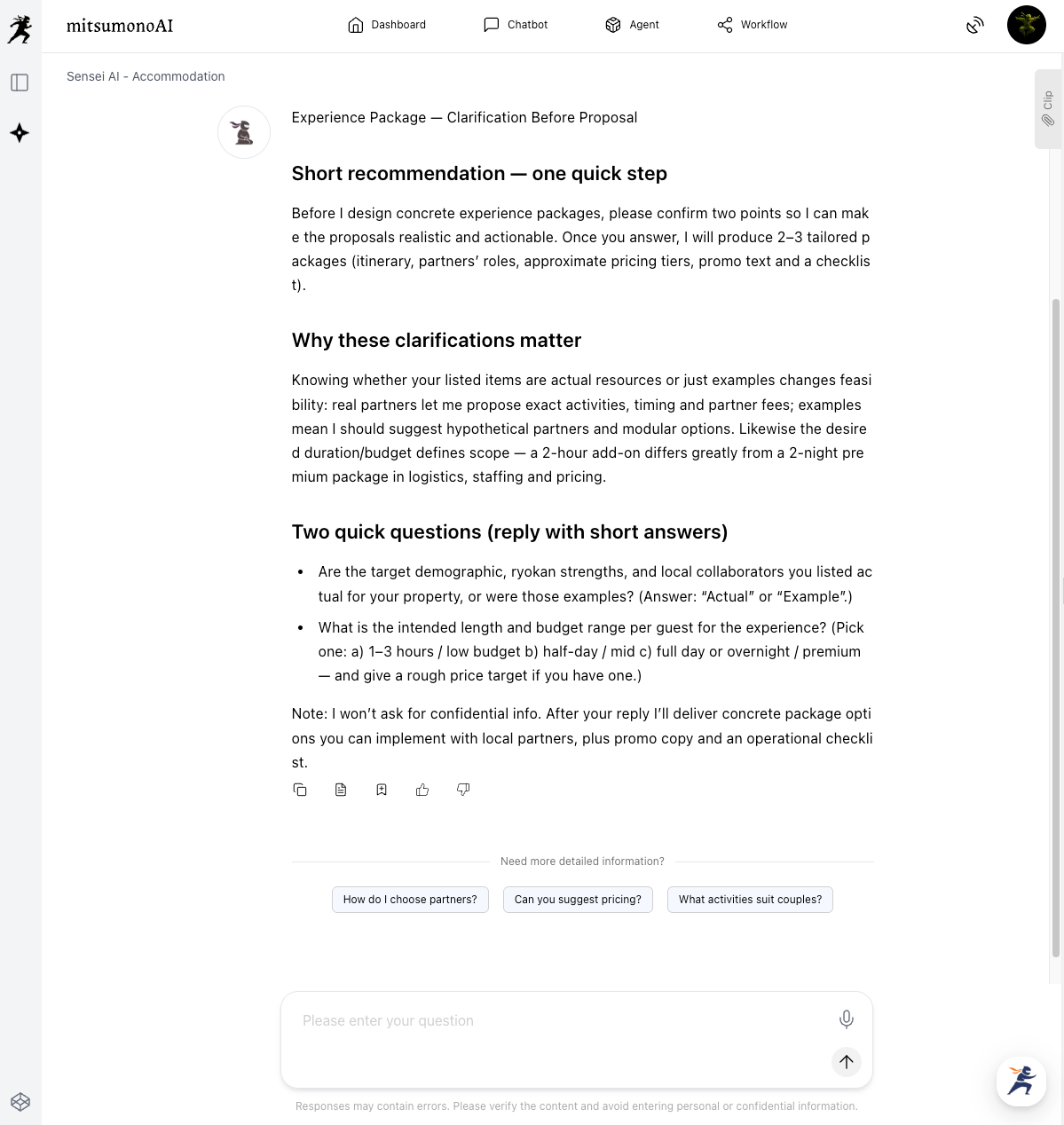
First, consult with "Sensei AI - Accommodation" by providing the following information.
・Target Demographic: Example: Active couples in their 30s
・Ryokan's Strengths: Example: Free-flowing hot springs, cuisine utilizing local ingredients
・Available Local Resources for Collaboration: Example: Local winery, traditional craft experience facility, fruit orchard"
Engage in a dialogue with Sensei AI to get hints on tour plan concepts that maximize the local region's appeal, and specific negotiation points with potential partners, based on the inputted information.
Through this dialogue, you will solidify the specific direction of the plan required in the next step.
Step 2: Clarify the Planned Package as a "Mission"
▶︎ Mission
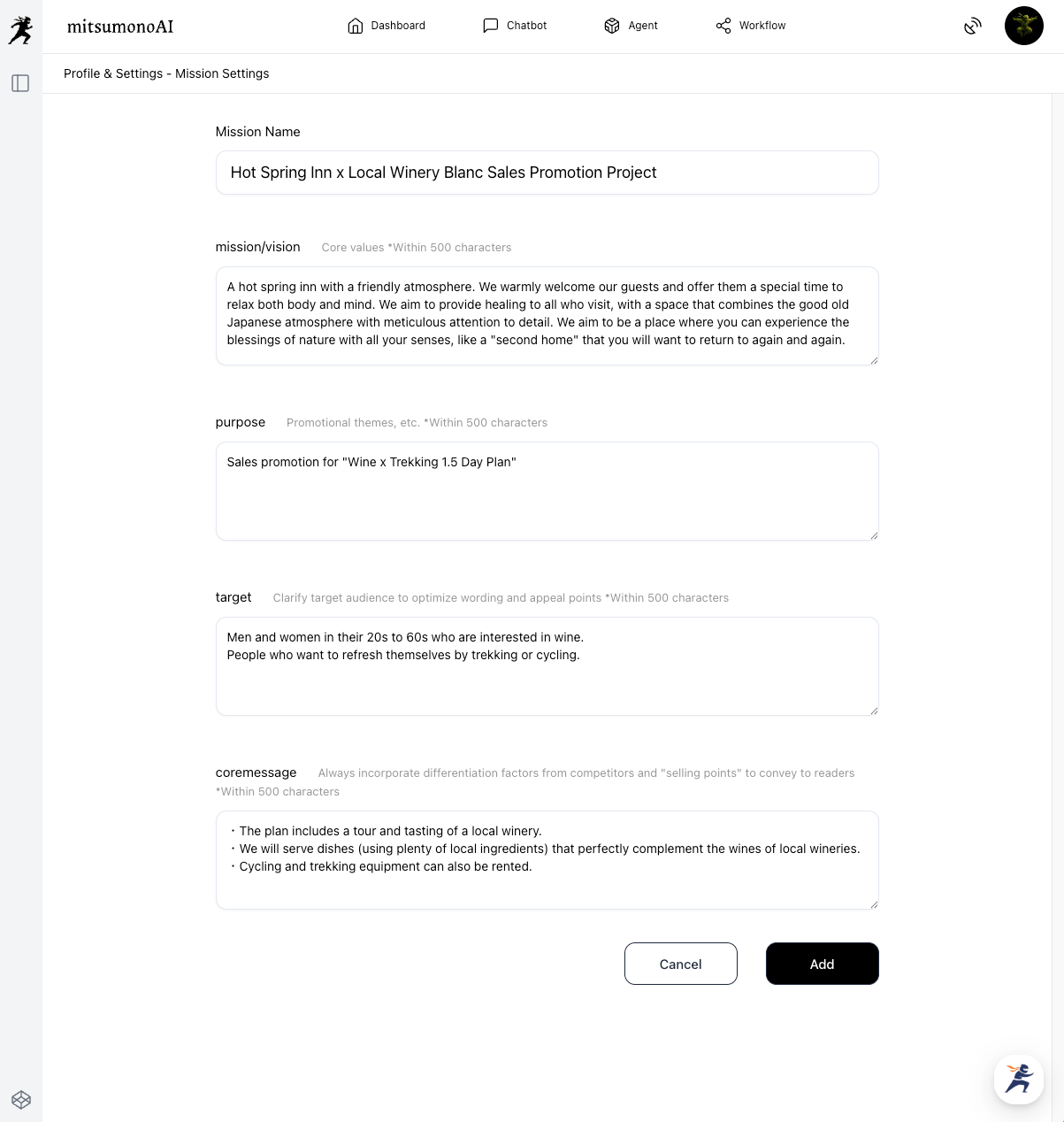
Once the direction of the tour plan is solidified based on the advice received from Sensei AI in Step 1, clearly set the specific details of the plan as a "Mission" for content marketing.
This Mission will serve as the main input information for the subsequent steps.
This time, we have set the "Sales Promotion Project for the Wine x Trekking 1.5-Day Plan" as the example Mission. Using this Mission as the core, we will develop a concrete information dissemination plan in Step 3.
Step 3: Plan the Information Dissemination Schedule
▶︎ Content Marketing Planner
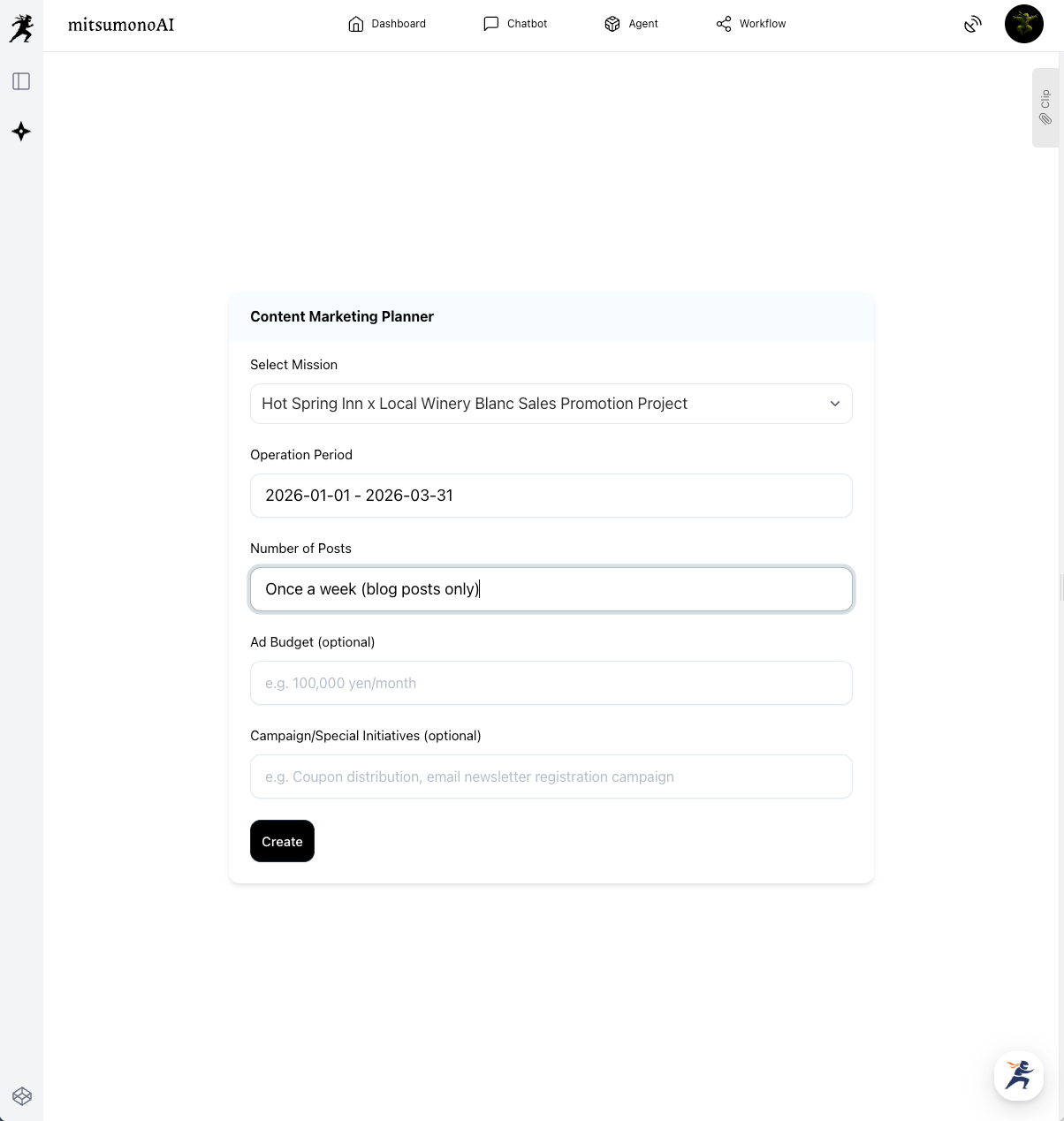
Based on the Mission set in Step 2, use the "Content Marketing Planner" to create the publishing schedule for blog articles.
This time, instruct the AI to create a content calendar for three months of blog articles.
The AI will output a series of information necessary for content marketing, such as market forecasts and in-depth target analysis, and generate a content calendar.
A content calendar for weekly blog posts, as instructed, has been generated.
Themes for a total of 13 posts over 3 months, with weekly blog posts, have been generated.
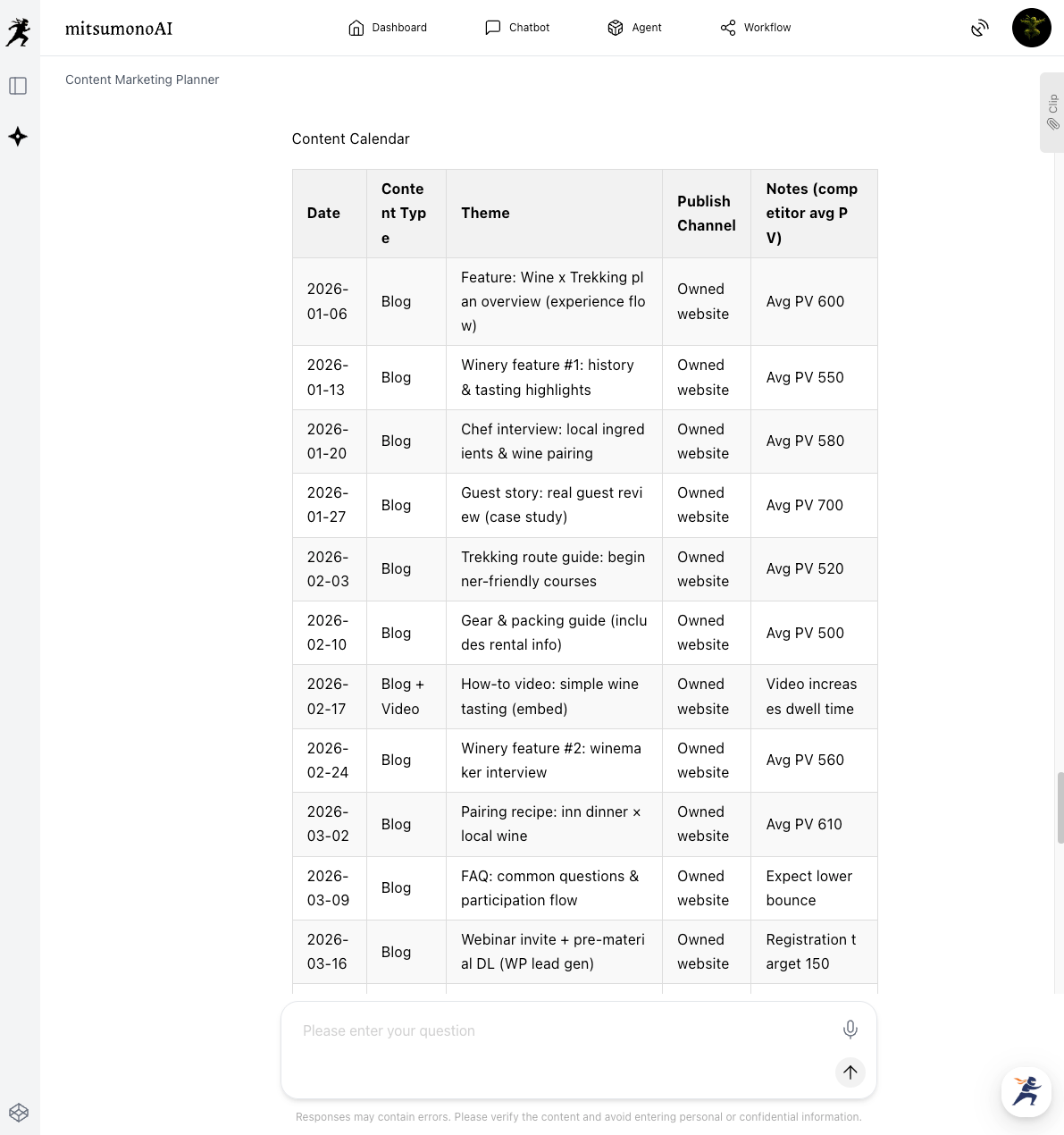
To grasp what should be conveyed in each article, instruct the AI to add a new column called "Article Content" to the right of the "Theme" column, generating a detailed article structure.
This step further clarifies the direction of each article, making the article creation in the next step smoother.
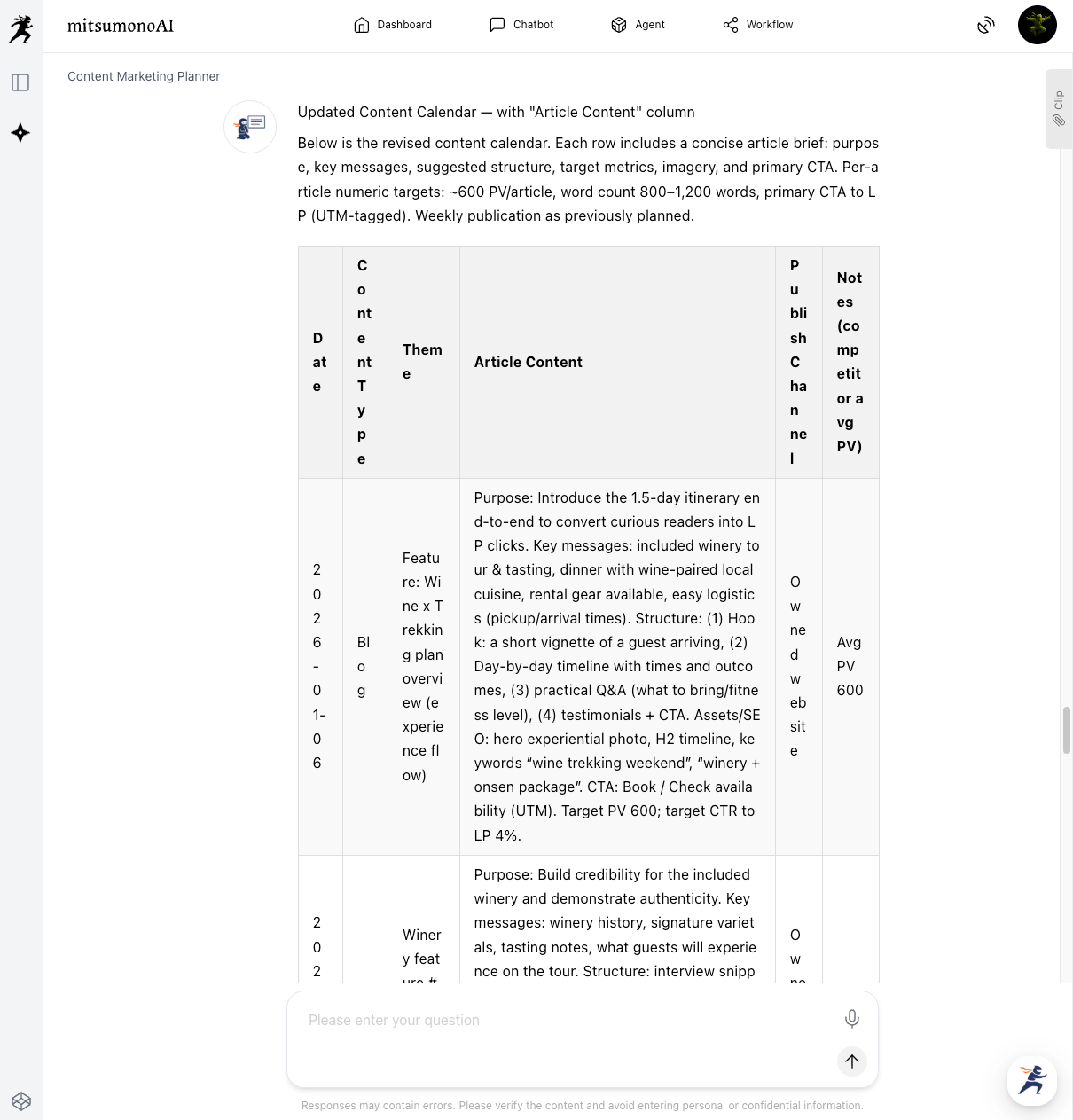
Save the generated schedule in the "clip" or paste it into Excel or a similar program.
Step 4: Generate Blog Articles that Lead to Customer Acquisition
▶︎ Blog Article Creation Workflow
Based on the Mission set in Step 2 and the content calendar created in Step 3, use the "Blog Article Creation Workflow" to generate blog articles that introduce the details of the tour plan and local information.
[Operation Procedure]
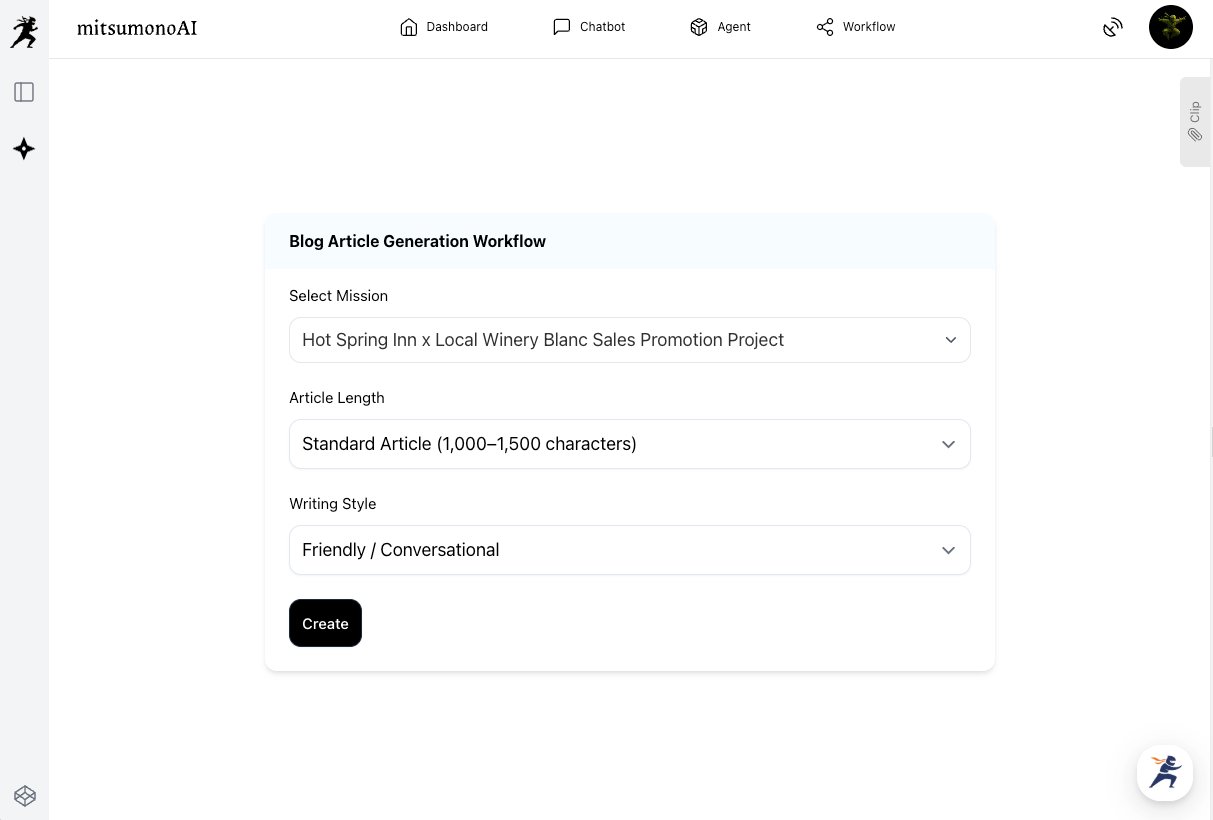
This tool allows for the efficient creation of the entire article, from the title to the body, in a natural flow by following the three steps below sequentially.
First, follow the on-screen instructions, select all designated items, and click "Create."
4.1. Select a Keyword
From the keywords suggested by the AI, select the one that best matches the theme for the first day of your content calendar.
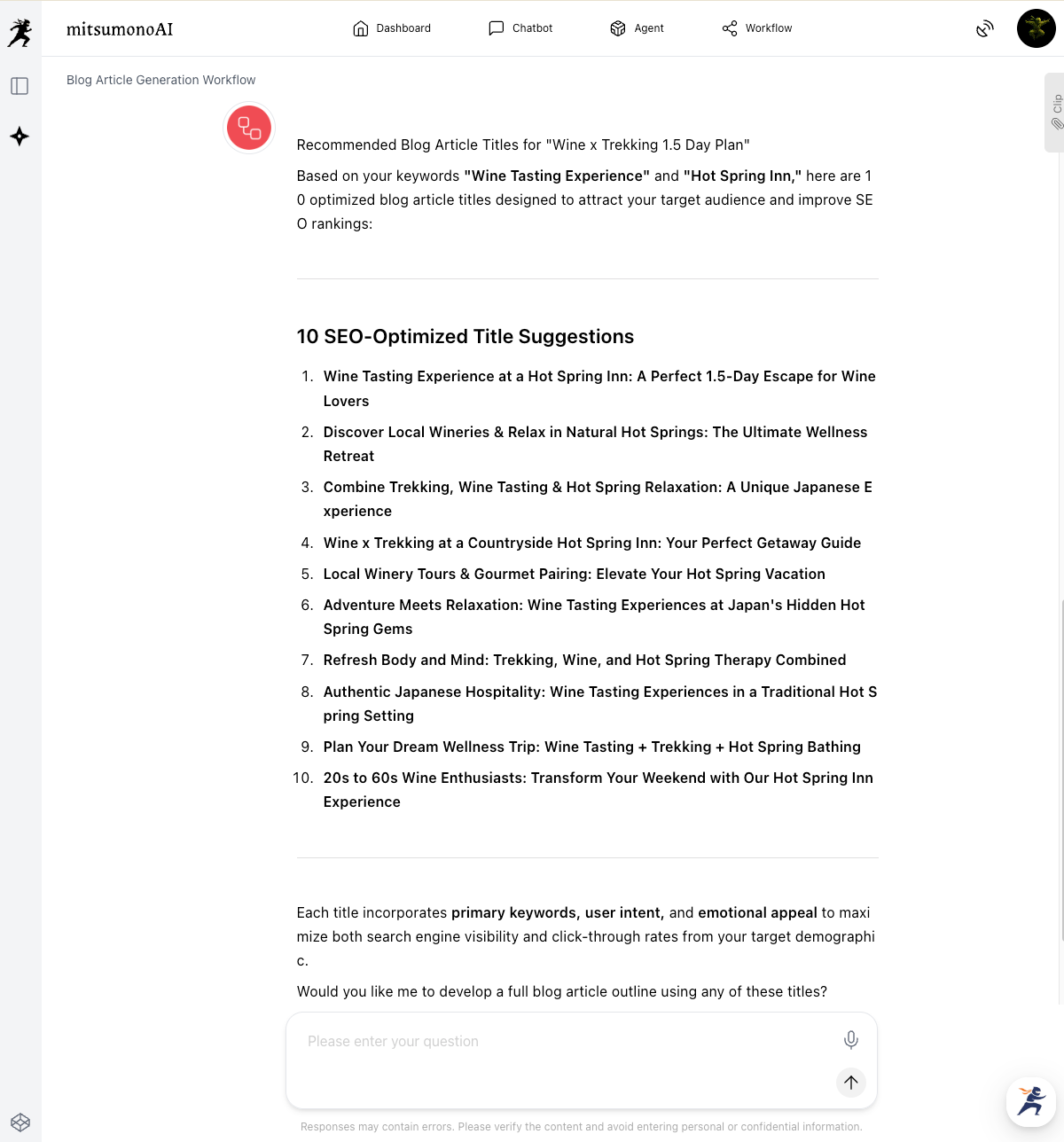
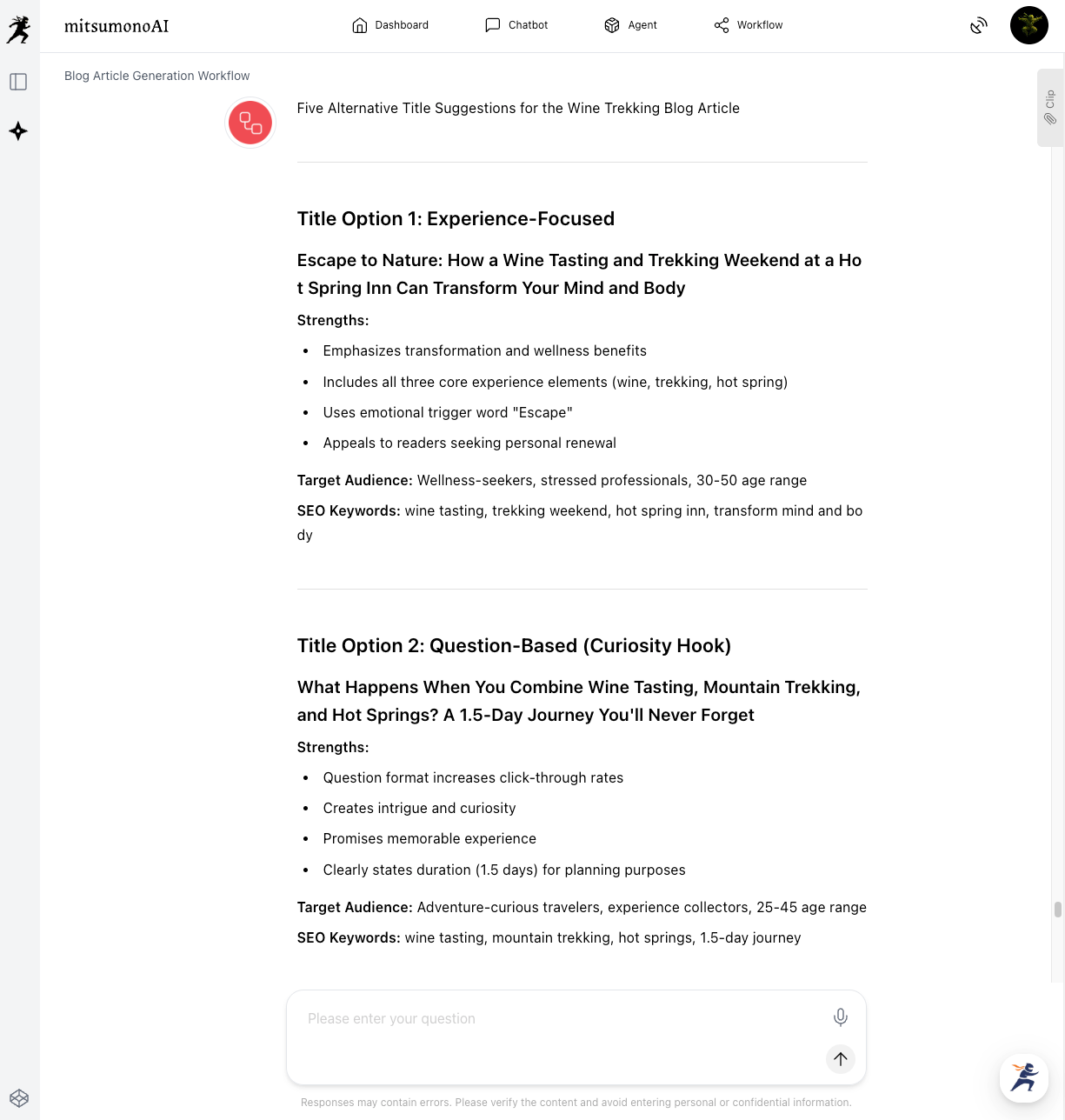
4-2.Determine the Article Title
Select the title that best fits the theme for the first day's post in the content calendar from the title candidates proposed by the AI, specify it, and proceed to the next step.You can also modify the title suggestions yourself or enter a newly devised title. It is also possible to request new title suggestions later, so choosing a provisional one at this stage is fine.
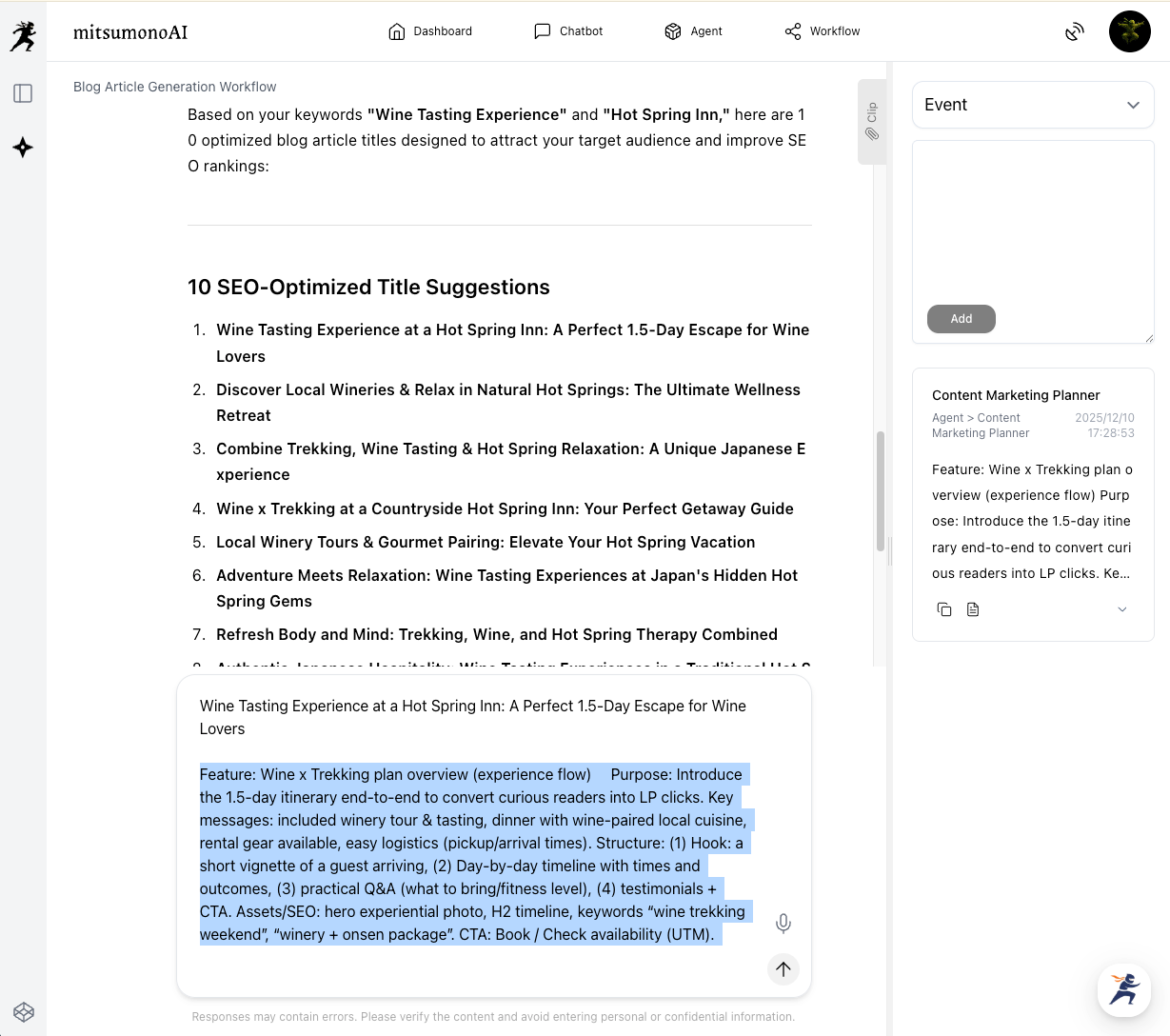
When choosing a title, send the AI the draft content for the first day's post, which was saved in the clip as "Article Content" when creating the content calendar in Step 3.
By communicating the specific direction of the article to the AI at this stage, you can synchronize the article's structure and content more closely with the content calendar.
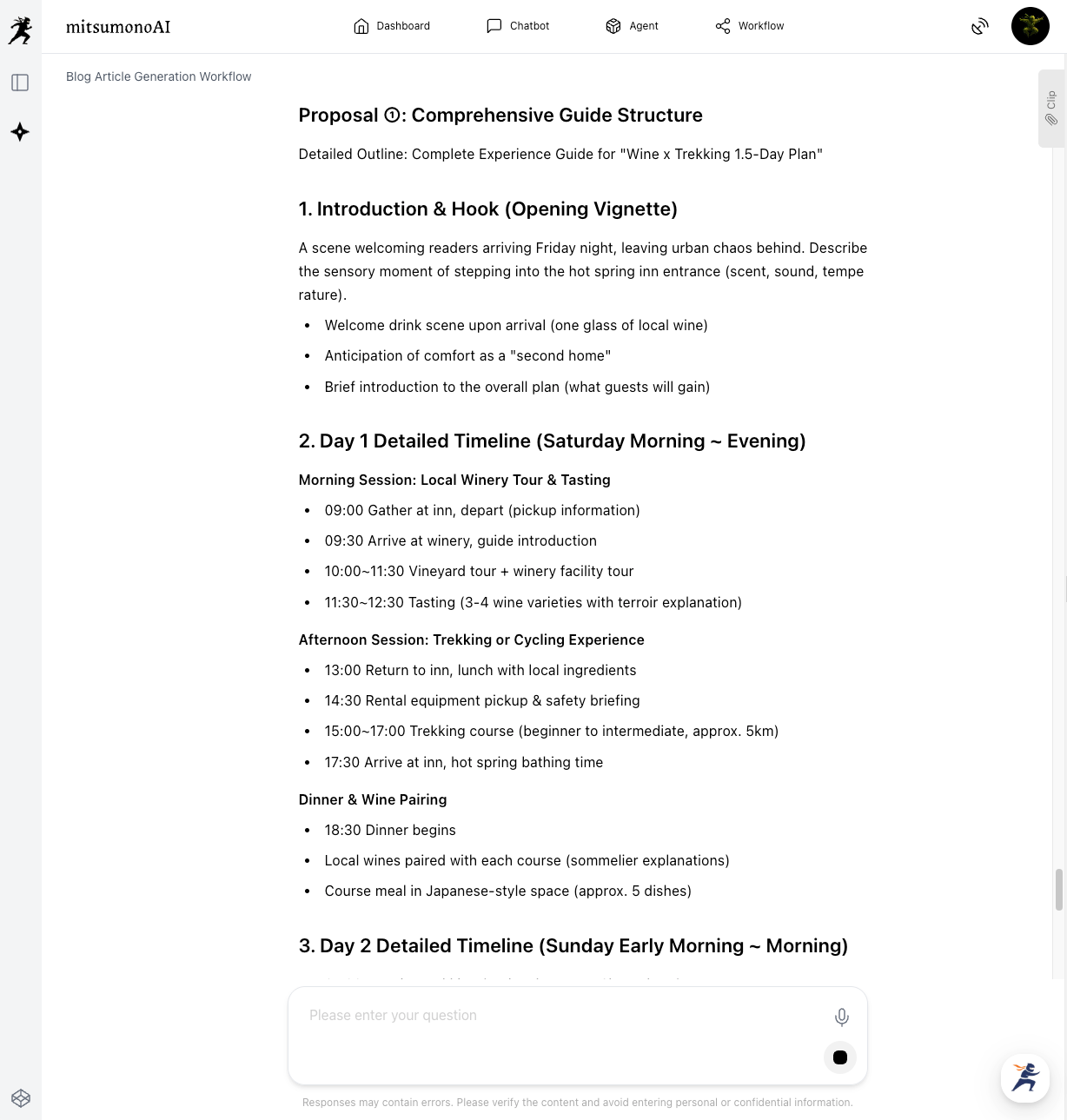
4-3.Select the Detailed Outline/Lead-in/Keyword Design Proposal
Next, determine the article's outline, lead-in paragraph, and keyword design proposal.The AI will offer multiple suggestions, so review the content and choose the one closest to your vision.
4-4.Output and Polish the Article
Based on the selected proposal, the first draft of the article will be outputted by the AI. Provide specific requests for changes, corrections, or additions to the generated article to the AI to further polish the article.
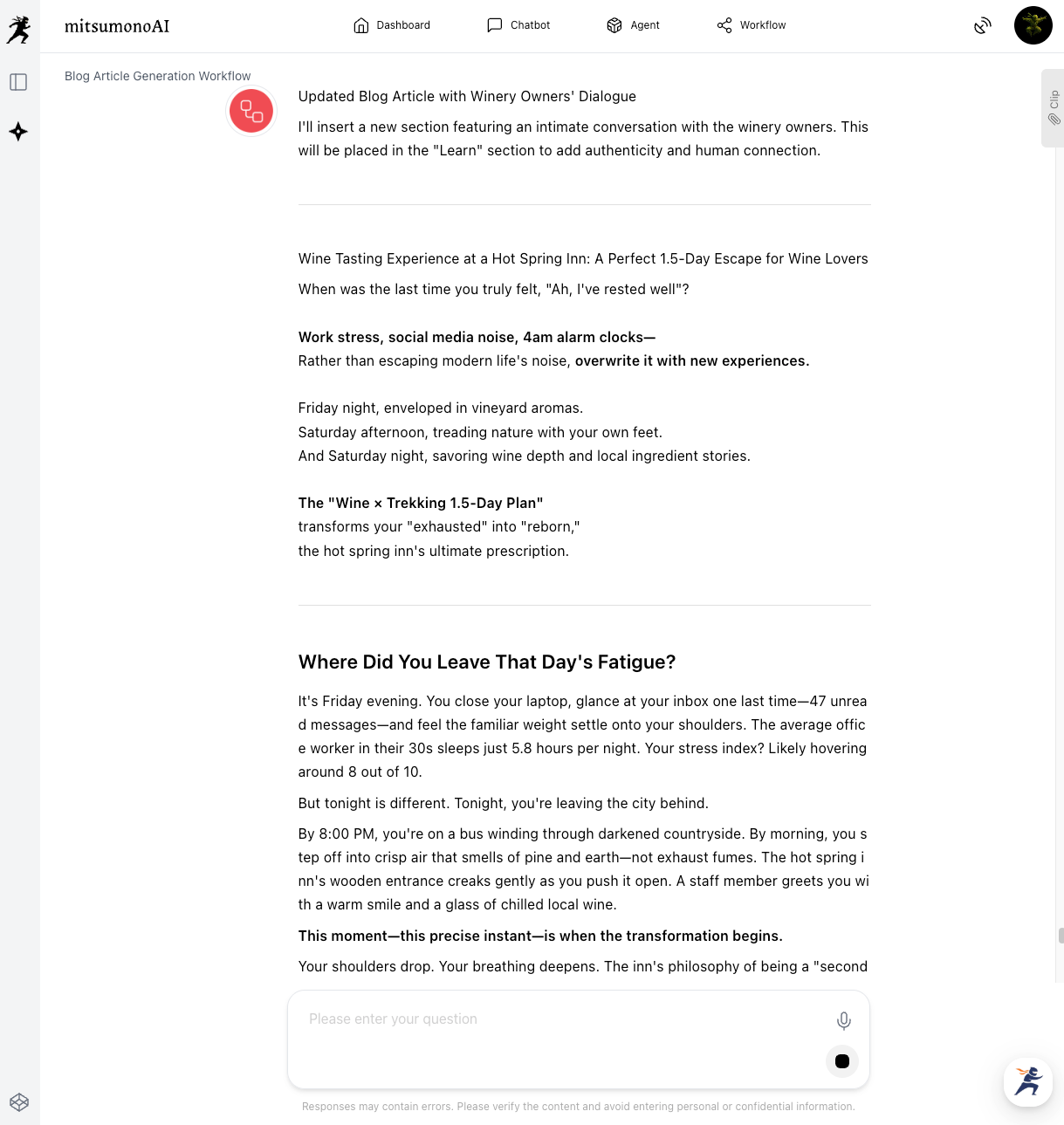
Format and edit the generated article as necessary before using it, such as saving it to a "clip" or Word document, or pasting it directly into a document creation software like Word or a blog platform like WordPress.
Step 5: Disseminate the Article and Connect it to Customer Acquisition
Actively disseminate the blog article generated and proofread with the AI tool on your website and social media (Instagram, Facebook, etc.).
Regularly publish other articles according to the content calendar to increase engagement with readers. This effectively communicates the appeal of the tour plan to the target demographic, leading to concrete customer acquisition results such as an increase in bookings.
Outcomes Achieved Through Utilization (Examples)
- Reduction of Planning Time:
- AI support significantly reduces the time and effort spent on gathering information and planning locally-collaborative packages.
- Creation of Appealing Content:
- You can efficiently generate attractive experience package ideas that maximize local charm and resonate with customers, along with high-quality blog articles that convey that appeal.
- Effective Customer Acquisition:
- High-quality blog articles generated by AI strengthen your information dissemination power to the target demographic, contributing to an increase in bookings. This connects customers to becoming fans of the ryokan and the region, contributing to the overall revitalization of the area.