AI Diagnoses Recruitment Material Design | How to Capture the Hearts of Candidates
Great offers, few applicants? Your design might be the culprit. This article explains how AI audits materials from a "candidate's perspective," turning subjective flaws into data. Learn concrete steps to optimize your content and boost application rates.


Tools Used
- Visual Creative Analyst
Boosting Application Rates Through AI-Powered Design Improvement
"Our salaries and benefits should be comparable to competitors, yet applications are somehow low."
"It feels like the serious recruitment website or presentation materials we made aren't resonating with candidates."
Many HR professionals face these "hard-to-articulate challenges." The cause might not be the text information in the job description, but the "impression of the design" that candidates unconsciously perceive.
This article introduces a new approach where you utilize AI as your company's "dedicated art director" to objectively evaluate and improve the impression that the design of your recruitment materials gives to candidates. We will explain the specific steps to make subjective issues quantifiable with data, thereby improving both the quality and quantity of applications.
Concrete Steps
Have AI Evaluate Recruitment Materials from a "Candidate's Perspective"
▶︎Visual Creative Analyst
The most crucial step is to objectively evaluate your current recruitment materials, not from the HR representative's "creator's perspective," but from the "recipient's perspective"—how candidates actually feel about them.
【Input Tips】
Upload multiple image files that candidates are most likely to see first, such as the main image used on job boards, a screenshot of the recruitment website's top page, or the cover of the company presentation slides.
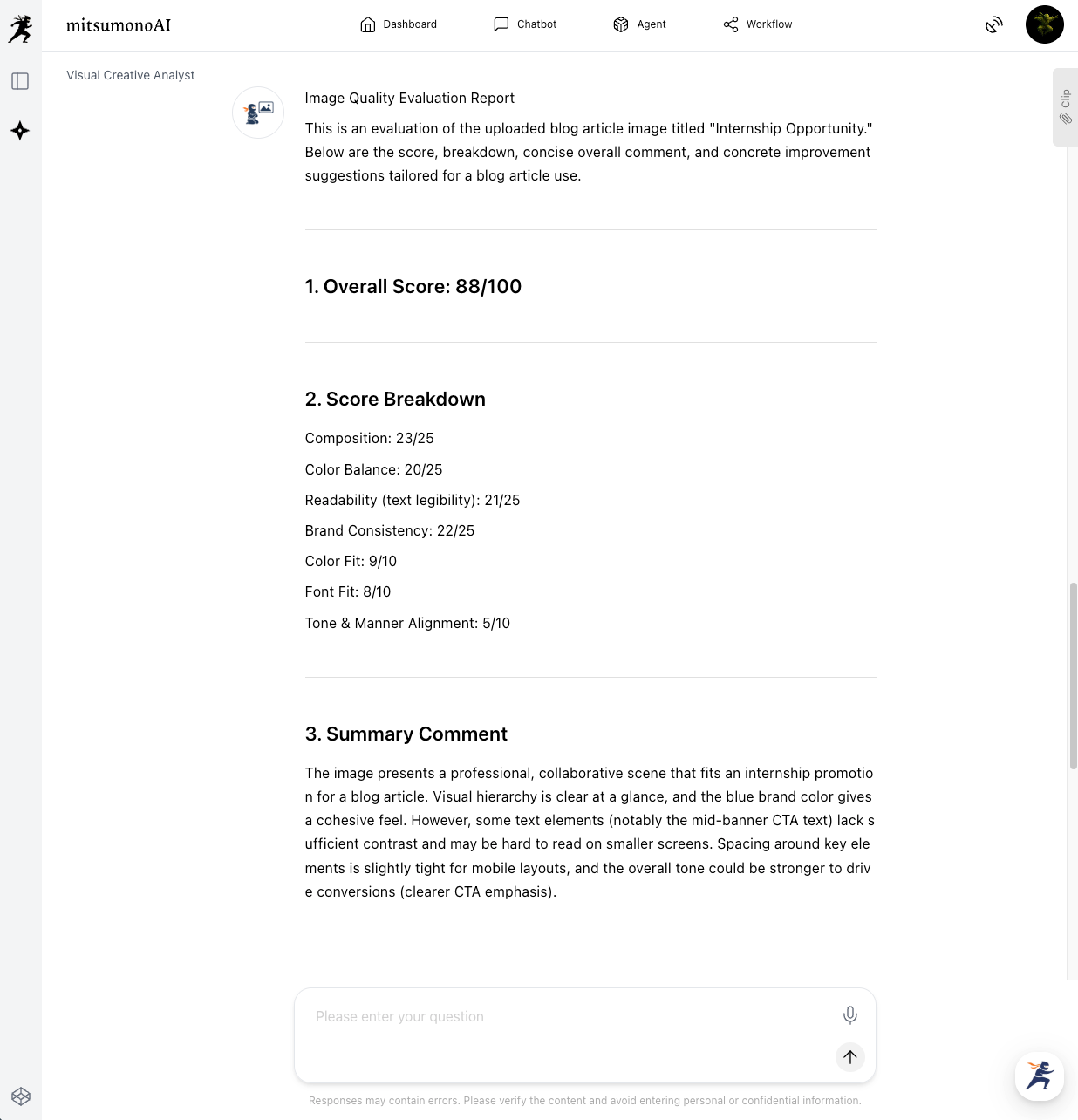
Furthermore, request feedback from the viewpoint of "Recruitment Branding."
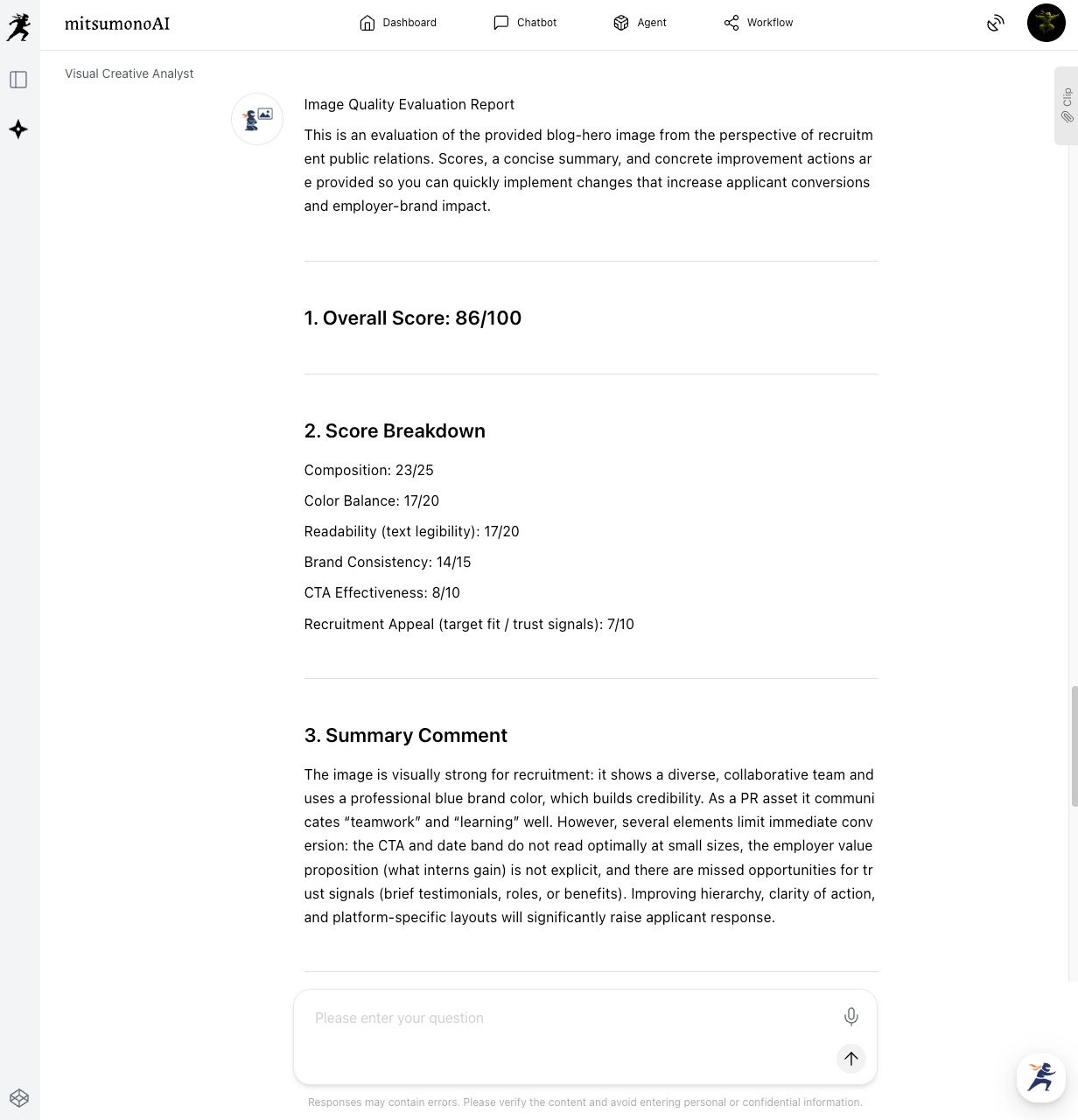
The AI, like a design expert, will point out problems that previously could only be described subjectively, using specific figures and logic.
Expected Outcomes of Utilization (Examples)
- Improvement in Application Rate and Strengthening of Recruitment Branding
Subjective issues like "it somehow doesn't look cool" can be made quantifiable with data and logically improved. The overall design quality of recruitment materials is unified, making it possible to give candidates the impression of a "progressive and tasteful company," consequently improving both the quality and quantity of applications. - Efficiency in Creative Production
When requesting revisions from a designer, providing specific instructions based on the AI's analysis reduces rework, thus improving the efficiency of the entire production process. - Reduction in Hiring Mismatches
By accurately conveying the company's culture and ethos through design, applications from candidates whose values match the company's increase, helping to prevent mismatches after joining.
Target Figures for the Initial Six Months
KGI:
- Number of applications via job boards: 30% increase
KPIs:
- Recruitment website bounce rate: 20% reduction
- Percentage of accepted offers citing "attraction to company culture" in post-acceptance surveys: 15% improvement