"Workation" to Increase Weekday Occupancy | AI-Proposed Marketing Plan to "Beat" the Competition
Accurately grasp the needs of workation users and the competitive landscape through AI-driven data analysis. Formulate a new "Workation Plan" that dramatically boosts room occupancy during the off-season and on weekdays, without relying on intuition or experience.

Tools to Use
- AI Model (ChatGPT-5 etc.)
- Product/Menu Development Planner
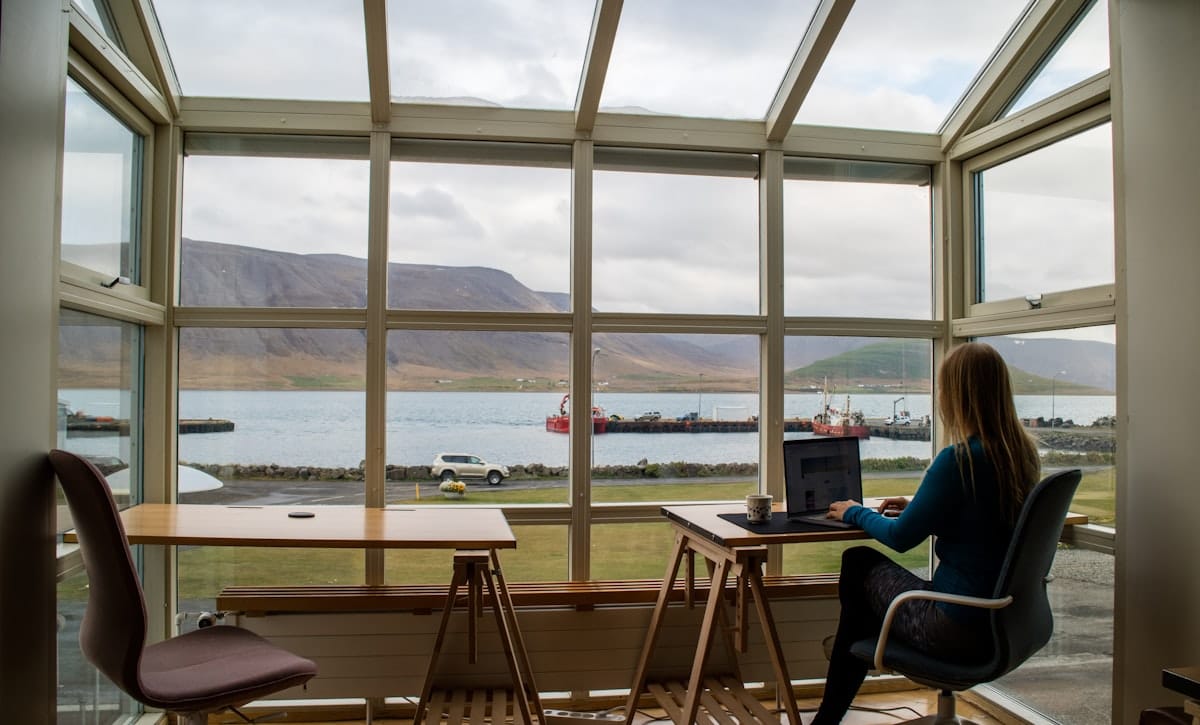
Your Workplace is Your Travel Destination. Tapping into the Workation Market with AI
In recent years, with the spread of remote work, "workation" (working while on vacation) has gained attention as a new style of work and travel. This trend involves enjoying a vacation destination while also performing work duties, driven by a growing need for people to focus on their jobs away from the hustle and bustle of the city, in nature-rich or non-daily environments. For those seeking a quiet environment, especially on weekdays, an onsen ryokan (hot spring inn) can be an attractive option.
To tap into this workation market and aim for improved occupancy during the off-season and on weekdays, it is crucial to plan the optimal accommodation package based on competitive analysis data and clearly differentiate yourself from the competition.
This time, we will introduce how to plan and evolve packages that attract workation users based on data.
Specific Procedures
Step 1: Grasp the Market through Competitor Research
▶︎ AI Model (ChatGPT-5 etc.)
First, identify competitor facilities that offer plans targeting your demographic (e.g., workation users) and thoroughly research the details of their plans, price ranges, special features, and strengths.
However, actually creating a competitor list and scrutinizing the contents of each workation plan is time-consuming.
Therefore, leverage the power of an AI model (like ChatGPT-5) to streamline this time-consuming information gathering process. The AI can analyze publicly available information, providing comprehensive competitor data in a short amount of time.
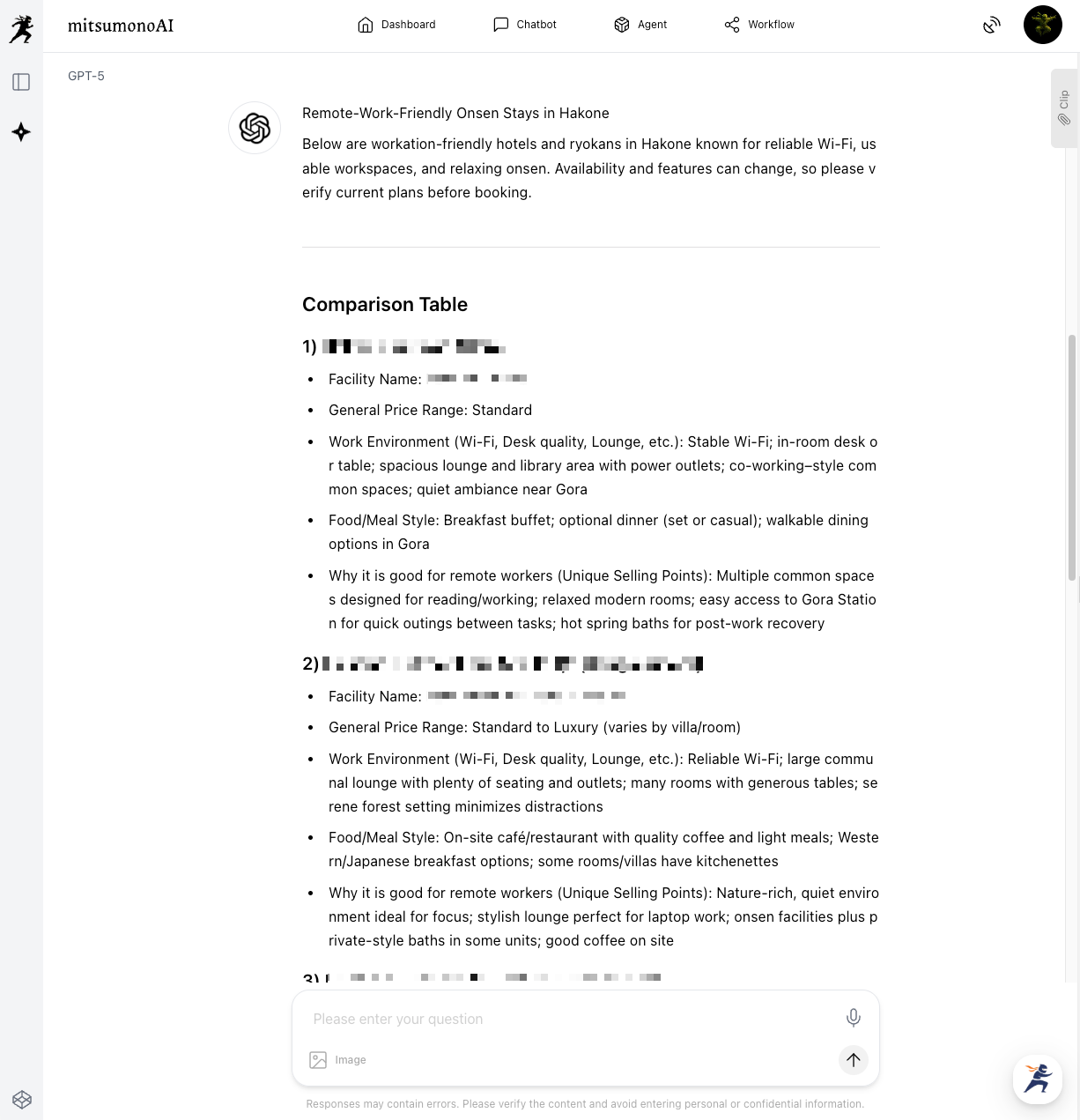
Provide the AI with a prompt like the one below to summarize the necessary data in a table format.
I am a digital nomad planning a "workation" (remote work trip) to Hakone next month. I am looking for accommodation where I can concentrate on work but also enjoy the onsen.
Please recommend 4-5 hotels or ryokans in the Hakone area that are famous for their workation plans or are remote-work friendly.
For each facility, please create a comparison table with the following columns:
・Facility Name
・General Price Range (e.g., Budget, Standard, Luxury)
・Work Environment (Wi-Fi, Desk quality, Lounge, etc.)
・Food/Meal Style
・Why it is good for remote workers (Unique Selling Points)
This analysis will provide valuable data for finding unique strengths when planning your ryokan's workation package.
Save the competitor information in the "clip."
Step 2: Plan the Workation Package
▶︎ Product/Menu Development Planner
Based on the information obtained from the competitor research (Step 1) and the ryokan's strengths, use the "Product/Menu Development Planner" to create the basic proposal for the workation package.
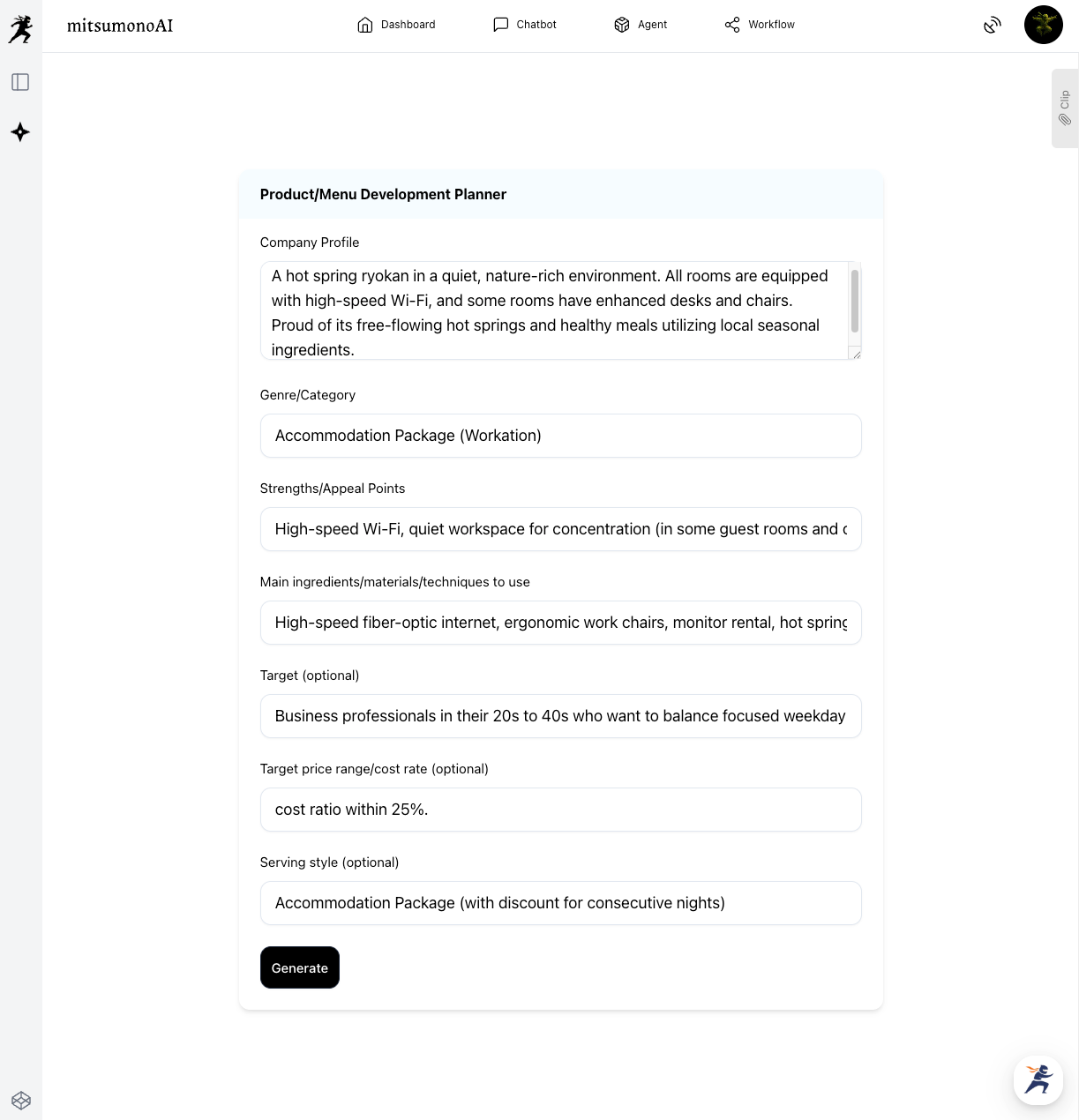
Based on the information you input, the AI will propose a basic plan for a workation package.
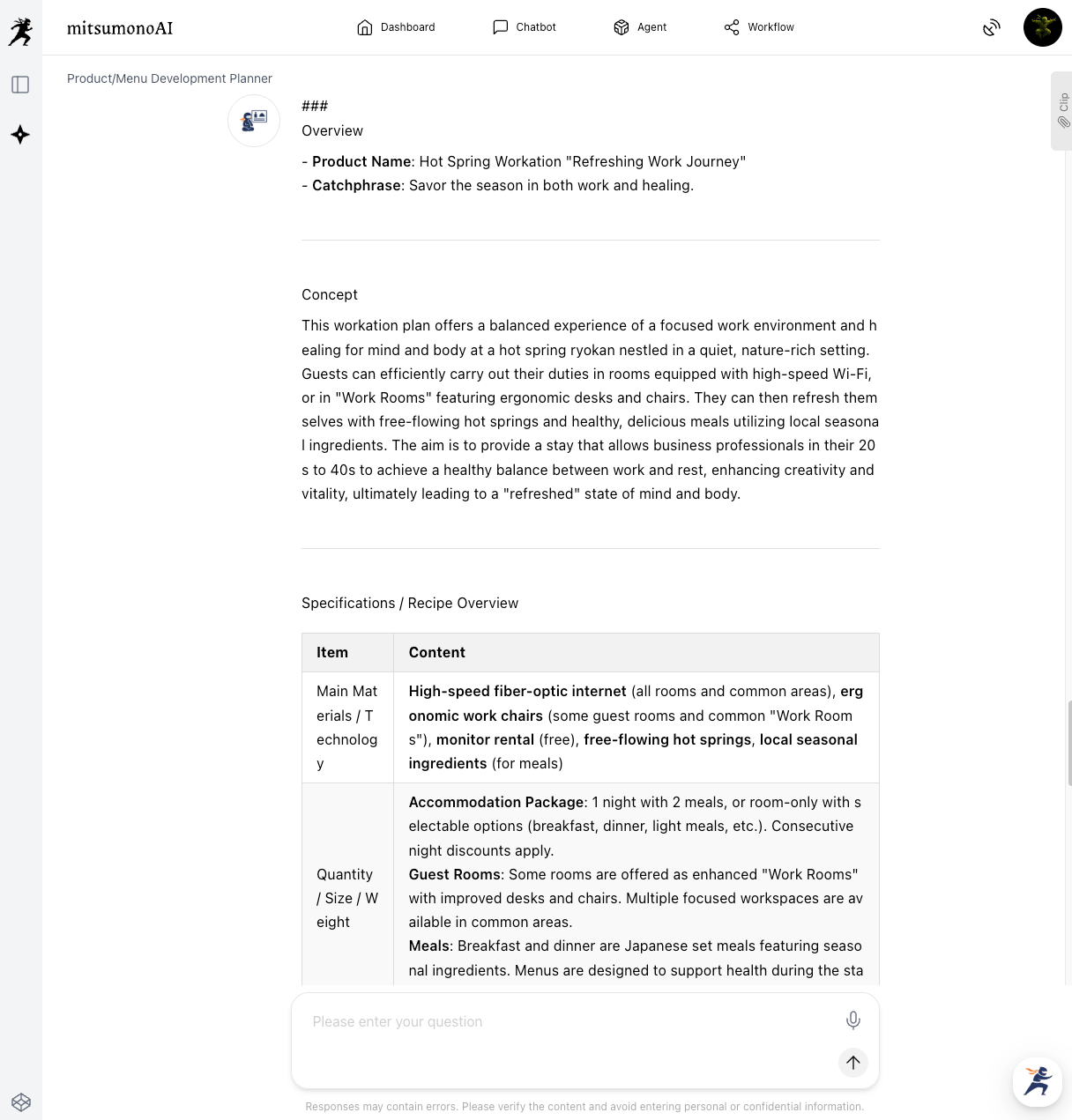
Step 3: Evolve the Plan to Differentiate from Competitors
▶︎ Product/Menu Development Planner (Continued)
Let's evolve the basic plan proposal obtained in Step 2 into a plan that can "beat" the competition.
Provide the AI with the competitor analysis information saved in Step 1 to clarify the points of differentiation.
[Paste the competitor facility list outputted in Step 1 here]"
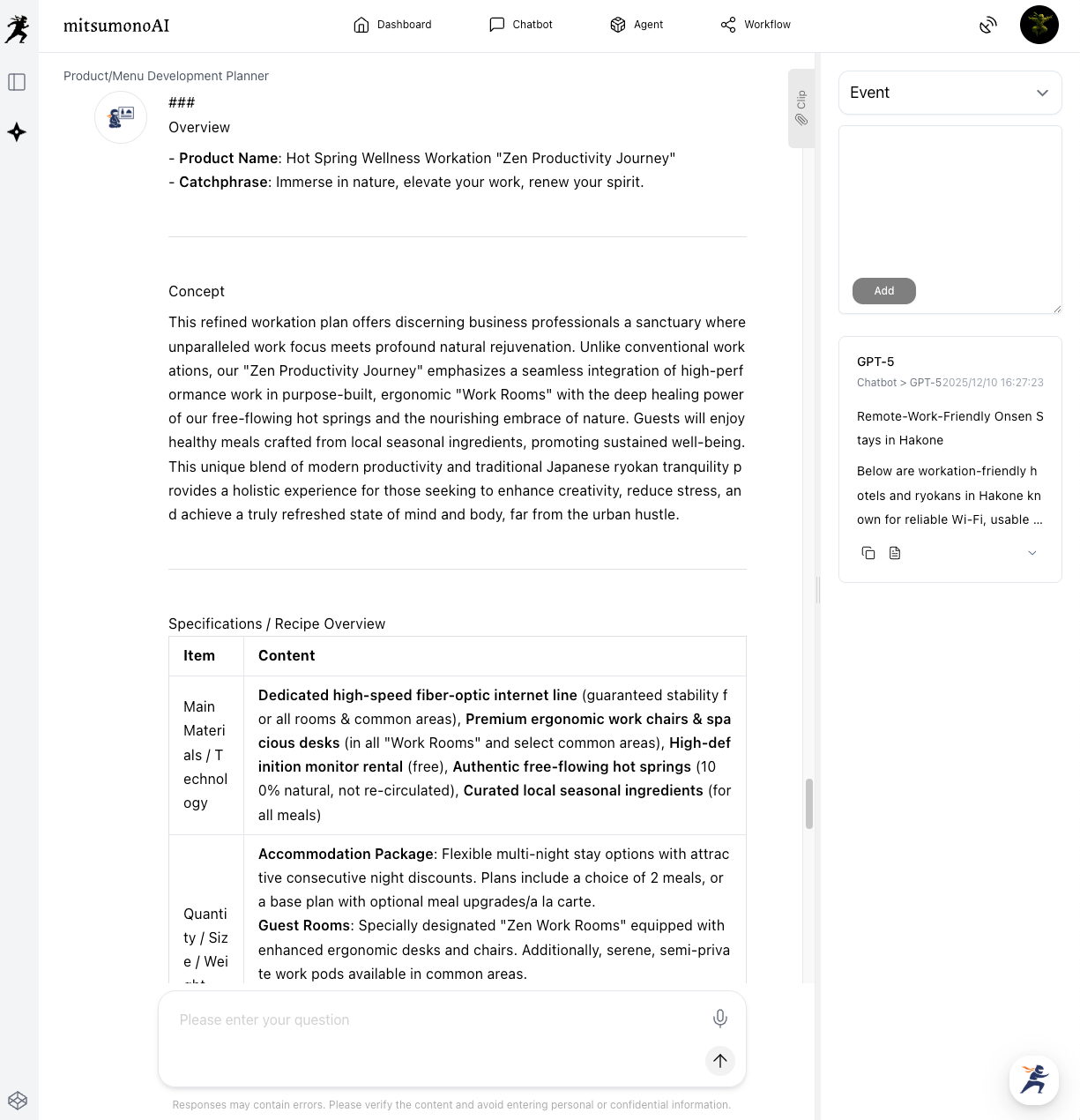
In this way, the AI will output a plan that is conscious of differentiation from competitors.
Ask the AI, "What are the differences from the competition?" to summarize the elements emphasized for differentiation. This information can be used in explanatory materials for internal review.
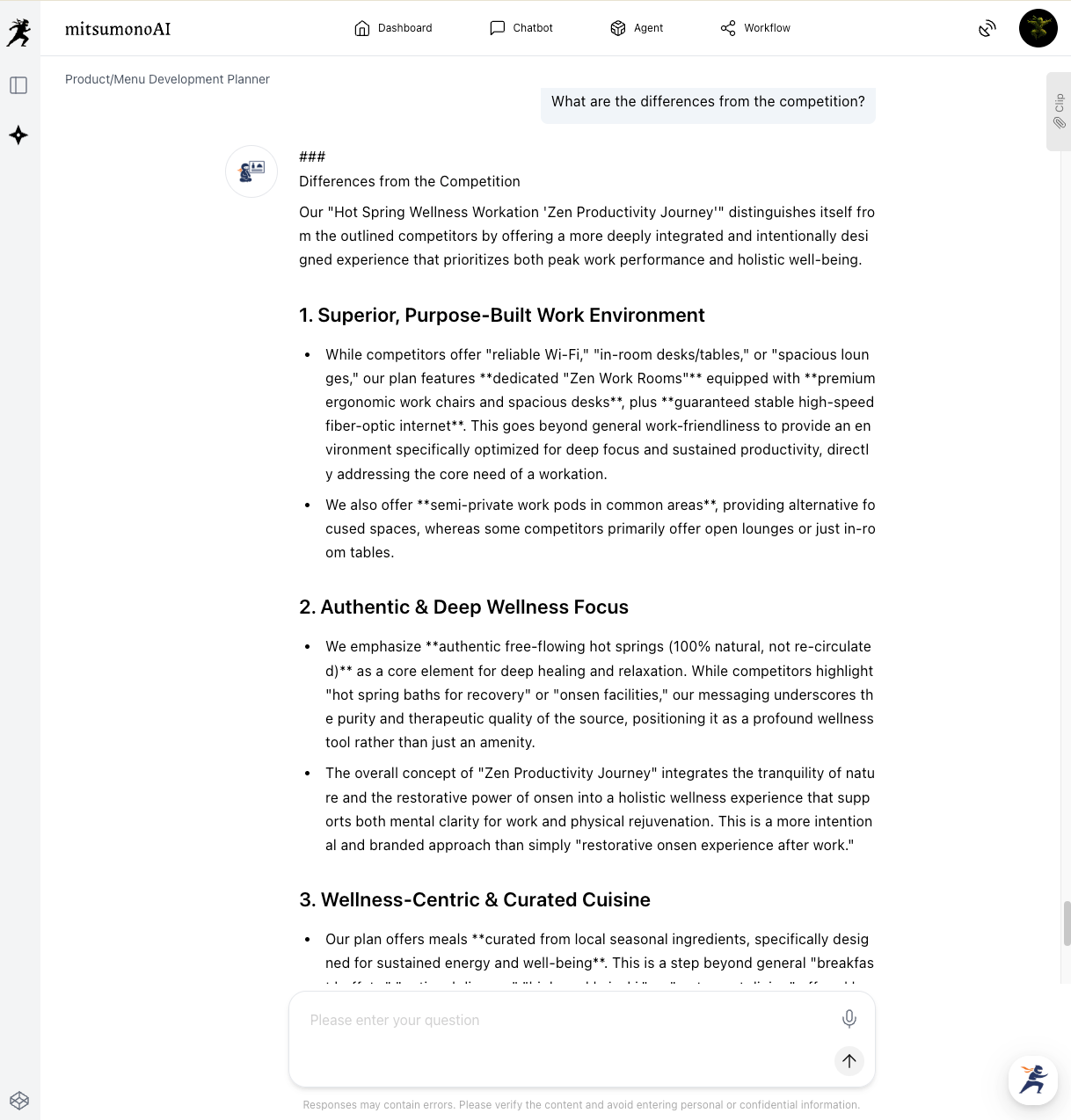
Step 4: Launch the Plan Offering
After internal discussion, update the workation plan proposed by the AI in Step 3 to a realistic version and launch the offering.
Here, it is important not to adopt the AI's proposal as is, but to make final adjustments according to the actual conditions of personnel structure, facility resources, budget, and other factors.
Outcomes Achieved Through Utilization (Examples)
- Improvement in Occupancy Rate
- Efficiently improves room occupancy during the off-season and on weekdays based on data.
- Acquisition of New Customer Segments
- Strategically attracts target demographics with specific needs, such as workation users.
- Efficiency in Planning and Promotion
- The AI supports everything from optimal pricing to effective information dissemination, significantly reducing time and effort.
- Strengthening of Competitiveness
- Enhances your ryokan's competitive advantage through strategies based on market trends and competitor information.
Target Values for One Year (Reference Example)
- KGI (Key Goal Indicator):
- Off-season/Weekday room occupancy rate: 5% increase year-over-year.
- KPIs (Key Performance Indicators):
- Annual bookings for the workation package: 20% increase year-over-year.
- Website/blog views regarding the workation package: 1,000 times per month or more.
- Overall satisfaction score of workation package users: Average 4.5 points or higher (out of 5).