How to Create a "Checklist" to Enhance Your Allergy Response Flow
Here are the concrete steps for using AI to analyze complex food allergy response manuals, identify common error points, and simultaneously create checklists and emergency response flows. Let's aim to use AI as a risk management specialist to standardize safety criteria and improve service quality.


AI Tools Used:
- File Analysis Assistant
- Sensei AI
The Challenge of Complex Allergy Responses and the Role of AI
For restaurants and lodging facilities, food allergy response is one of the most critical and sensitive operations in ensuring customer safety. However, the process is extensive and often complex, encompassing everything from receiving the declaration and checking the menu to preventing cross-contamination during cooking and performing the final check upon serving. Unfortunately, such complex processes inherently carry the risk of human error.
In this article, we will explain the specific steps for utilizing the "File Analysis Assistant" to have an AI analyze your current allergy response manual and identify points prone to error. Furthermore, we will detail how to ask the AI to propose the creation of an appropriate checklist and an emergency response flow to prepare for contingencies, aiming to clarify safety standards and strengthen the risk management system.
Specific Steps
Step 1: Have the AI Analyze Current Manuals and Procedures
▶︎File Analysis Assistant
Upload the manuals and procedure documents related to the current food allergy response flow.
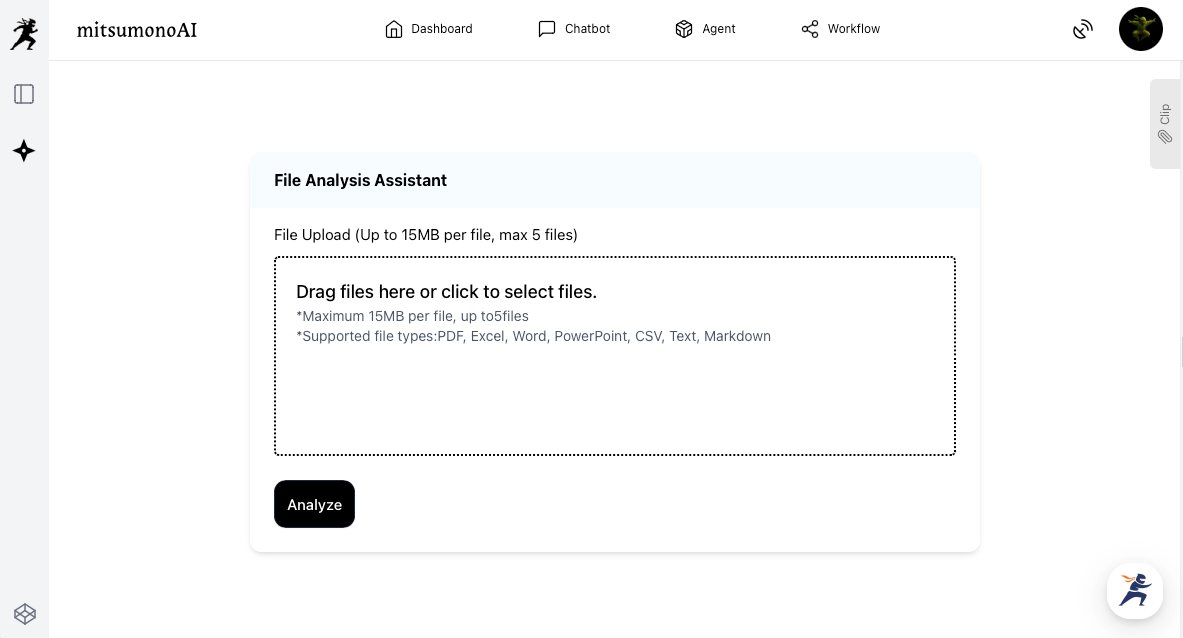
Next, ask the AI to identify areas prone to human error or points that need improvement within those documents.
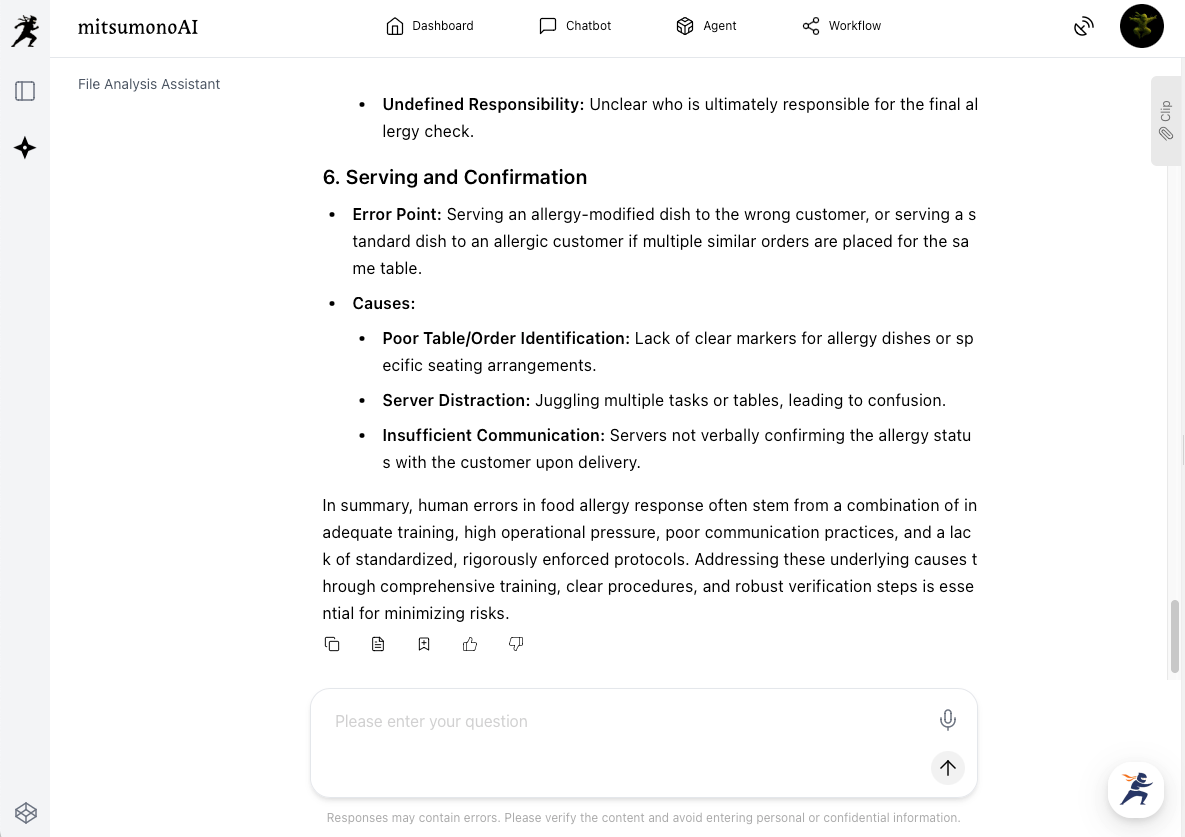
The File Analysis Assistant will output an objective analysis of potential risks at each stage of the flow and specific points where errors are likely to occur.
Step 2: Have the AI Propose an On-Site "Checklist" and "Emergency Flow"
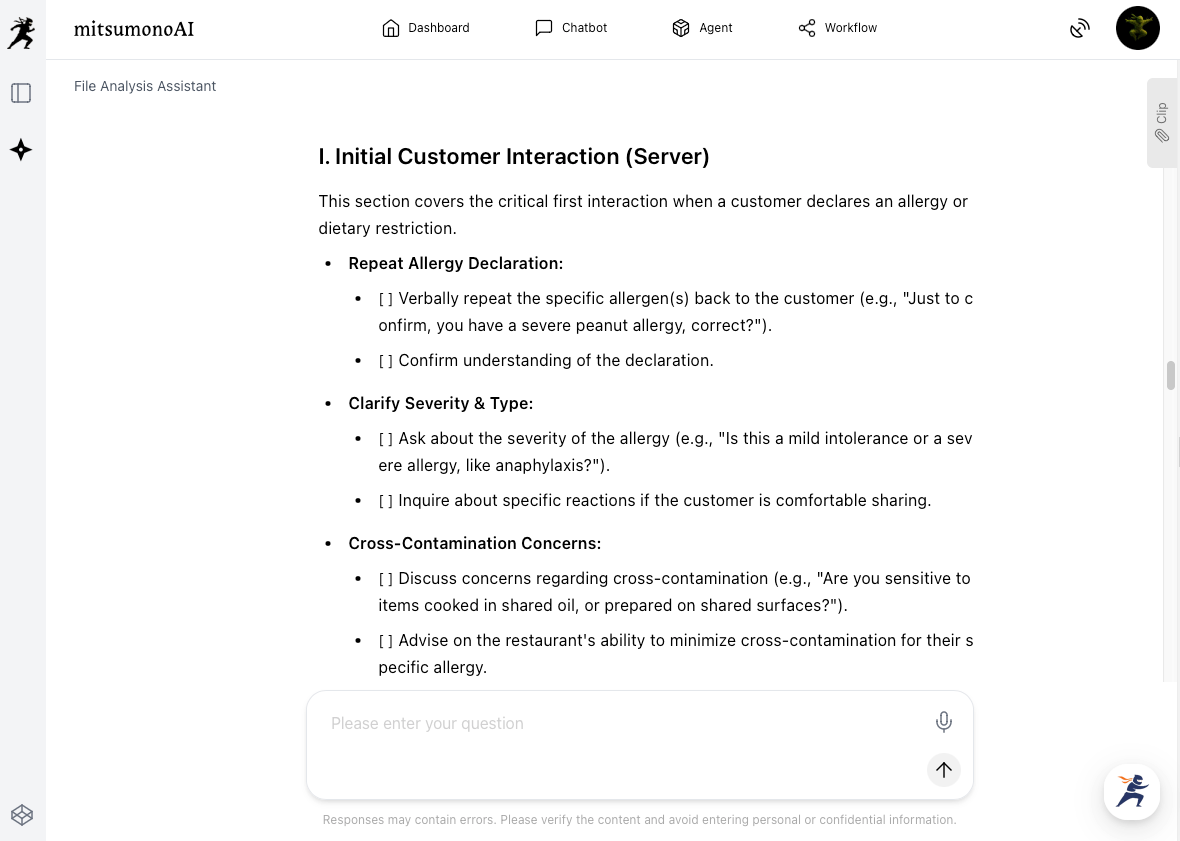
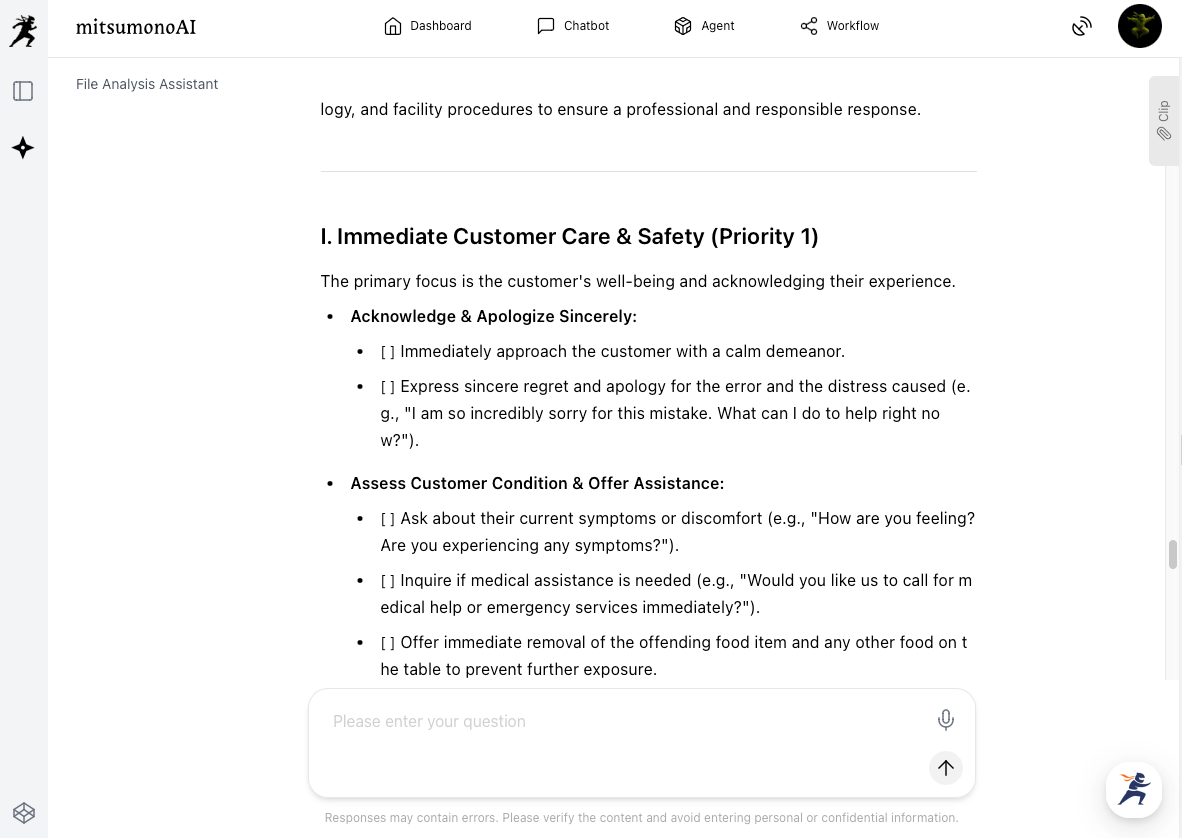
Based on the error points identified in Step 1, ask the AI to create a draft for a "Checklist" to be used on-site and an "Emergency Response Flow" to be posted publicly for staff.
- Checklist Proposal
- Emergency Response Flow (for On-Site Posting)
Step 3: Improve Allergy Response Safety Based on the AI's Proposal
Based on the proposals from Sensei AI, clarify the safety standards for food allergy response and ensure all staff share a common understanding of the process. By utilizing the AI's objective perspective and proposals, you can strengthen your risk management system.
- Thorough Communication and Training for All Staff
Conduct regular training and role-playing so that all staff understand and can implement the created checklist and emergency flow. - Information Sharing Mechanism
Establish a mechanism to accurately and quickly share allergy response information (e.g., customer declaration details, assigned cook, server, etc.) among relevant personnel. - Continuous Review and Improvement
Regularly check the actual operational status and update/improve the checklist and emergency flow as needed based on incidents that have occurred and new findings.
Outcomes Gained Through Utilization (Example)
- Clarification and Standardization of the Food Allergy Response Flow
The AI's analysis and proposals organize the complex allergy response flow, establishing standardized procedures that are easy for anyone to understand. - Reduction of Human Error and Improvement of Safety
The on-site posting of the checklist and emergency flow prevents human errors such as missed confirmations and information transfer mistakes, ensuring customer safety. - Strengthening of Risk Management and Operational Efficiency
By utilizing the AI from a risk management perspective, a system is established for calm and appropriate response in case of contingencies, elevating the facility's overall safety standards. It also leads to efficiency in manual creation and information sharing.
Target Metrics 3 Months After Implementation
KGI:
Claims due to human errors related to food allergies: 0 cases
KPI:
- Completion rate of the allergy response checklist: 100%
- Understanding of the emergency response flow: 90% or higher
Summary
By using the "File Analysis Assistant" to objectively analyze the existing complex allergy response manual with an AI's perspective, we were able to accurately identify specific risk points where human errors are likely to occur.
This collaborative approach with AI is applicable not only to this case but can also be utilized for creating checklists based on existing manuals and rules, as well as visualizing operational bottlenecks.
We encourage you to utilize the objective analytical power of AI to mitigate various risks.