Guide to Formulating "Guest Item Rules" to Prevent Trouble
Clear rules for carry-in items are essential to prevent potential fires, damage to equipment, and disturbances to other guests. This article explains the process of efficiently creating "Rules for Guest Items," "Explanation Manuals," and "Wording for Various Notices" using AI.


Tool Used
- Sensei AI - Accommodation/Restaurants, etc.
For Risk Management Regarding Guest Items
Recently, the fire risk associated with mobile battery ignition has been reported in the news, highlighting the importance of safety management. Especially in hotels and accommodations, troubles caused by various items guests bring in (pets, food and beverages, electronic devices, etc.), not limited to mobile batteries, can be a major challenge for facility operation.
To prevent these risks and provide a safe and comfortable experience for all guests, clear rule setting and manuals are essential. This article uses the handling of mobile batteries as a concrete example to explain the specific steps for creating rules to prevent troubles related to guest items.
Specific Steps
Step 1: Identifying Potential Troubles
Consult about a comprehensive approach to prevent troubles caused by mobile batteries brought in by guests.
What kind of troubles can be anticipated? "
Consulting with AI allows for a comprehensive identification of troubles from a professional perspective. At this stage, it is crucial to understand the potential troubles comprehensively.
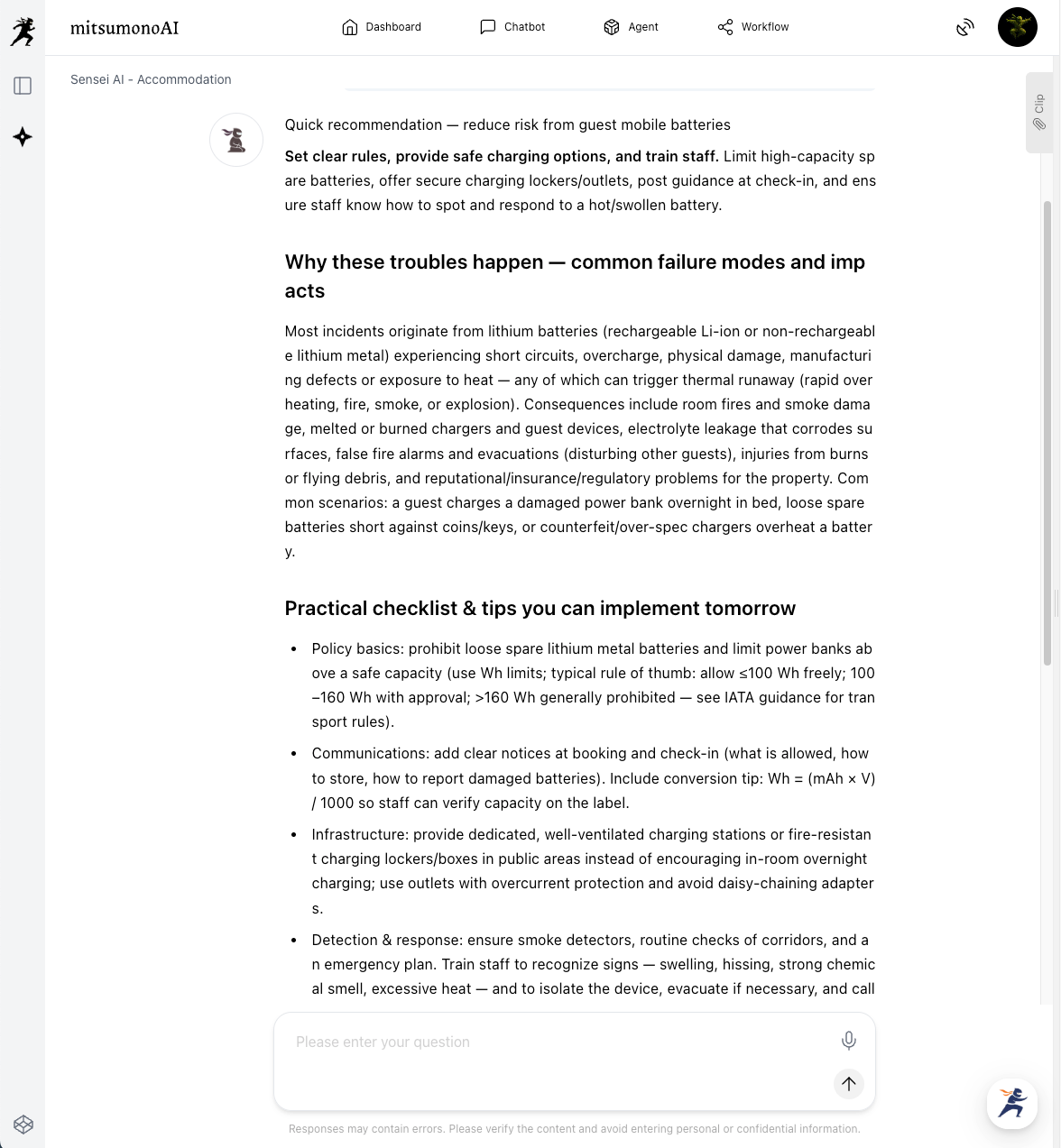
Step 2: Requesting Creation of Rules and Explanation Manual
Based on the consultation results from Step 1, ask the AI to create specific "Guest Item Rules" and an "Oral Explanation Manual" for staff to directly explain to guests.
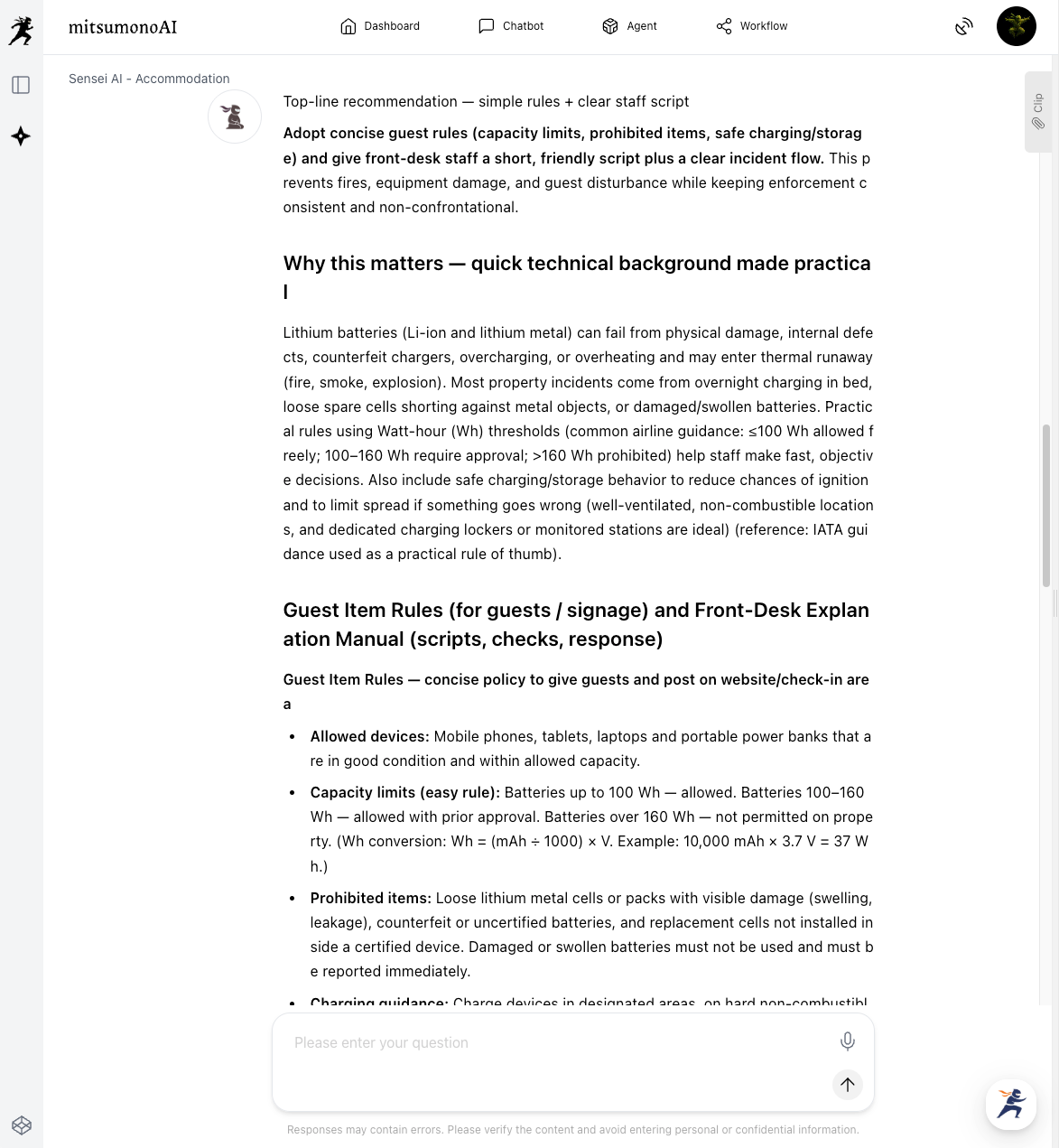
Step 3: Creating Various Notices and Notification Texts
Based on the terms and conditions wording and the oral explanation manual created by the AI, create the texts to be used on the official website, in reservation confirmation emails, and on notices within the facility.
・A warning notice for posting on the official website
・A sentence to be attached to the reservation confirmation email
・A concise cautionary note to be placed in the guest rooms "
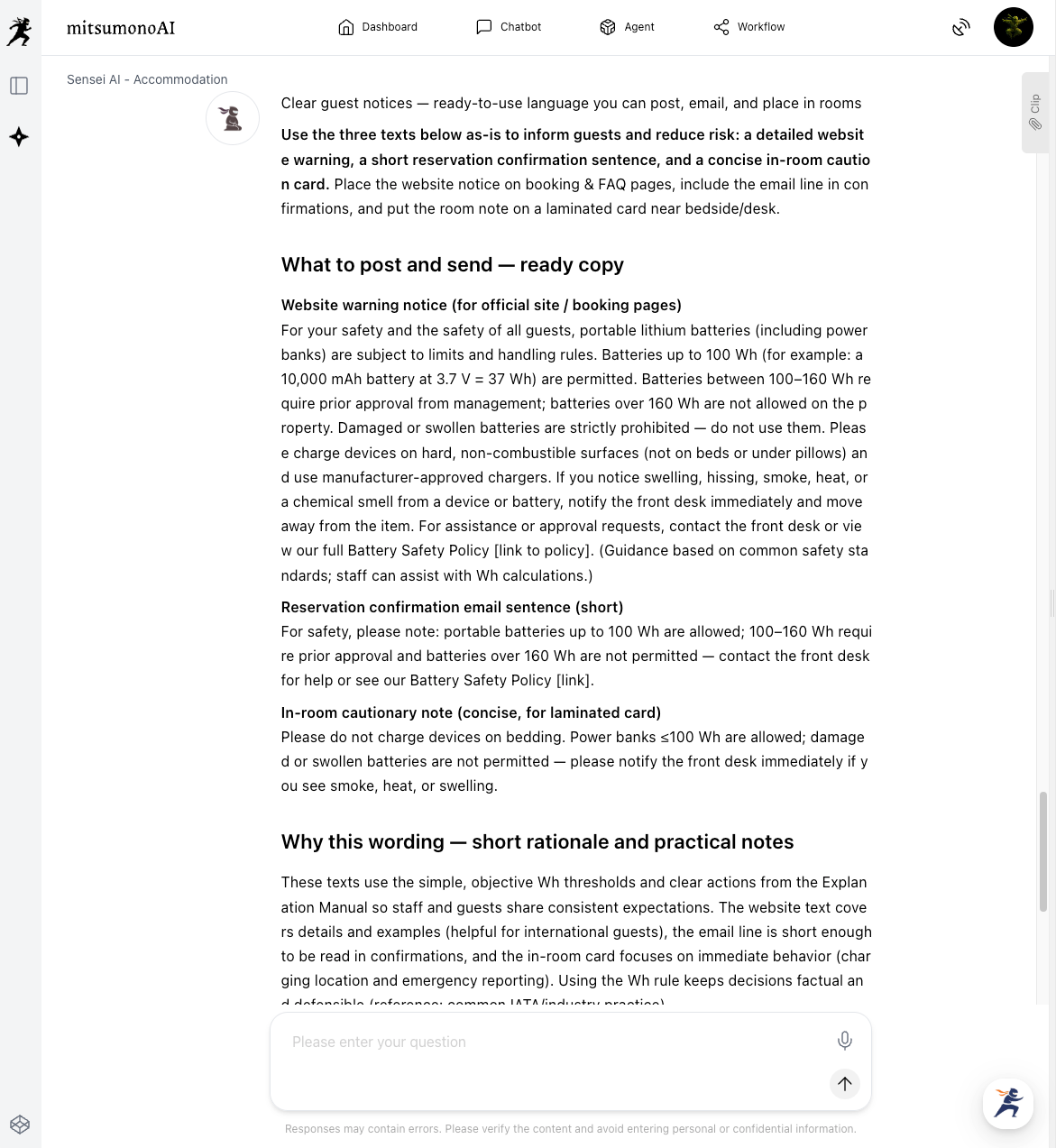
In this way, rules are formulated to promote customer understanding and prevent the occurrence of trouble.
Step 4: Verification and Implementation of Content
The terms and conditions wording, oral explanation manual, and various notice texts generated by the AI are verified before actual use, and operations begin at the facility.
Expected Outcomes from Implementation (Examples)
- Avoidance of Mobile Battery Related Risks
- Clear rules and manuals help avoid troubles such as fires and equipment damage caused by mobile batteries.
- Improved Customer Satisfaction and Trust Building
- When rules are clearly communicated in advance, customers can use their mobile batteries with peace of mind. Furthermore, by demonstrating the hotel's commitment to safety measures, it becomes easier to gain customer trust.
- Reduced Legal Risk and Secured Business Continuity
- The establishment of usage rules makes it easier to respond to liability risks in the event of an emergency. This minimizes the impact of unexpected claims for damages on the business, leading to stable operation.