Slashing Hospitality Energy Costs: Use AI to Prioritize and Execute High-Impact Savings
Slash hotel utility bills with AI. Learn how the File Analysis Assistant pinpoints energy waste, prioritizes high-ROI measures, and builds a sustainable profit strategy in 4 steps.


Why Energy Management is Now a Strategic Priority
Rising energy prices are no longer a temporary fluctuation; they are a direct threat to hotel profitability. With utility costs surging 30-50% in recent years, many properties are finding that even high occupancy rates can't guarantee a healthy bottom line.
This article explains how to use the "File Analysis Assistant" to scientifically identify waste in your utility data and build a data-driven DX (Digital Transformation) strategy that balances environmental sustainability with aggressive cost reduction.
The 4-Step AI-Powered Energy Strategy
STEP 1: Consolidate and Upload Utility Data
Upload your past three years of monthly utility data (Electricity, Gas, Water) along with current year-to-date figures.
AI Prompt:
"Compare our historical energy usage with the current year's data. Identify which cost categories have the highest growth rate and determine if the cause is increased consumption or rising unit prices."
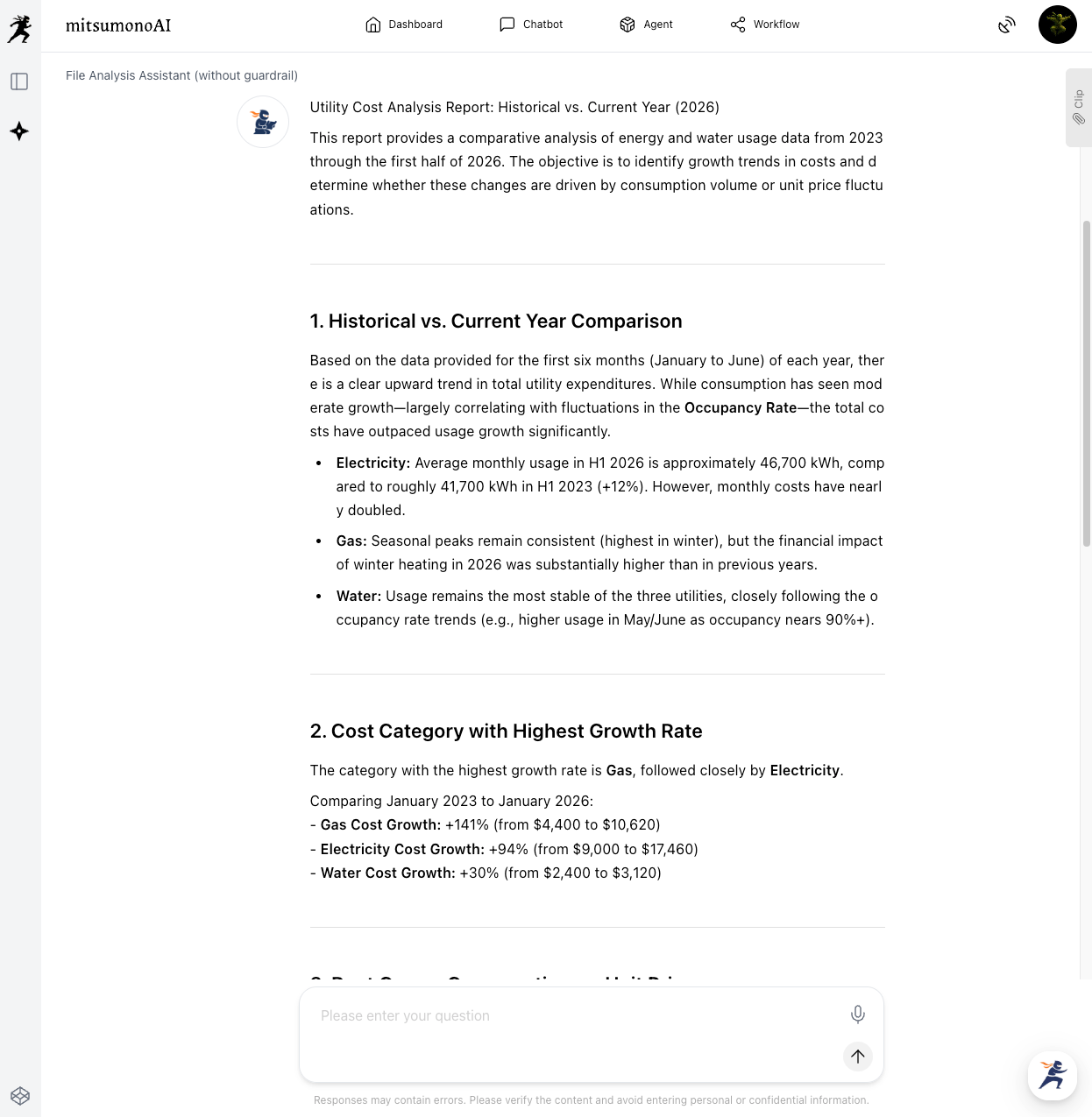
In minutes, AI processes data that would take a human analyst days to compile, providing an objective baseline for your strategy.
STEP 2: Identify High-Priority Targets
Once the data is processed, ask the AI to rank the targets.
AI Prompt:
"Rank the cost categories by reduction priority and provide a rationale for each."
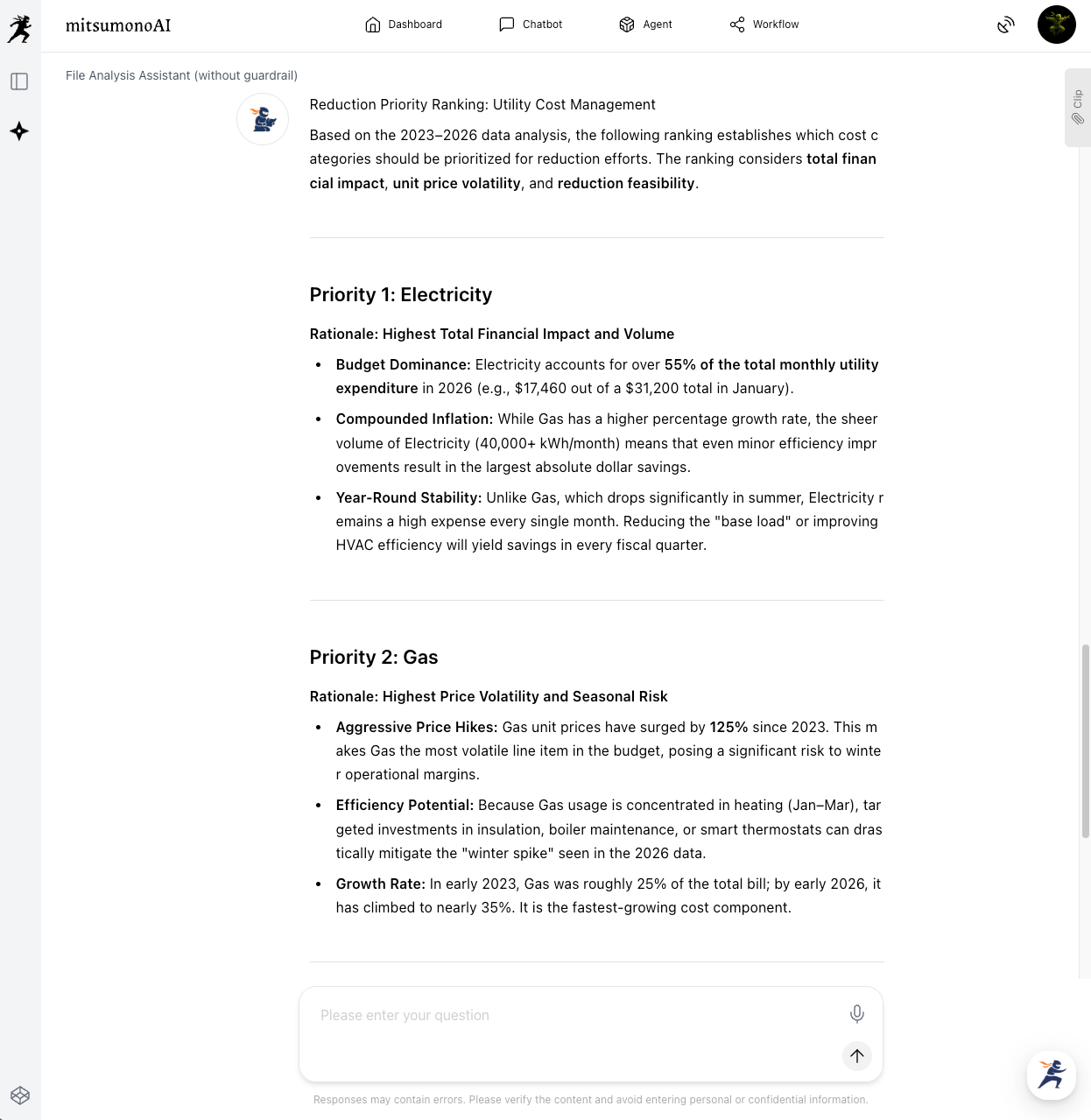
This ensures your team focuses on the "vital few" areas where the biggest savings are possible, rather than wasting time on low-impact initiatives.
STEP 3: Generate Actionable Interventions
Once the target (e.g., Electricity) is identified, ask for specific, realistic solutions.
AI Prompt:
"Propose 3 specific cost-saving measures for electricity that require low initial investment, show results within 3-6 months, and have minimal impact on guest satisfaction."
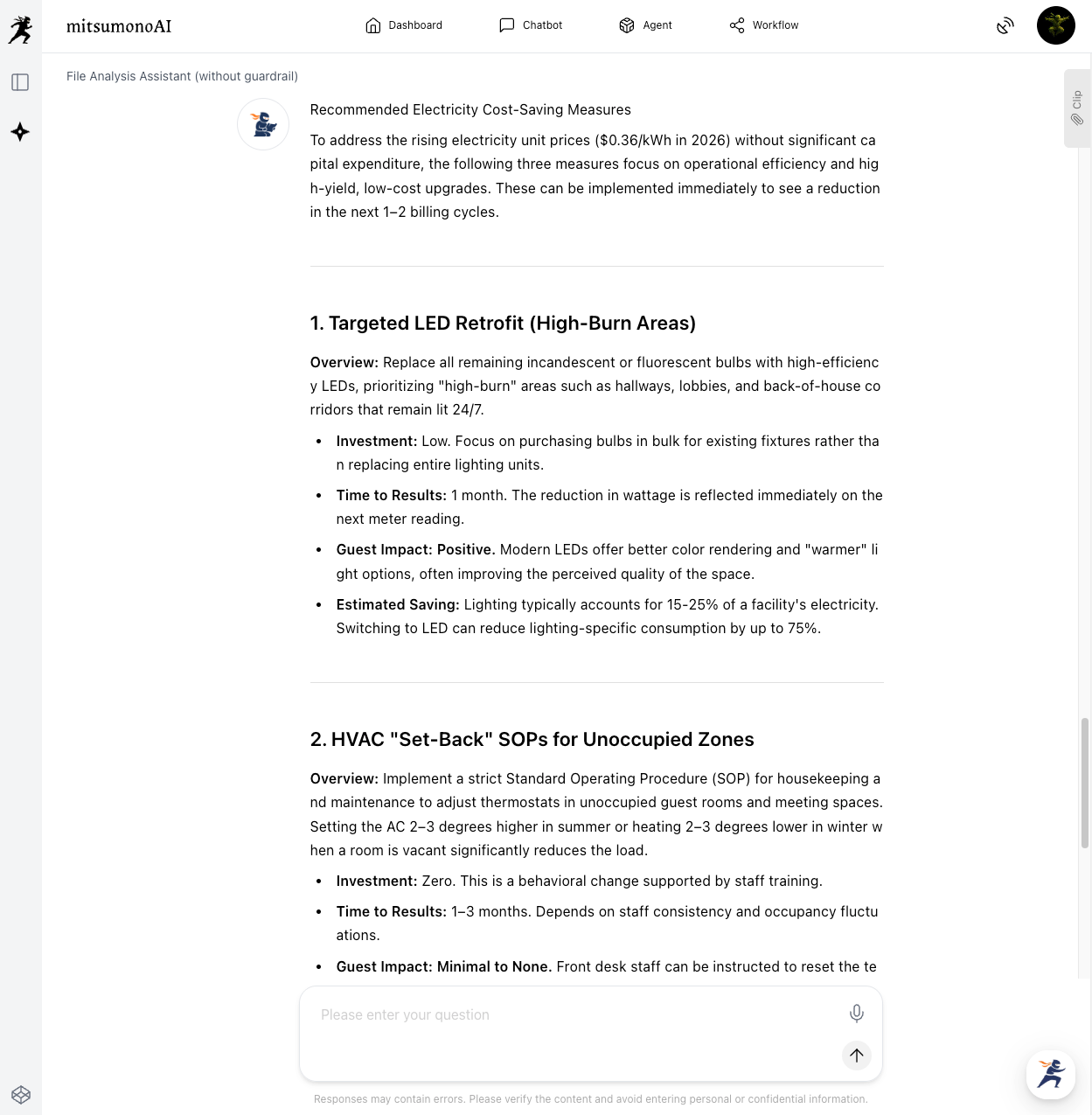
AI provides a neutral, data-backed proposal that helps resolve internal debates between departments and aligns the team toward execution.
STEP 4: Executive Review and PDCA Cycle
Management and department heads conduct the final review, focusing on factors AI cannot quantify: budget availability, guest experience impact, and staff workload.
- Implementation: Launch approved measures (e.g., renegotiating utility contracts or optimizing HVAC schedules).
- Monitoring: Track the reduction effect monthly.
- Continuous Improvement: Refine the strategy based on AI analysis to establish a robust PDCA cycle.
Strategic Outcomes: Turning Energy Efficiency into a Competitive Advantage
Implementing AI-driven energy analysis is more than a cost-saving measure; it represents a fundamental shift to "Data-Driven Management," strengthening the core profitability of your property.
- Accelerating Decision-Making through Data Visibility
What used to take a week of manual data collection and departmental coordination is now condensed into minutes. By clearly distinguishing between "unit price hikes" and "consumption increases," AI eliminates perception gaps between on-site staff and executive management, enabling rapid, evidence-based decisions. - Strategic Resource Allocation for Maximum ROI
Move beyond guesswork like "just turn off the lights." AI scientifically prioritizes interventions that require low initial investment but offer high short-term impact. By focusing limited budget and manpower on the "vital few" areas with the highest potential, you achieve the fastest route to margin improvement. - Building Sustainable Brand Value through ESG Management
AI simulates complex scenarios to balance cost reduction with guest satisfaction and environmental goals. This transcends simple expense cutting, evolving into a proactive "Green Strategy" (SDGs/Decarbonization) that enhances your brand value in the eyes of conscious travelers and investors. - Operational Excellence and Autonomous PDCA Cycles
AI provides a neutral, data-backed "common language" that builds consensus across departments and increases staff buy-in. By setting clear targets—such as a 15% YoY reduction—you empower your team to run autonomous improvement cycles, significantly boosting the organization's overall execution power.
Summary: Transforming Cost Management into a Strategic Growth Engine
Energy price volatility is a structural challenge for the hospitality industry, not a temporary one. mitsumonoAI solves this problem by turning cost management into a strategic engine for growth through the following:
- Data-Driven Consistency: By sharing your historical data and facility goals with the AI, you ensure a highly objective and consistent reduction strategy that does not rely on individual intuition.
- Minimized Lead Time to Results: The workflow automates everything from complex gap analysis to specific action planning, maximizing the speed of business improvement.
- Strategic Synergy (Human-AI Co-creation): AI handles the quantitative data crunching, while humans focus on hospitality, guest experience, and safety. This collaboration creates a "next-generation operating model" that maximizes profit without compromising service quality.
Why not evolve your energy management from a defensive, manual chore into a powerful offensive strategy that fuels your profit? With AI as your partner, you can transform complex utility bills into clear competitive advantages.
mitsumonoAI is a business-specialized AI platform designed to simultaneously enhance "quality of work" and "speed."
Beyond energy cost reduction, it can be utilized for various hospitality challenges—such as labor shortage solutions, guest experience enhancement, and organizational reform—to solve problems, improve efficiency, and create new value for your business.