Practical Recipe Development : Mastering the Art of Dialogue with your AI Chef
Stop struggling with overly complex AI recipes. Learn how to bridge the gap between creative ideas and kitchen reality by treating AI as a collaborative partner for your specific operations.


Adapting AI Recipes for the Field: Menu Development Considering Operational Constraints
This guide explains a conversational approach to optimizing creative AI-generated recipes to fit your restaurant's operations, cost ratios, and equipment, ensuring they can be reliably implemented on the floor.
【Recommended for those facing these challenges】
- AI-proposed recipes are too complex to integrate into busy kitchen operations.
- Idealized ingredient lists cause the target food cost ratio to be significantly exceeded.
- Steps are included that cannot be replicated with current kitchen equipment or staff skill levels.
- You want to move beyond simple brainstorming and use AI as a practical development partner.
■ Practice | Step-by-Step Guide
Here, we simulate a case where a cafe struggling with labor shortages develops a signature "Seasonal Pasta" menu by adjusting a recipe through dialogue with an AI.
Step 1: Get the "Ideal Recipe" from the [Recipe Development Chef]
First, expand your creative ideas without worrying too much about constraints.
[Preparation & Execution]
Launch the Recipe Development Chef and input your basic concept.
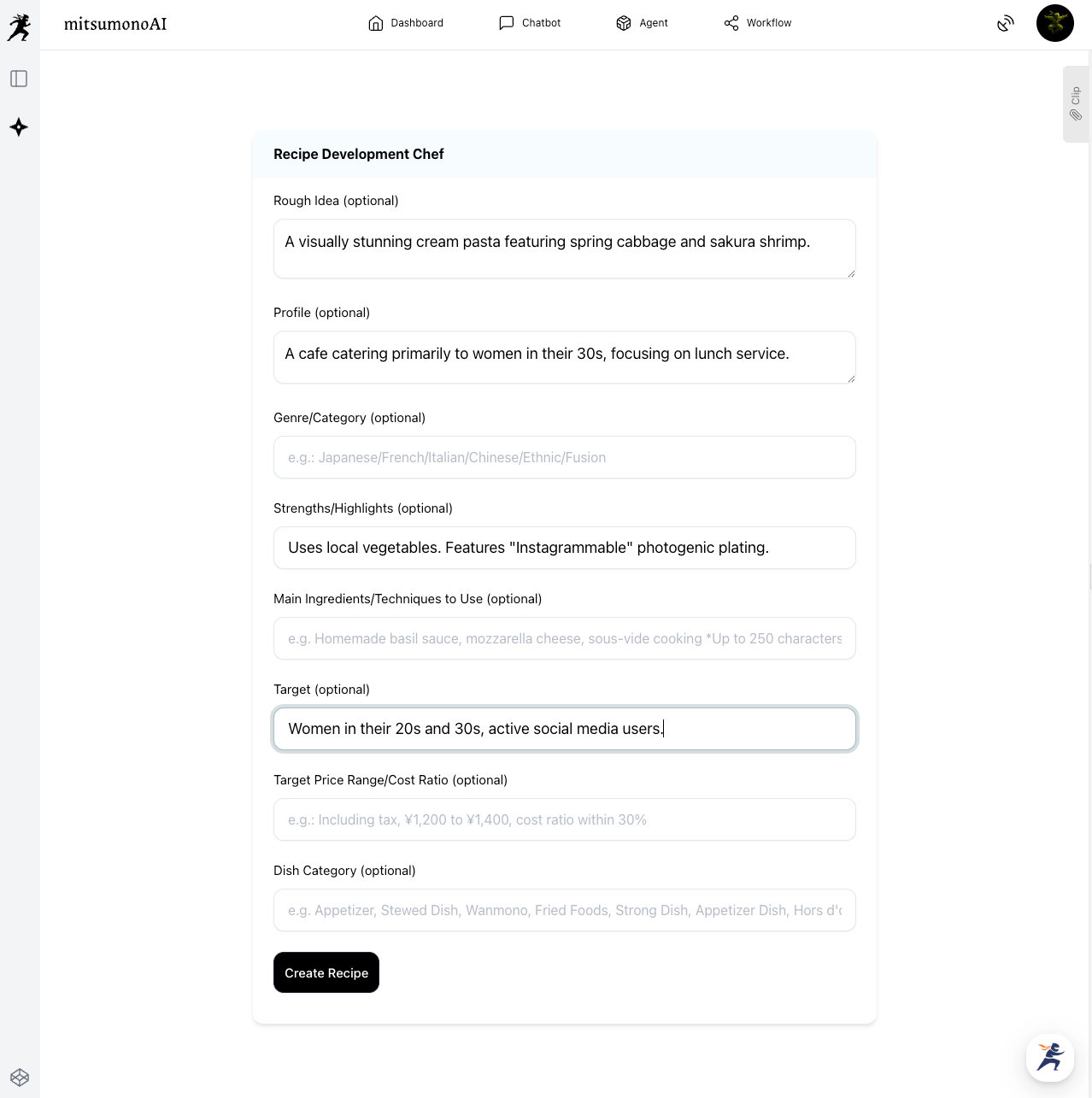
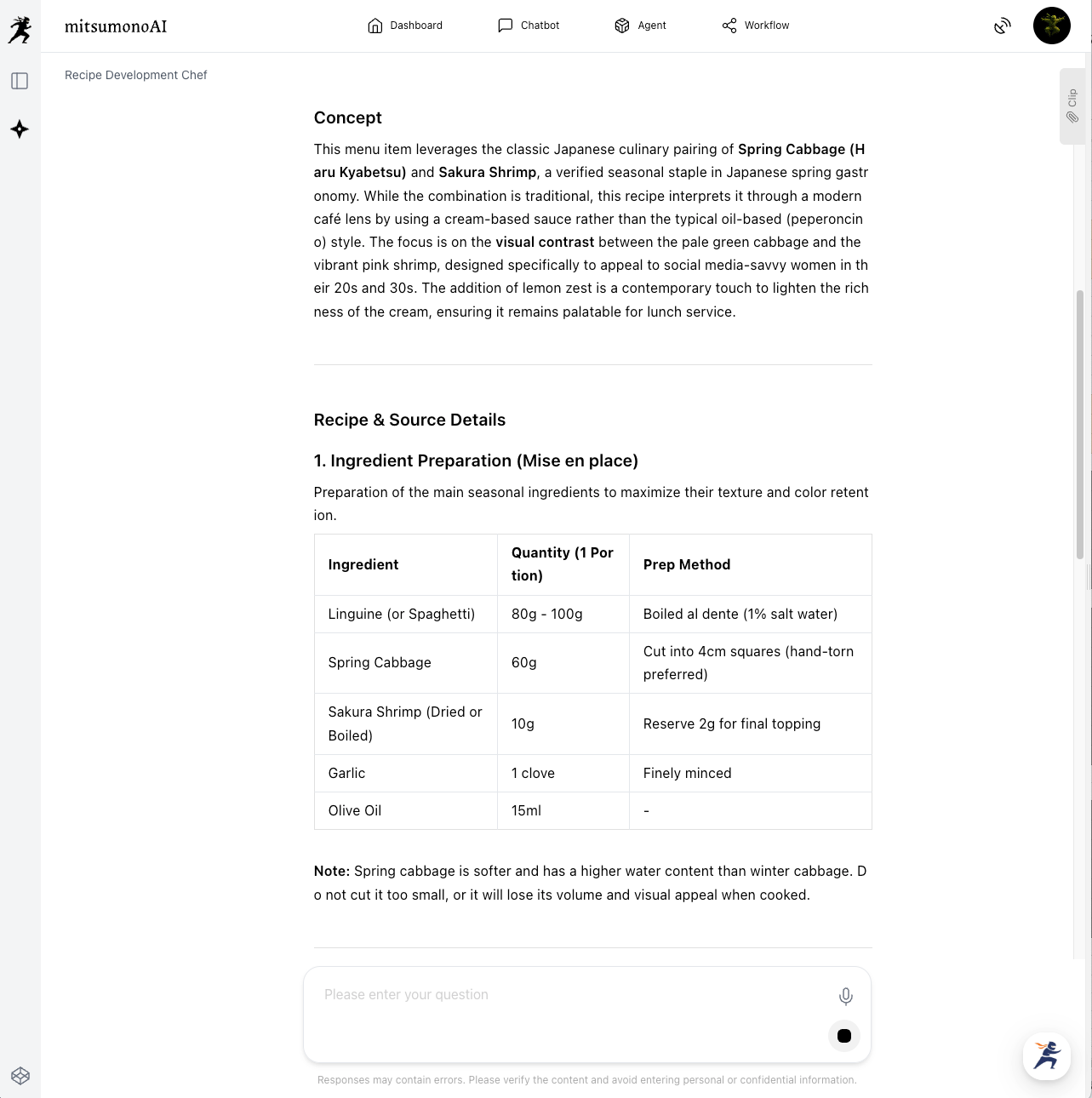
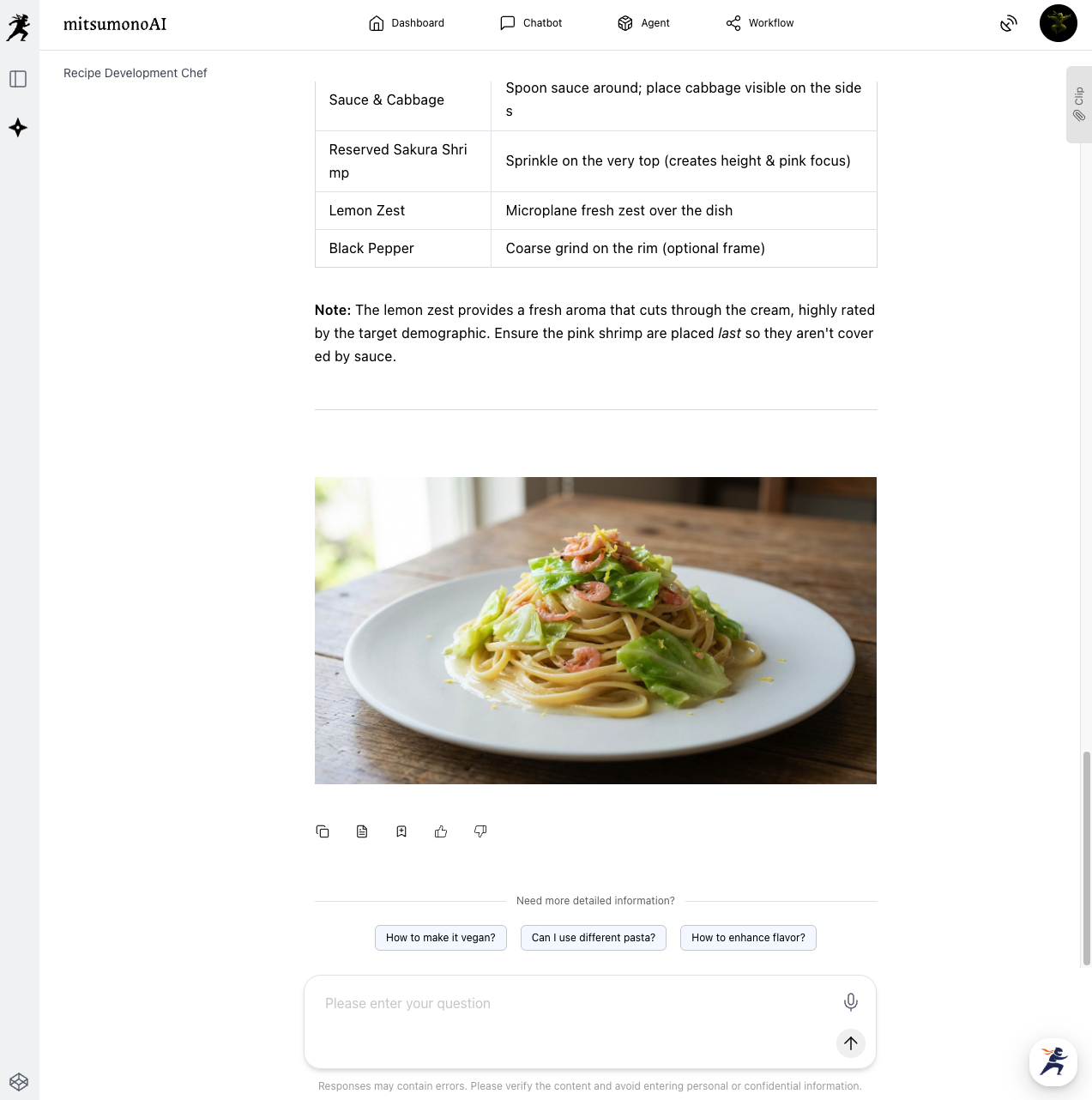
While lovely, there is no capacity to boil fresh pasta and toss individual pans during the lunch peak. Furthermore, specialty ingredients like "dill" or "pink pepper" carry a high risk of food waste if not fully utilized. Instead of giving up, move to the next step.
Step 2: [Interactive Adjustment] Communicate "Kitchen Realities" for Revision
This is where the real work begins. Use the chat function to provide feedback and specific requirements to the AI.
Reply to the AI's response as follows: Prompt Example:
"This is a great concept, but the lunch rush is intense. Managing fresh pasta and tossing sauce for every single order is impossible. Also, I want to avoid specialty ingredients like 'dill' or 'pink pepper' due to inventory risks."
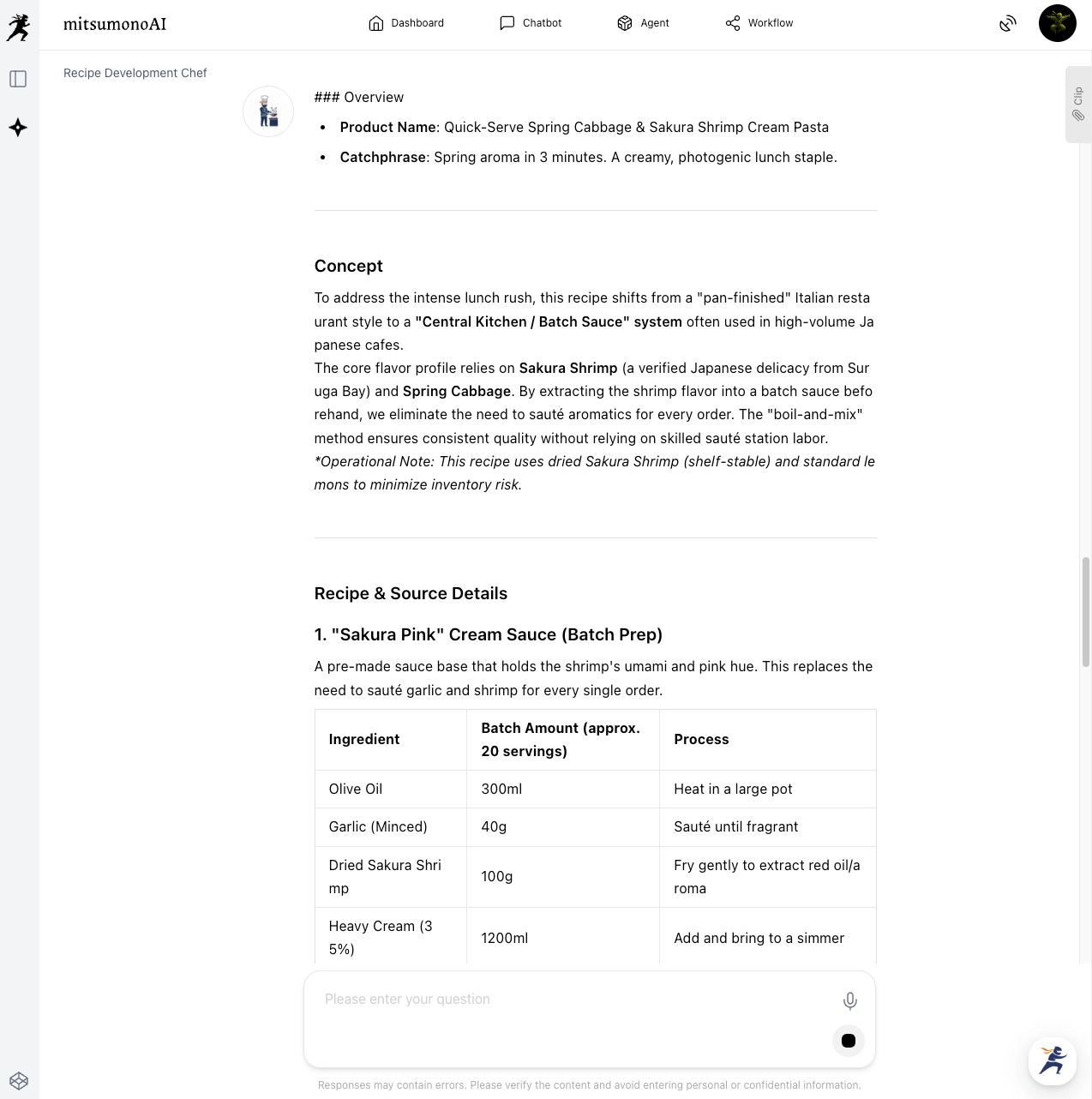
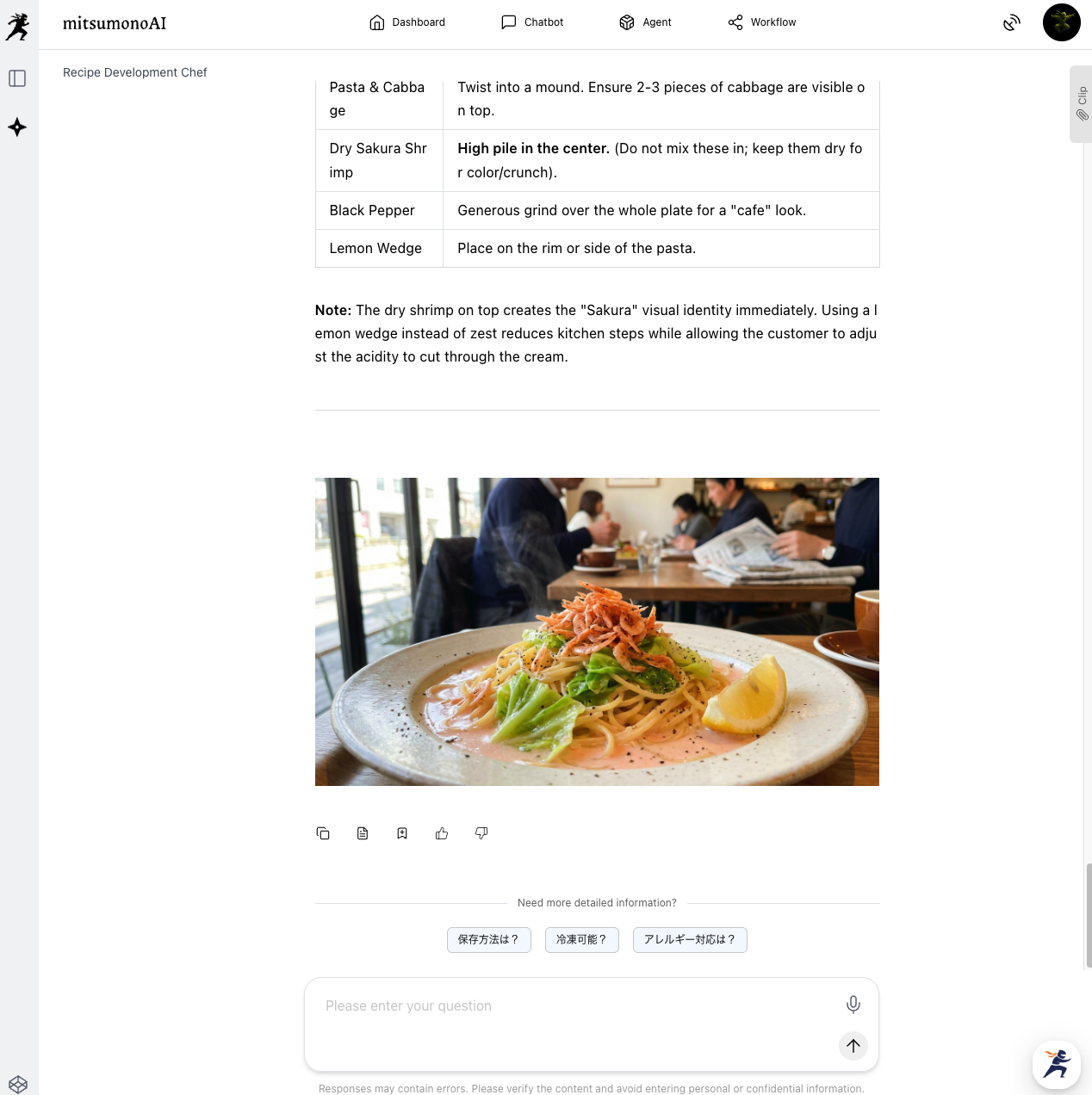
Step 3: [Final Adjustment] Balancing Cost and Flavor
Go a step further to adjust the food cost ratio.
Prompt Example:
"Looking better! However, dried sakura shrimp are expensive, so I need to lower the cost. Do you have ideas to reduce the amount of shrimp or use other ingredients to add volume without losing the flavor profile?"
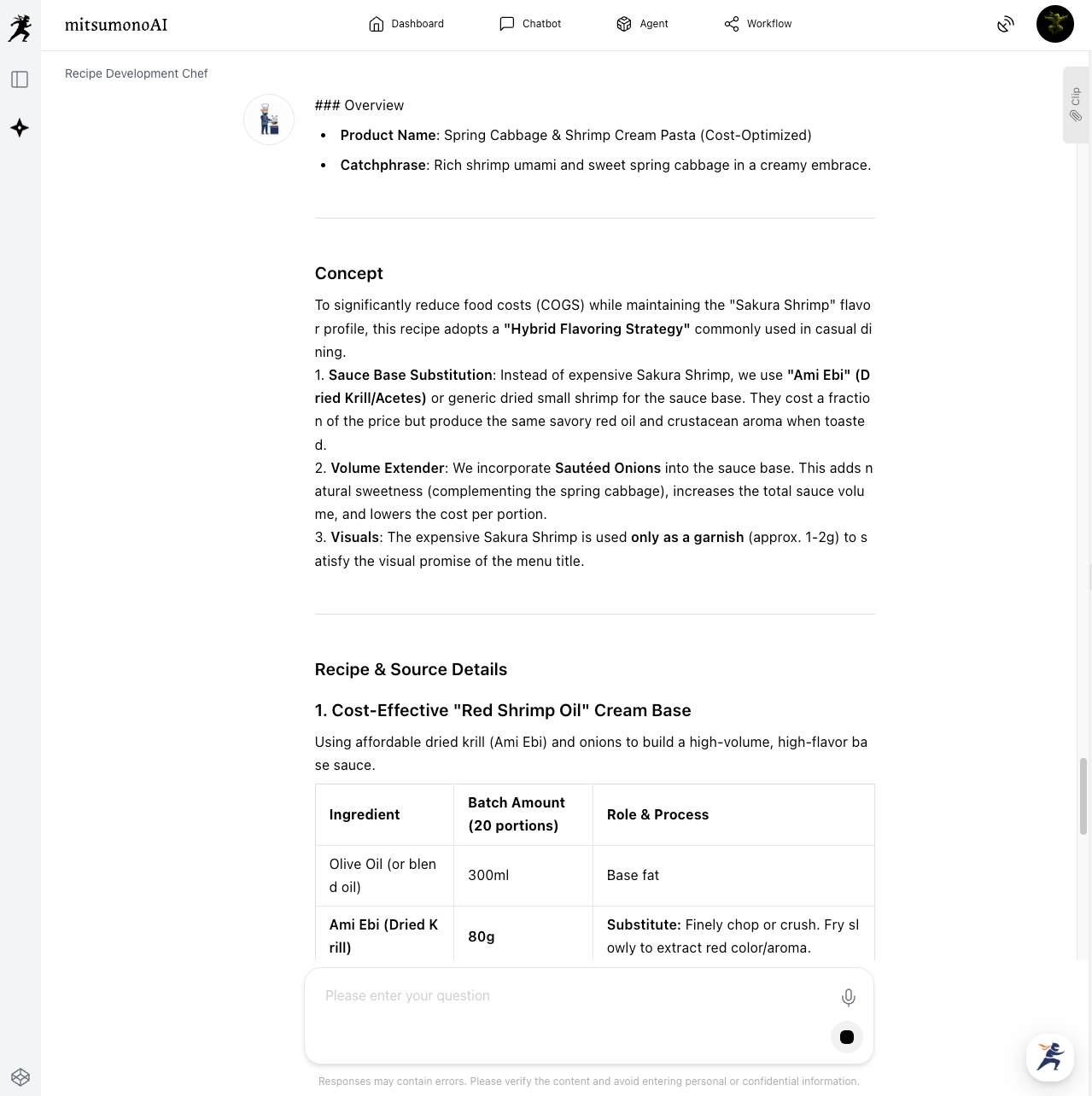
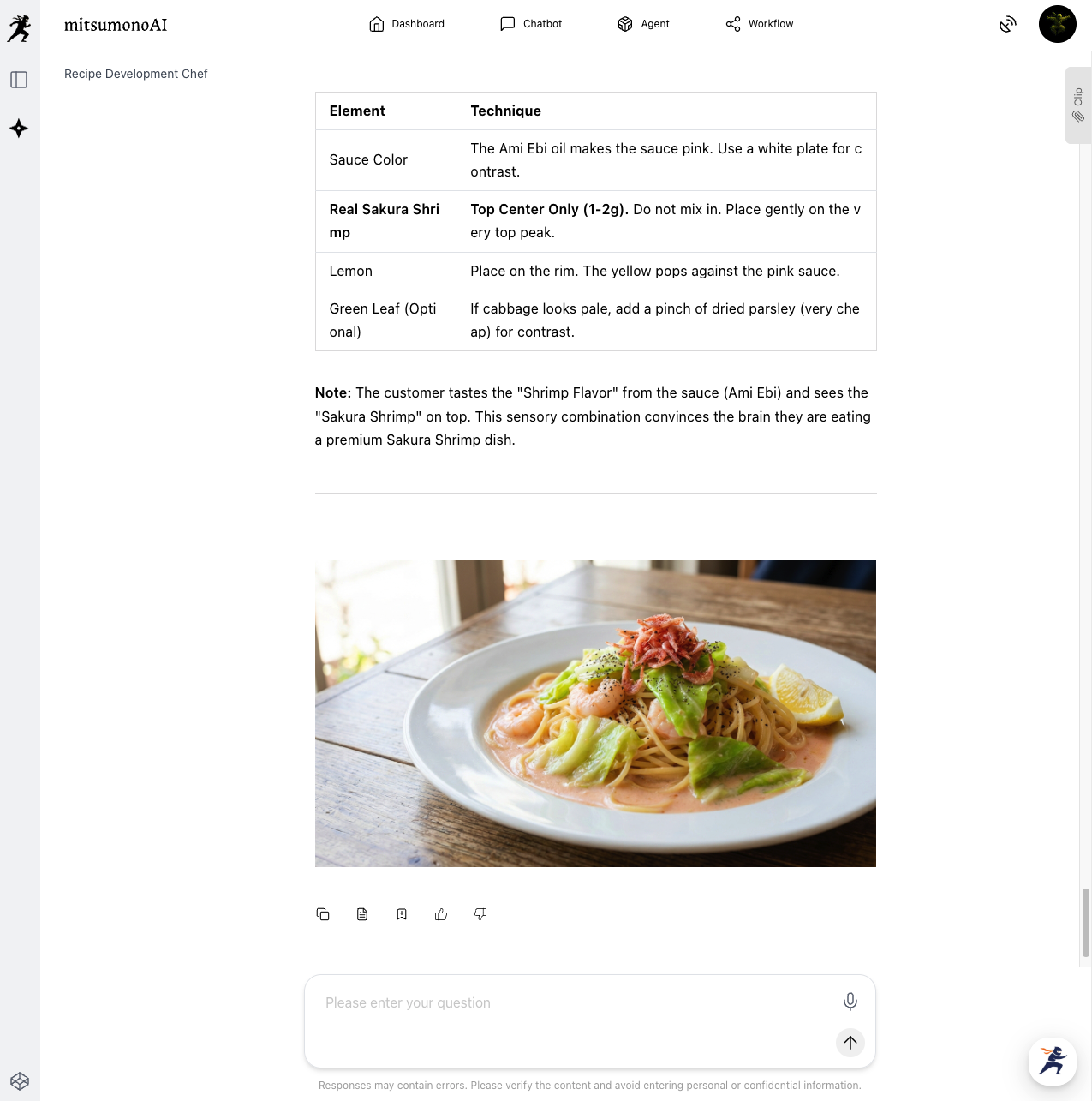
With this, you have completed a "field-ready recipe" that clears all hurdles: aesthetics, operations, and cost.
■ Applications & Expansion (From Training to Waste Reduction)
This "dialogue-based development" skill can be applied beyond just recipes.
- Training New Staff: Ask the AI to explain "Why is this step necessary?" and include that in your manuals to deepen staff understanding.
- Food Waste Reduction: Consult the AI: "Suggest a staff meal recipe using leftover spring cabbage cores" to eliminate waste.
- Allergy Accommodations: Request: "Suggest a version of this recipe for customers with dairy allergies," and instantly receive a substitute recipe using soy milk.
Summary
This article introduced methods to transform ideal recipes into realistic menus through dialogue with AI.
- Use the Recipe Development Chef to generate the seeds of attractive ideas.
- Provide feedback via chat regarding field constraints, such as "lack of equipment" or "busy periods."
- Repeat adjustments to clear cost and operational hurdles.
Even if the AI doesn't provide a perfect answer in one go, it grows into a premier partner by understanding your specific business context through repeated dialogue. Before giving up and saying "we can't do this," try asking the AI, "Is there an easier way?" You will surely be presented with surprising solutions.
mitsumonoAI features numerous functions to support restaurant revenue growth, including recipe development, food cost calculation support, compelling menu descriptions, and new menu announcements for SNS. For more use cases and the latest information, please visit the mitsumonoAI blog site.