2026 Guide to the Top 10 Cost Estimation Software : Comprehensive Comparison
In 2026, cost estimation has evolved from "craftsman's intuition" to "AI-driven autonomous decision-making." Explore the top 10 AI-native tools like mitsumonoAI to secure your profit margins.


Introduction
Cost estimation is the backbone of any business, yet many professionals face the challenge of calculations becoming too complex to handle manually. With fluctuating factors such as material costs, processing fees, and logistics, many struggle to find a definitive method for accurate calculation.
Specific triggers that signal the need for dedicated software include:
- Frequent Specification Changes: Spending hours recalculating every time a design is slightly modified.
- Delayed Responses: Losing potential contracts because the quotation process is too slow for the customer’s pace.
- Eliminating Dependency on Individuals: Breaking out of the "black box" state where only a specific veteran employee knows how to calculate the costs.
The Importance of Cost Estimation in Modern Business
The current global landscape is highly unstable. Daily news is filled with geopolitical risks, supply chain disruptions, and soaring raw material prices. In such an uncertain world, a quote from just a few weeks ago can quickly become obsolete. Constant, accurate cost tracking based on the latest information is now the only defense mechanism to protect corporate profits.
The Rise of AI-Driven Tools
Against this backdrop, software embedded with "AI Agents" has become the mainstream in 2026. Previously, software was merely a "tool" where humans input data for calculation. However, the latest AI Agents act as "autonomous expert partners." Even without explicit human instructions, the AI reads past data and current market prices to present the optimal estimation plan.
Why AI-Driven "Estimation Automation" is Essential Now
AI offers overwhelming advantages that traditional methods cannot match:
- From Speed to "On-the-Spot Negotiation": The era of taking days for a quote is over. Since AI can calculate costs within 10 seconds, you gain the speed required to agree on pricing right during a client meeting.
- Digitalizing "Craftsman’s Intuition" to Prevent Errors: AI learns the estimation rules previously locked inside the heads of veteran employees. This reduces human calculation errors and allows anyone to produce expert-level quotes.
- Scalability Against Change: Even if request volumes surge, AI processes them instantly without fatigue. It can complement information from incomplete drawings or past emails, functioning as an immediate asset from day one.
Key Points for Selecting Cost Estimation Software
With the market flooded with options, selecting the right fit for your company can be daunting. Here are specific criteria for success, particularly in the manufacturing sector:
- Estimation Accuracy: It is crucial that the tool provides a logical basis for pricing (e.g., which machine runs for how many minutes) rather than a mere "rough estimate."
- Speed: Customers demand rapid responses. The modern standard is calculation within 10 seconds.
- Integration: Choose a "ready-to-use" solution that connects with your existing ERP or CAD data (via API) without complex setup.
- Usability: If it’s difficult to operate, the front-line staff won’t use it. Ideally, it should be as intuitive as a smartphone app, requiring no manual.
- AI Implementation Level: This is vital. Avoid "Add-on AI" (chat features tacked onto old software) and opt for "AI-Native" designs where the AI is built to think and act autonomously from the ground up.
2026 Next-Generation Cost Estimation & Procurement Tool Comparison Table
| Tool Name | AI Implementation Level | Key Features (Speed/Learning) | Target Scale/Industry | Estimation Accuracy |
| mitsumonoAI | Highest (AI-Native) | Ultra-fast (<10s). Infers specs from incomplete data. | Mid to Large (Manufacturing/Precision) | Extremely High (Logical) |
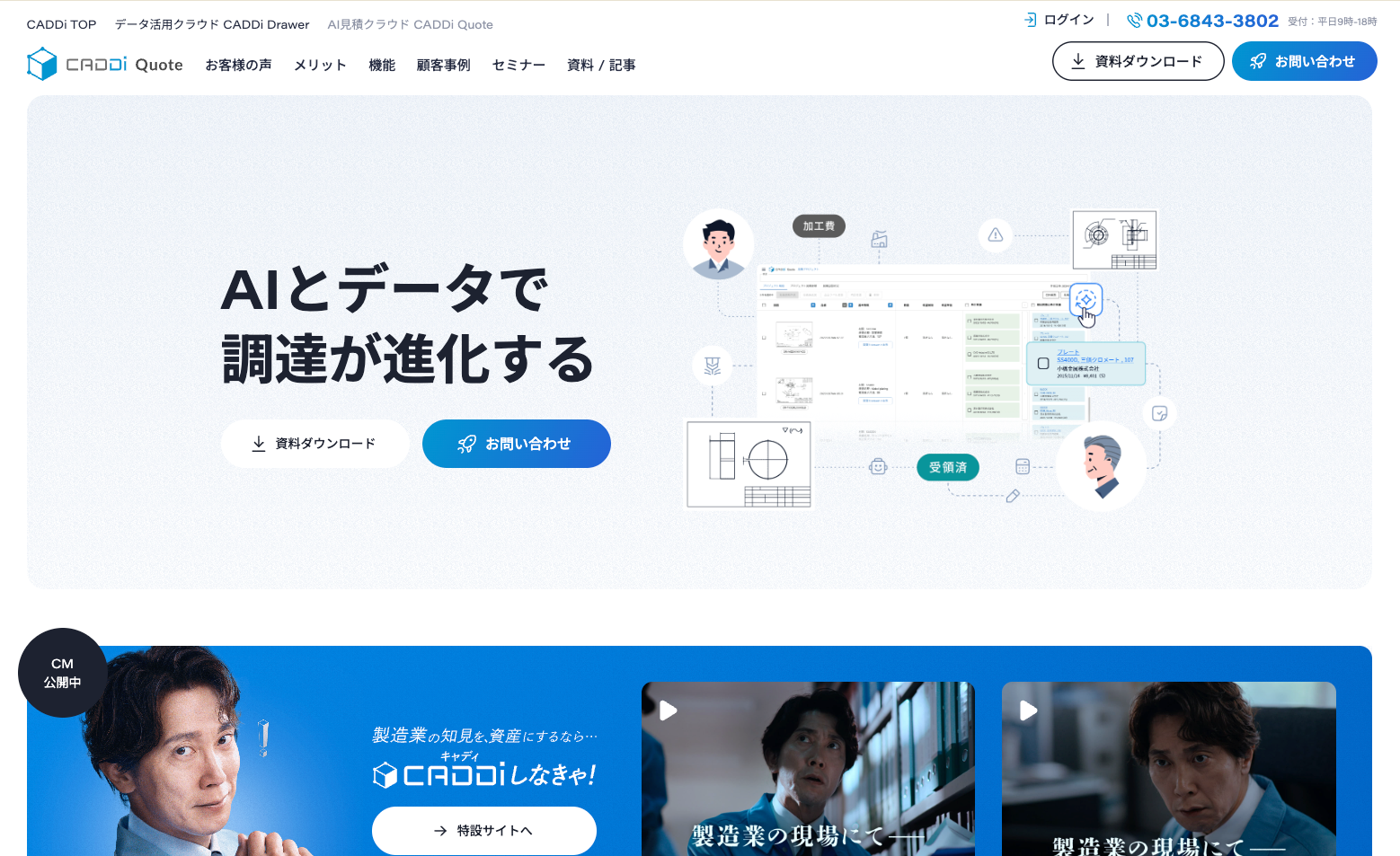
| CADDI Quote | High (AI-Native) | Similarity search based on vast drawing data. Requires pre-learning. | Large to Mid (Manufacturing/Heavy Industry) | High |
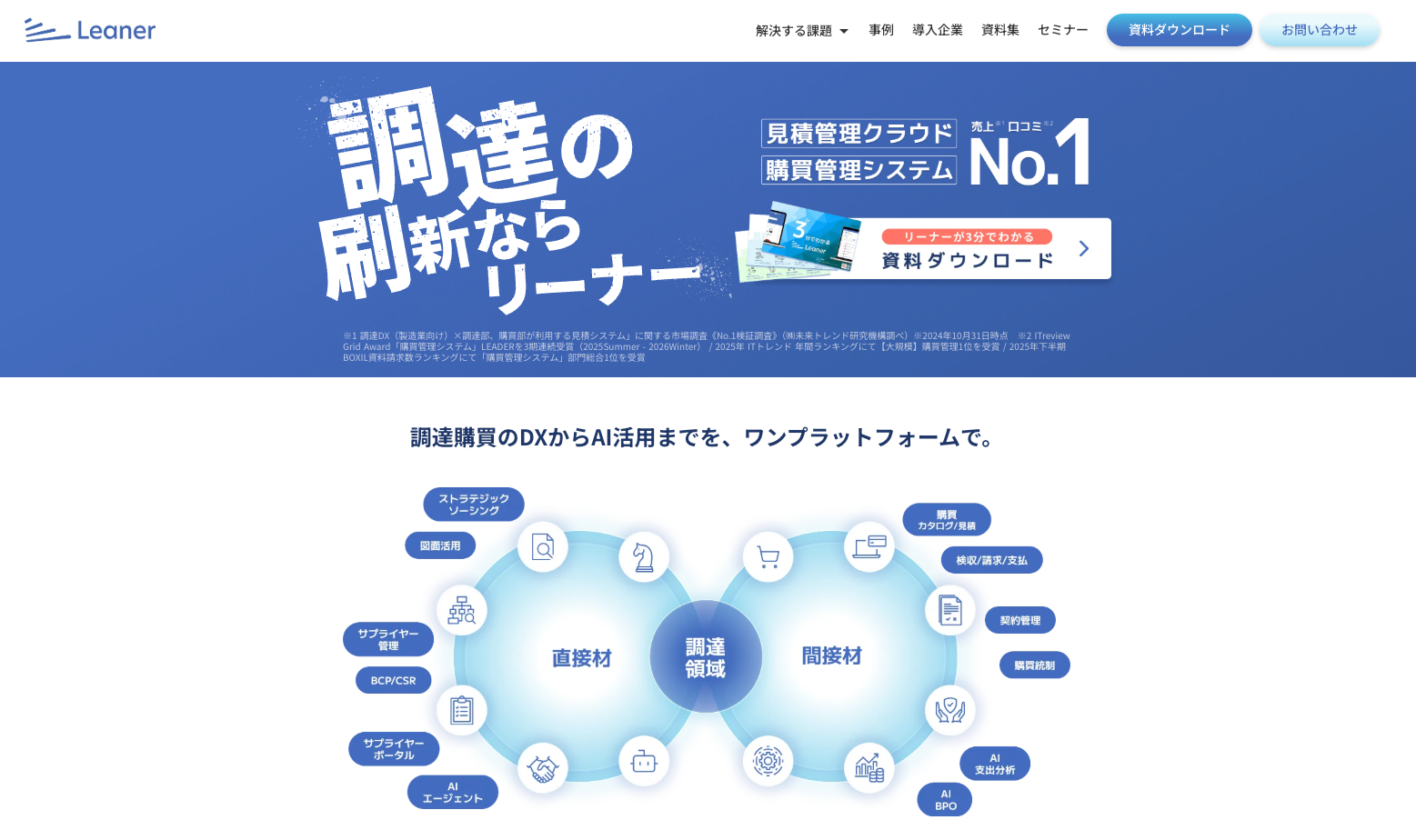
| Leaner | High (AI Agent) | Automation of the entire procurement process. Strong cost-down proposals. | Mid to Large (General Industry/Indirect Materials) | Standard |
| Arkestro | Highest (Predictive/Autonomous) | Negotiation AI using game theory. Reduces cycle time by 60%. | Global Enterprises (Energy/Manufacturing) | High (Strong Prediction) |
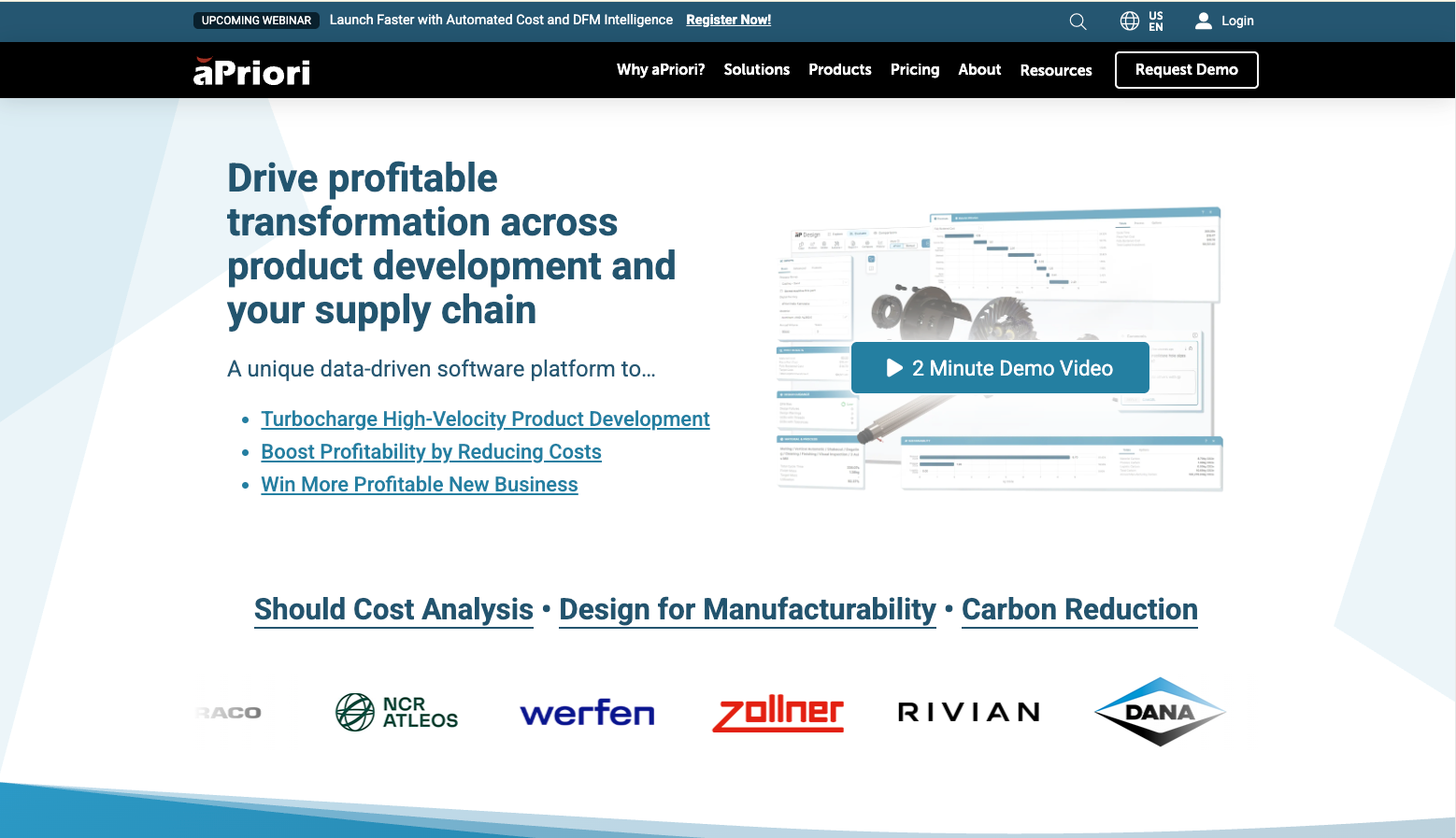
| aPriori | Medium (Simulation) | Manufacturing process simulation via Digital Twin. | Large (Aerospace/Automotive) | Very High (Physics-based) |
| mcframe X | Medium (ERP-Integrated) | Handles complex cost calculation logic. AI is primarily a chatbot. | Mid to Large Manufacturing | High (Logic-focused) |
| Facton EPC | Medium (Rule-based) | Standardization across global sites. Limited autonomous learning. | Large Suppliers (Automotive, etc.) | High (Standardization) |
| ProEst | High (Construction-specific) | Auto Takeoff from construction drawings. | Construction/Civil Engineering | High (85-90% Accuracy) |
| CalcuQuote | High (Electronics-specific) | Specializes in BOM analysis and market price syncing. | Electronics Manufacturing (EMS) | High (Electronics-focused) |
Detailed Analysis of Key Tools
1. mitsumonoAI (Autonomous AI Estimation Agent)
This platform embodies the "AI-Native" philosophy in the 2026 market. Utilizing proprietary algorithms, it completes drawing analysis—which previously took hours—in under 10 seconds.
- Pros: It can infer and complement missing specifications from unstructured data like drawing notes or past email contexts. It creates value from day one by digitalizing "expert intuition" even without prepared master data.
- Strengths: Beyond manufacturing and precision equipment, it offers a lineup of specialized AI consultants for various industries including Sensei AI - Real Estate, Sensei AI - House Builder, Sensei AI - Accommodation, Sensei AI - Restaurant, Sensei AI - Hospital/Clinic, and Sensei AI - Professional Services. Each AI is pre-trained on industry-specific customs and expertise.
- Best For: Companies looking to digitalize person-dependent expertise and enable immediate, logical decision-making across all business scenarios.

2. CADDI Quote / Drawer (Drawing Data Utilization)
A tool with a powerful foundation in the Japanese manufacturing industry by CADDI Inc.
- Pros: Instantly searches for similar items from a vast database of past drawings to support selection based on historical pricing.
- Cons: Requires an initial upload and learning period for past drawings to maximize effectiveness.
- Best For: Large manufacturers prioritizing the organization and utilization of accumulated drawing data.
3. Leaner (Procurement Orchestration)
A Japanese tool driving DX across the entire procurement process and spend analysis.
- Pros: Highly intuitive UI/UX makes it easy for front-line staff to adopt; excellent at process management automation.
- Cons: Lacks the depth of geometric autonomous inference or physical simulation found in specialized tools.
- Best For: Companies aiming for transparency and efficiency across the whole procurement cycle.
4. Arkestro (Predictive Procurement Platform)
A US-based predictive platform strong in "negotiation science."
- Pros: Uses game theory to suggest predicted prices before supplier responses, shortening negotiation cycles by 60%.
- Cons: Built on global standards; may require adjustments for the nuanced consensus-building typical in Japan.
- Best For: Global manufacturing firms seeking rapid price determination.
5. aPriori (Manufacturing Simulation)
Utilizes Digital Twins to calculate "should-cost" in a virtual space.
- Pros: Extremely high accuracy based on physical evidence; strong in cost optimization during the design phase.
- Cons: High implementation costs and requires advanced technical configuration for operation.
- Best For: Industries requiring precise cost management from the design stage, such as Aerospace or Automotive.
6. mcframe X
An ERP-integrated platform deeply rooted in the Japanese manufacturing industry.
- Features: Strong in unique, complex Japanese cost management logic; integrates closely with production and inventory management.
- AI Implementation: Currently focused on "Add-ons" like data extraction assistance and chatbot support.
- Best For: Large to mid-sized Japanese manufacturers looking to strengthen company-wide cost management during a core system refresh.
7. Facton EPC
A German-developed estimation standardization tool for global manufacturing.
- Features: Specialized in creating estimates based on the "same calculation standards" across multiple locations and countries.
- AI Implementation: Primarily rule-based, with AI used for trend analysis of historical data.
- Best For: Global suppliers with numerous overseas factories wanting uniform accuracy worldwide.
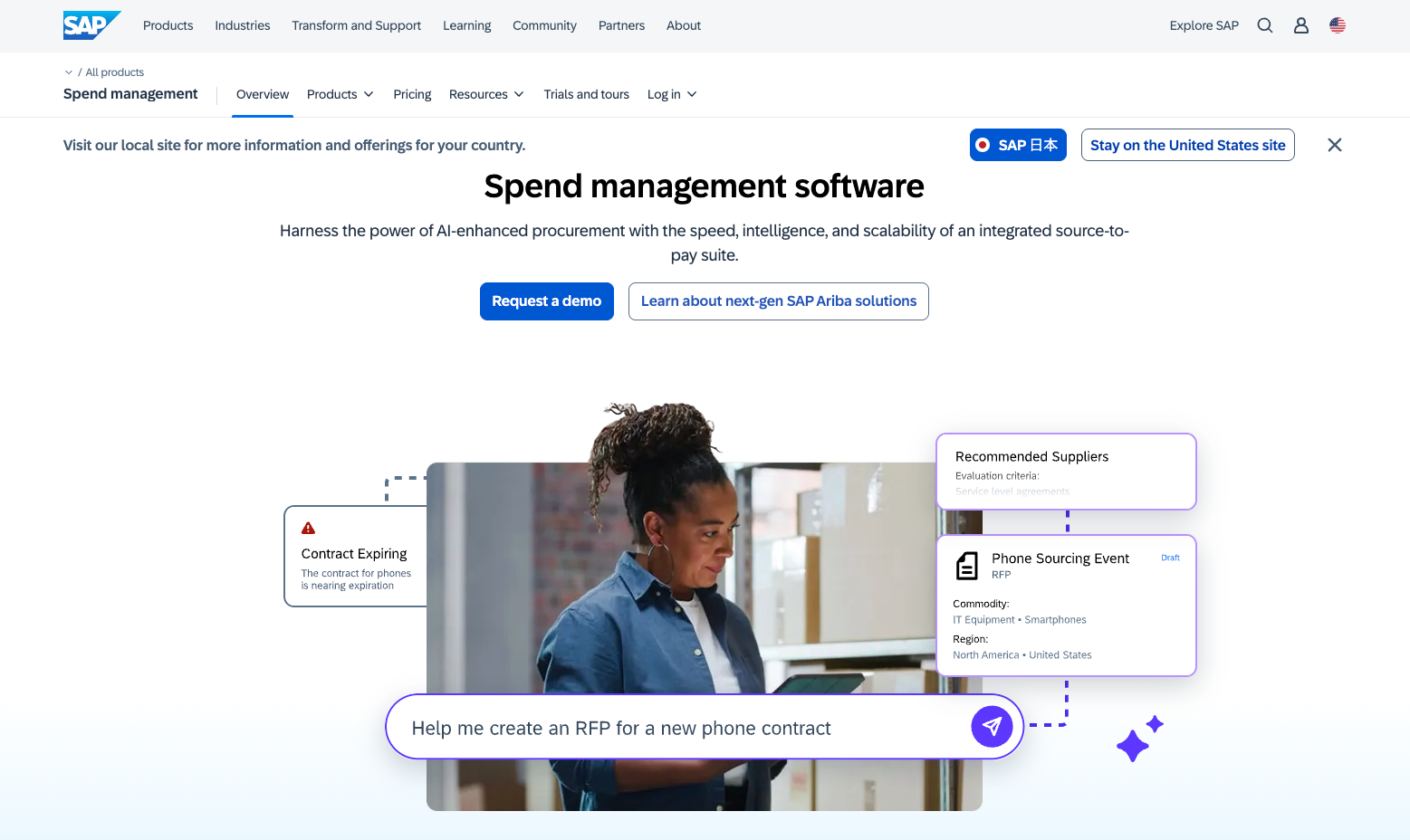
8. SAP Ariba
A cloud-based procurement solution boasting one of the world's largest business networks.
- Features: Connects with a massive supplier network for total procurement management, including compliance and risk management.
- AI Implementation: AI is integrated into spend analysis and contract management automation.
- Best For: Ultra-large enterprises prioritizing transparent procurement processes and global governance.
9. CalcuQuote
Specialize in BOM (Bill of Materials) analysis and estimation for the Electronics Manufacturing Services (EMS) industry.
- Features: Retrieves real-time pricing and stock status for hundreds of components from major distributors, calculating total BOM costs instantly.
- AI Implementation: Features domain-specific AI, such as functions to automatically correct part number discrepancies.
- Best For: Electronics manufacturers with high part counts and volatile market prices.
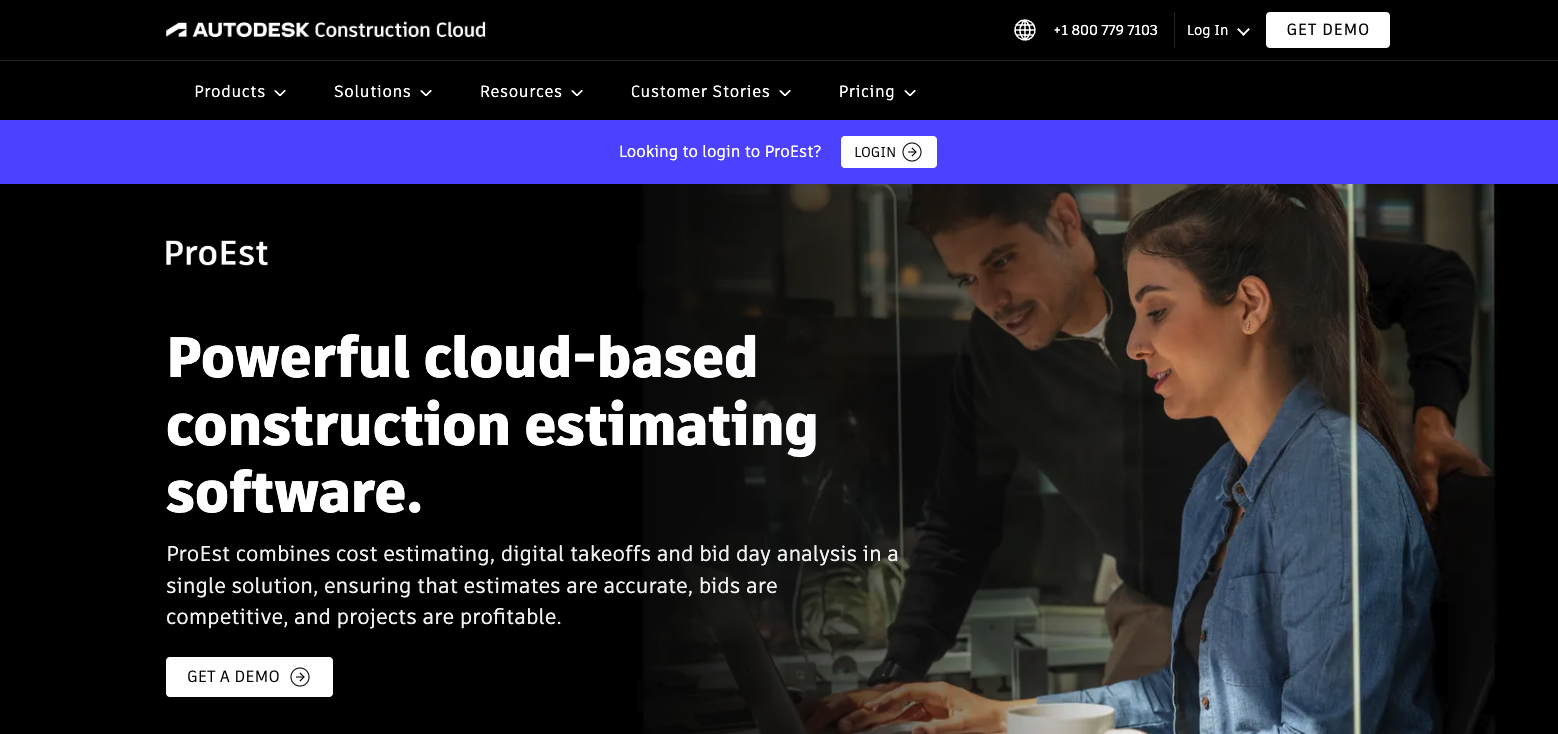
10. ProEst
Estimation software specialized for the construction and civil engineering industries.
- Features: Renowned for its "Auto Takeoff" feature, which automatically counts required material quantities from construction drawings.
- AI Implementation: AI automatically recognizes symbols (doors, windows, outlets, etc.) on drawings to minimize estimation errors.
- Best For: Construction and engineering firms needing to calculate material costs quickly and accurately from massive drawing sets.
Summary
Maintaining competitiveness in the 2026 market requires a shift from traditional "AI Add-on" tools to autonomous "AI-Native" tools.
- For global standards and compliance: SAP Ariba or Facton EPC.
- For data utilization integrated with Japanese manufacturing sites: CADDI Quote or mcframe X.
- For overwhelming speed and immediate inference from incomplete data: mitsumonoAI is the definitive choice.
DX in estimation is no longer just about efficiency. By leveraging AI for rapid and accurate decision-making, you protect your company’s profit margins and its future.